
Introduction
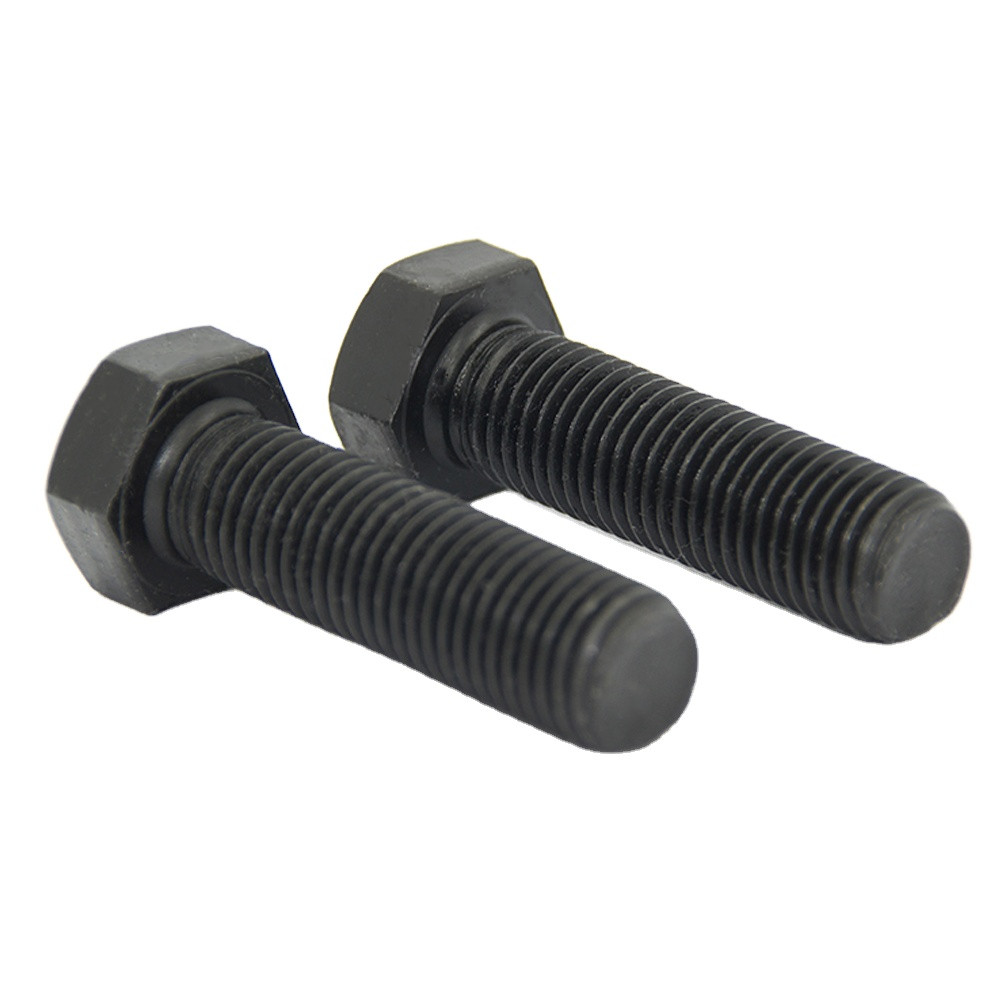
Screw-in stud bolts are internally threaded fasteners designed for applications requiring high tensile strength and secure connections, primarily in heavy industries like oil & gas, petrochemical, power generation, and large-scale construction. Positioned within the fastening and joining technology sector, these bolts differ from standard bolts by offering a double-ended threaded configuration, allowing them to be screwed into one component and project from the other for nut attachment. This design facilitates ease of assembly and disassembly, particularly in applications with limited access or where frequent maintenance is required. Core performance characteristics center around load-bearing capacity, resistance to shear stress, fatigue life, and compatibility with the joined materials. The industry frequently grapples with issues surrounding corrosion, material traceability, and ensuring consistent thread quality across large-volume production runs.
Material Science & Manufacturing
Screw-in stud bolts are predominantly manufactured from carbon steel (ASTM A307 Grade A, A574), alloy steel (ASTM A193 Grade B7, B8), stainless steel (ASTM A193 Grade B8M, 304, 316), and occasionally, specialized materials like duplex stainless steel or Inconel, depending on the severity of the operating environment. Carbon steel provides cost-effectiveness for general applications. Alloy steels, particularly those containing chromium and molybdenum, offer significantly enhanced strength, toughness, and corrosion resistance. Stainless steels are chosen for corrosive environments, balancing strength with oxidation resistance. Manufacturing typically involves cold heading for initial shape formation followed by thread rolling, a process imparting compressive residual stresses to the surface, increasing fatigue strength. Heat treatment (quenching and tempering) is crucial for achieving desired mechanical properties. Critical parameters during manufacturing include thread pitch accuracy (maintained through precision thread rolling dies), material composition verification (using spectroscopic analysis), and proper heat treatment cycles (monitored via hardness testing and metallographic examination). Galvanizing, PTFE coating, or other protective coatings are commonly applied to enhance corrosion resistance. The selection of raw material grade directly correlates to the bolt's yield strength, tensile strength, and elongation, dictating its performance under load. Inadequate heat treatment can result in brittle fractures, while improper thread rolling can compromise fatigue life.
Performance & Engineering
The performance of screw-in stud bolts is governed by several engineering principles. Force analysis focuses on tensile load, shear load, and bending moments. Tensile stress is calculated based on the applied force divided by the bolt's cross-sectional area. Shear stress is relevant when bolts are subjected to forces perpendicular to their axis. Bending moments arise from misalignment of joined components. Environmental resistance is a critical consideration; corrosion (uniform, pitting, galvanic) can drastically reduce the bolt's load-carrying capacity. Material selection, coatings, and cathodic protection are employed to mitigate corrosion. Fatigue performance – the bolt's ability to withstand repeated loading and unloading – is a major design factor, especially in applications involving vibration or cyclic stress. Compliance requirements are dictated by industry standards (discussed in the footer) and project specifications. Functional implementation demands precise torque control during installation to achieve the desired preload, ensuring proper clamping force and preventing loosening. Finite element analysis (FEA) is frequently used to model stress distributions and optimize bolt design for specific applications. Failure to account for thermal expansion/contraction differences between the bolt and joined materials can induce significant stresses, leading to premature failure. The accurate determination of preload is paramount, as insufficient preload reduces clamping force and increases susceptibility to loosening, while excessive preload can lead to bolt yielding or stripping of threads.
Technical Specifications
| Material Grade | Tensile Strength (MPa) | Yield Strength (MPa) | Hardness (HRC) |
|---|---|---|---|
| ASTM A307 Grade A | 400-550 | 240-310 | 18-22 |
| ASTM A193 Grade B7 | 690-860 | 485-620 | 30-34 |
| ASTM A193 Grade B8M | 830-1000 | 690-830 | 33-37 |
| 304 Stainless Steel | 517-724 | 205-276 | 20-25 |
| 316 Stainless Steel | 586-862 | 248-345 | 22-28 |
| Duplex Stainless Steel | 700-900 | 400-550 | 28-35 |
Failure Mode & Maintenance
Screw-in stud bolts are susceptible to several failure modes. Fatigue cracking, particularly at the thread root, is common in dynamically loaded applications. Corrosion-induced failures (pitting, crevice corrosion, stress corrosion cracking) are prevalent in harsh environments. Hydrogen embrittlement can occur in high-strength steels exposed to hydrogen-containing environments, leading to brittle fracture. Thread stripping, resulting from excessive torque or mismatched thread forms, can compromise joint integrity. Overload, exceeding the bolt’s tensile or shear capacity, can cause immediate failure. Failure analysis techniques, including fracture surface examination (using scanning electron microscopy), metallurgical analysis, and non-destructive testing (NDT) like magnetic particle inspection and ultrasonic testing, are used to determine the root cause of failures. Preventative maintenance involves regular inspection for signs of corrosion, thread damage, or loosening. Torque checks should be performed periodically, especially after initial installation and during routine maintenance. Lubrication of threads can reduce galling and facilitate disassembly. In corrosive environments, the application of protective coatings should be regularly inspected and reapplied as needed. Proper storage of spare bolts is essential to prevent corrosion and maintain material integrity.
Industry FAQ
Q: What is the impact of thread form on the fatigue life of a stud bolt?
A: The thread form significantly influences fatigue life. Sharper thread roots concentrate stress, making the bolt more susceptible to fatigue cracking. Rounded thread roots, as found in many modern thread standards, distribute stress more evenly, increasing fatigue resistance. The choice of thread pitch also plays a role; finer pitches generally offer better fatigue performance but are more sensitive to contamination.
Q: How does material traceability impact the selection and application of stud bolts?
A: Material traceability is crucial for ensuring quality and compliance, especially in critical applications. Complete traceability – from raw material source to finished bolt – allows verification of material composition, heat treatment records, and dimensional accuracy. This is essential for demonstrating compliance with industry standards and preventing failures due to substandard materials.
Q: What are the key considerations when selecting a coating for corrosion protection?
A: The selection of a coating depends on the severity of the corrosive environment and the specific material of the bolt. Galvanizing provides sacrificial protection for carbon steel. PTFE coatings offer a barrier against chemical attack. Ceramic coatings provide high-temperature corrosion resistance. The coating's adhesion, thickness, and resistance to abrasion are also important factors.
Q: What is the role of preload in the performance of a bolted joint using stud bolts?
A: Preload is the initial tension applied to the bolt during tightening. It creates clamping force between the joined components, preventing loosening under dynamic loading. Proper preload maximizes the bolt’s fatigue resistance and ensures a secure connection. Insufficient preload can lead to loosening, while excessive preload can cause bolt yielding or stripping of threads.
Q: How do you determine the appropriate stud bolt size and length for a given application?
A: Bolt size and length are determined by considering the applied load, the material being joined, the required clamping force, and accessibility constraints. Tensile and shear stress calculations are used to determine the minimum required bolt diameter. The length must accommodate the thickness of the joined materials, the desired thread engagement length, and any required protruding length for nut attachment.
Conclusion
Screw-in stud bolts are indispensable fastening components in numerous critical industries, offering a robust and reliable solution for high-stress applications. Their performance is fundamentally linked to material selection, precise manufacturing processes, and proper installation techniques. Understanding the potential failure modes and implementing preventative maintenance strategies are paramount to ensuring long-term reliability and safety.
Future advancements will likely focus on developing novel materials with enhanced corrosion resistance and higher strength-to-weight ratios. Improved coating technologies and more sophisticated NDT methods will also contribute to enhancing the durability and reliability of these critical fasteners. Furthermore, increasing emphasis on digital thread and data analytics will facilitate improved quality control and predictive maintenance capabilities.