
Introduction
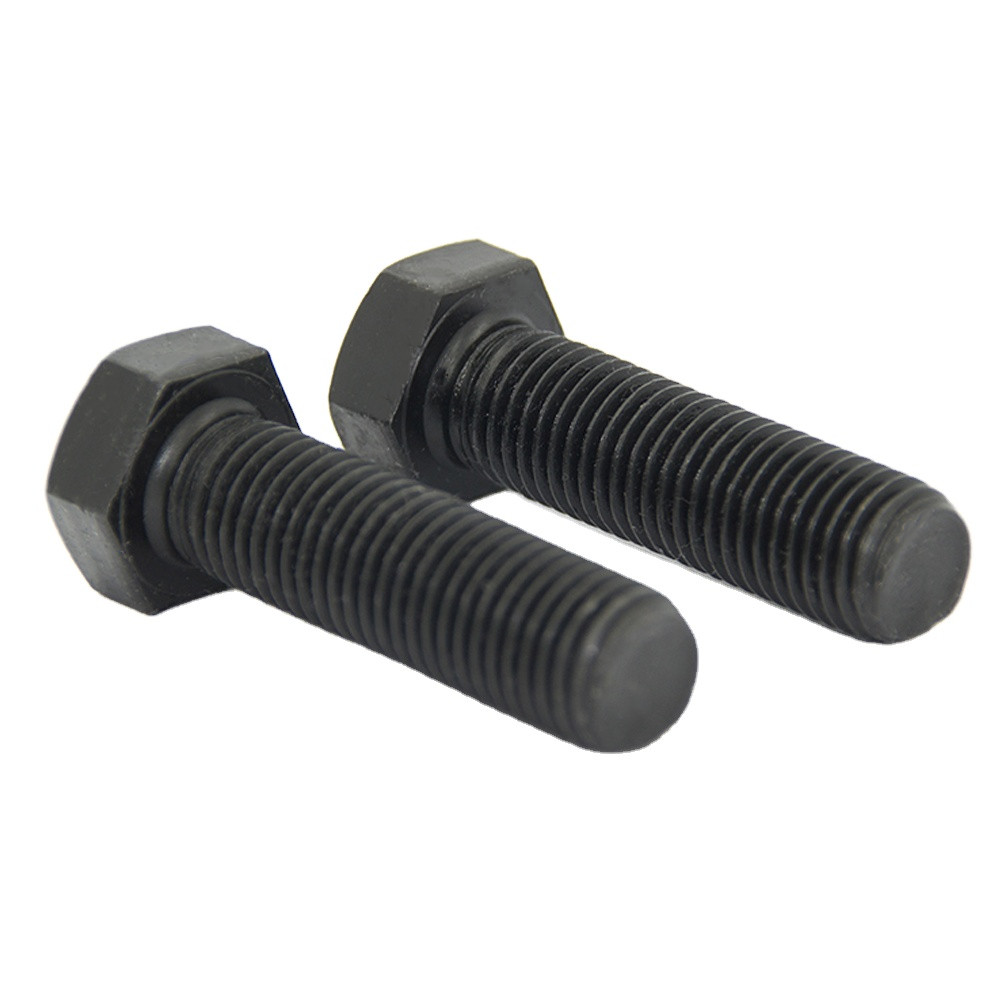
Reduced stem stud bolts are high-strength fasteners employed in critical joint applications across numerous industries, including petrochemical, power generation, and heavy equipment manufacturing. Distinguished by a reduced diameter shank relative to the thread length, these bolts are specifically engineered to handle high tensile loads and minimize stress concentration. Their primary function is to securely connect flanged joints, pressure vessel components, and other assemblies requiring robust mechanical integrity. The reduction in shank diameter aims to improve flexibility and reduce bending stress, particularly in situations with misalignment or thermal expansion. This document provides a detailed technical analysis of reduced stem stud bolts, encompassing material science, manufacturing processes, performance characteristics, failure modes, and relevant industry standards. Understanding these facets is crucial for proper specification, installation, and maintenance to ensure long-term reliability and safety.
Material Science & Manufacturing
Reduced stem stud bolts are commonly manufactured from high-alloy steels, prioritizing strength, toughness, and corrosion resistance. Typical materials include ASTM A193 Grade B7 (chromium-molybdenum alloy steel), A193 Grade B8 (nickel-chromium-molybdenum alloy steel) for elevated temperature service, and A286 (superalloy) for extreme temperature and corrosive environments. The selection hinges on the operating temperature, pressure, and the chemical composition of the media the bolt will be exposed to. Manufacturing commences with hot forging or cold heading of the material, shaping the initial bolt blank. The reduced shank is formed through machining, typically using CNC turning or milling processes, ensuring precise dimensional control. Thread rolling is the preferred method for creating the threads, as it imparts favorable compressive residual stresses, enhancing fatigue resistance. Heat treatment is a critical step, involving austenitizing, quenching, and tempering, to achieve the desired mechanical properties – typically a tensile strength of 150-200 ksi (1034-1379 MPa) and a yield strength of 135 ksi (931 MPa) minimum for Grade B7 materials. Surface treatments like zinc plating, PTFE coating, or phosphate coating are often applied to enhance corrosion resistance and lubricity. Quality control includes dimensional inspections, hardness testing (Rockwell C scale), and non-destructive testing (NDT) such as magnetic particle inspection (MPI) or ultrasonic testing (UT) to detect surface and internal flaws.
Performance & Engineering
The performance of reduced stem stud bolts is largely dictated by their ability to withstand tensile loading, shear loading, and fatigue cycles. Force analysis considers the bolt preload (tightening torque), applied external loads, and the geometry of the joint. Preload is crucial as it establishes the clamping force, preventing gasket leakage and maintaining joint integrity. Insufficient preload can lead to joint separation, while excessive preload can exceed the bolt's yield strength, causing permanent deformation or failure. Environmental resistance is paramount, particularly in corrosive environments. Galvanic corrosion, pitting corrosion, and stress corrosion cracking are common concerns. Material selection and protective coatings mitigate these risks. Compliance requirements are governed by industry codes and standards such as ASME Section VIII Division 1 (Pressure Vessels), ASME B31.3 (Process Piping), and API 6A (Wellhead and Christmas Tree Equipment). These standards specify material requirements, design calculations, and inspection procedures. The reduced shank’s engineering function centers on managing bending stress. When a bolted joint is subject to misalignment or thermal expansion, the shank experiences bending moments. Reducing the shank diameter lowers the section modulus, allowing for increased bending deflection without exceeding the material's yield strength. This flexibility helps distribute stress and prevent brittle fracture. Finite element analysis (FEA) is routinely used to optimize bolt geometry and predict stress distribution under various loading scenarios.
Technical Specifications
| Material Grade | Tensile Strength (ksi) | Yield Strength (ksi) | Hardness (Rockwell C) |
|---|---|---|---|
| ASTM A193 B7 | 150-170 | 135 | 30-34 |
| ASTM A193 B8 | 170-190 | 150 | 32-36 |
| ASTM A286 | 180-200 | 160 | 35-40 |
| UNC 2B Thread Class | N/A | N/A | N/A |
| Shank Reduction Ratio (Typical) | 0.7-0.9 | N/A | N/A |
| Coating Options | Zinc, PTFE, Phosphate | N/A | N/A |
Failure Mode & Maintenance
Reduced stem stud bolts are susceptible to several failure modes. Fatigue cracking, often initiated at the thread root or shank shoulder, is a common issue in cyclically loaded applications. Corrosion-related failures, including pitting corrosion and stress corrosion cracking, can significantly reduce bolt strength. Hydrogen embrittlement, particularly in high-strength steels exposed to hydrogen sulfide (H2S), can lead to catastrophic brittle failure. Overload failure occurs when the applied load exceeds the bolt's tensile strength. Galling, a form of adhesive wear, can occur during installation or removal if insufficient lubrication is used. Maintenance procedures include periodic visual inspections for signs of corrosion, cracking, or deformation. Torque verification is essential to ensure proper preload is maintained. Non-destructive testing (NDT) techniques, such as ultrasonic testing (UT) and magnetic particle inspection (MPI), can detect internal and surface flaws. Lubrication with appropriate anti-seize compounds is critical during installation and removal to prevent galling and facilitate future maintenance. Replacement of bolts exhibiting signs of damage is crucial to prevent catastrophic failures. Documented torque records and inspection reports are essential for maintaining a reliable bolt maintenance program.
Industry FAQ
Q: What is the primary benefit of using a reduced stem stud bolt versus a full-bodied stud bolt in a flanged connection?
A: The primary benefit lies in the reduced stress concentration in the shank, particularly when dealing with flange misalignment or thermal expansion. The smaller shank diameter allows for greater flexibility, mitigating bending stresses and minimizing the risk of brittle fracture. Full-bodied studs, while stronger in tension, can be more prone to failure due to bending moments.
Q: How does material selection impact the corrosion resistance of reduced stem stud bolts in a seawater environment?
A: Material selection is paramount. ASTM A286, a nickel-chromium-molybdenum superalloy, exhibits superior corrosion resistance compared to A193 Grade B7 or B8 in seawater. Applying a protective coating, such as PTFE or specialized marine-grade zinc plating, further enhances corrosion protection. Regular inspection and maintenance are still vital, even with corrosion-resistant materials and coatings.
Q: What are the critical parameters to monitor during the installation of reduced stem stud bolts to ensure correct preload?
A: The critical parameters are torque applied, bolt stretch (using ultrasonic elongation measurement), and the lubrication condition of the threads. Using a calibrated torque wrench and following the manufacturer's recommended torque values is essential. Ultrasonic elongation measurement provides a more accurate assessment of preload, accounting for thread friction and bolt stiffness. Proper lubrication minimizes friction and ensures consistent preload.
Q: How often should reduced stem stud bolts in a petrochemical plant be inspected, and what types of inspections are recommended?
A: Inspection frequency depends on the severity of the operating environment and the criticality of the application. In a petrochemical plant, visual inspections should be performed monthly, looking for signs of corrosion, cracking, or deformation. More comprehensive inspections, including ultrasonic testing (UT) and magnetic particle inspection (MPI), should be conducted annually or as dictated by process safety management (PSM) requirements.
Q: What are the implications of using incorrect thread lubricants during the installation of reduced stem stud bolts?
A: Incorrect thread lubricants can lead to inaccurate preload readings, increased friction, and potential galling of the threads. This can result in insufficient clamping force, gasket leakage, or even bolt failure. Always use lubricants specifically recommended by the bolt manufacturer, ensuring compatibility with the bolt material and the service environment.
Conclusion
Reduced stem stud bolts represent a critical fastening solution in demanding industrial applications, offering a unique balance of strength, flexibility, and resistance to failure. Their design, incorporating a reduced shank diameter, effectively mitigates bending stresses induced by misalignment or thermal expansion, enhancing joint reliability. Proper material selection, rigorous manufacturing processes, and adherence to industry standards are vital to ensure optimal performance and longevity.
Moving forward, advancements in non-destructive testing methodologies and the development of enhanced corrosion-resistant alloys will further improve the safety and reliability of these essential fasteners. Implementing robust maintenance programs, including regular inspections and torque verification, is paramount for maximizing service life and preventing catastrophic failures. Continued research and development efforts focused on optimizing bolt geometry and material properties will contribute to the ongoing evolution of reduced stem stud bolt technology.