
Introduction
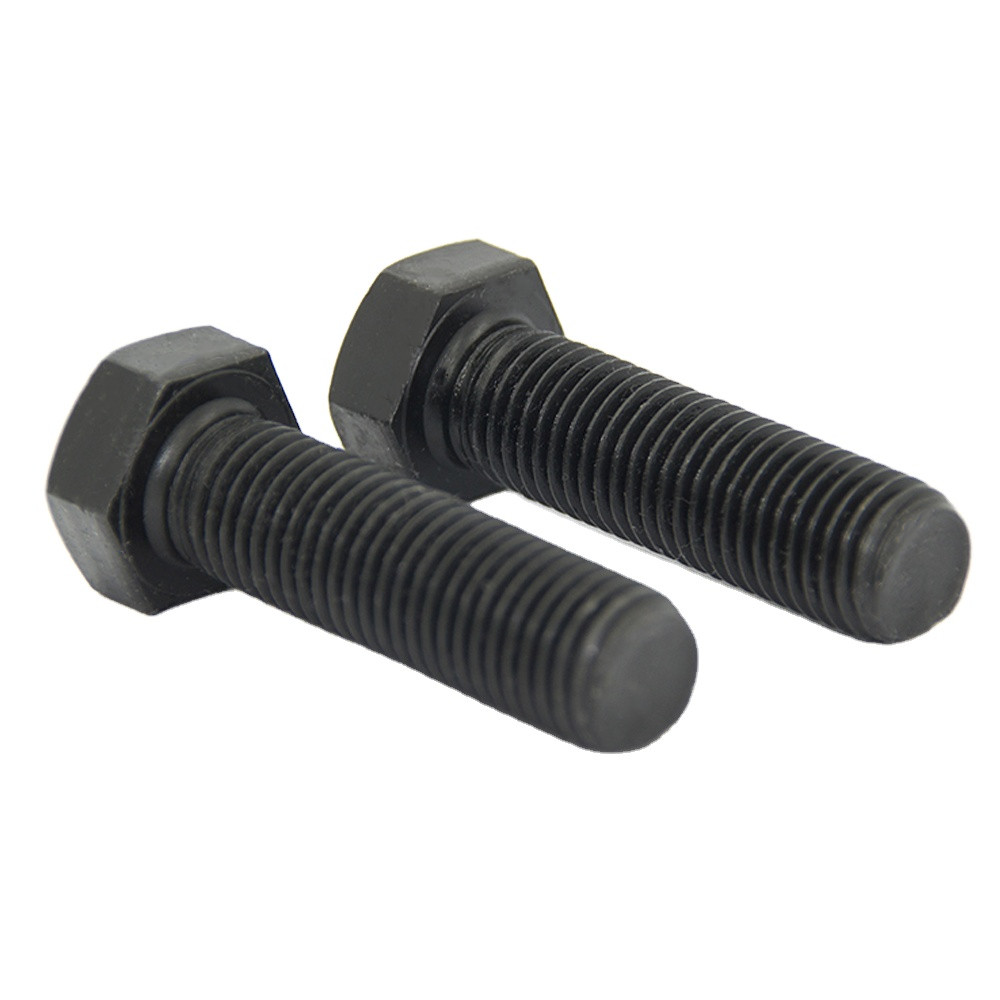
Plain stud bolts are externally threaded fasteners, headless and typically used in conjunction with nuts to create a clamping force. They function as high-strength pins, providing a secure connection in critical applications across diverse industries, including petrochemical, power generation, and structural engineering. Unlike bolts which are tightened into tapped holes, studs are threaded into one component and a nut is applied to the opposite end. This configuration offers several advantages, including improved fatigue resistance, increased clamp load capacity, and simplified assembly/disassembly in confined spaces. Their primary performance characteristics are tensile strength, yield strength, corrosion resistance (dependent on material), and thread quality, influencing the reliability and longevity of assembled structures. The core industry pain point addressed by optimized stud bolt selection lies in preventing joint failure, minimizing maintenance downtime, and ensuring structural integrity, particularly in high-stress and corrosive environments.
Material Science & Manufacturing
Plain stud bolts are predominantly manufactured from carbon steel, alloy steel, and stainless steel. Carbon steel (e.g., ASTM A307 Grade A) is cost-effective but exhibits limited corrosion resistance, typically requiring protective coatings. Alloy steels (e.g., ASTM A193 Grade B7, A193 Grade B8) offer enhanced strength and toughness, often incorporating chromium, molybdenum, and nickel for improved properties. Stainless steels (e.g., ASTM A276 Type 304, Type 316) provide superior corrosion resistance, crucial for applications in harsh environments. Material selection hinges on the operational temperature, pressure, and the chemical composition of the surrounding media. The manufacturing process commonly involves cold heading or hot forging to create the stud shape, followed by thread rolling. Thread rolling is preferred as it work-hardens the surface, enhancing fatigue strength. Critical parameters during manufacturing include precise control of material composition, thread pitch diameter, surface finish (Ra value), and heat treatment (quenching and tempering) to achieve desired mechanical properties. Non-destructive testing methods like ultrasonic testing and magnetic particle inspection are utilized to detect internal flaws and surface cracks, ensuring product quality. Post-processing often includes phosphate coating or galvanizing for added corrosion protection, however, this must be carefully considered in relation to the intended application and potential impact on thread engagement.
Performance & Engineering
The performance of a plain stud bolt is governed by several engineering principles. Tensile loading induces stress on the stud, and its ability to withstand this stress is defined by its tensile strength and yield strength. Fatigue performance is critical in applications subjected to cyclic loading; the stud’s surface finish and thread quality directly impact fatigue life. Preload, the initial tightening force applied to the stud and nut, is paramount in maintaining joint integrity. Insufficient preload can lead to loosening due to vibration or thermal cycling, while excessive preload can induce stud yielding or failure. Environmental resistance is also crucial. Corrosion, particularly in chloride-containing environments, can significantly reduce the effective cross-sectional area of the stud, weakening it over time. Galvanic corrosion can occur when dissimilar metals are in contact. Compliance requirements often dictate specific material grades and manufacturing processes (e.g., NACE MR0175/ISO 15156 for sour service applications in the oil and gas industry). Finite Element Analysis (FEA) is routinely employed to optimize stud geometry and predict stress distribution under various loading conditions, ensuring structural integrity and preventing failures.
Technical Specifications
| Material Grade | Tensile Strength (MPa) | Yield Strength (MPa) | Hardness (HRC) |
|---|---|---|---|
| ASTM A307 Grade A | 400 - 550 | 240 | 18-25 |
| ASTM A193 Grade B7 | 690 - 830 | 415 | 30-38 |
| ASTM A193 Grade B8 (Class 1A) | 860 - 1030 | 620 | 30-38 |
| ASTM A276 Type 304 | 517 - 724 | 276 | 20-30 |
| ASTM A276 Type 316 | 586 - 862 | 290 | 20-30 |
| ISO 8.8 (4.8/5.8/6.6/8.8) | 800 | 600 | 24-34 |
Failure Mode & Maintenance
Plain stud bolts are susceptible to several failure modes. Fatigue cracking, often initiated at stress concentrations (e.g., thread root), is common in cyclically loaded applications. Corrosion, particularly pitting corrosion and crevice corrosion, can weaken the stud material, leading to premature failure. Hydrogen embrittlement, prevalent in high-strength steels exposed to hydrogen-containing environments, can reduce ductility and cause brittle fracture. Thread stripping can occur due to excessive load, improper tightening, or thread damage. Overload failure results from exceeding the stud’s tensile strength. Maintenance primarily involves regular inspection for signs of corrosion, damage, or loosening. Torque checks should be performed periodically to ensure adequate preload is maintained. Lubrication of threads with appropriate anti-seize compounds can prevent galling and facilitate disassembly. In corrosive environments, protective coatings should be inspected and reapplied as necessary. If a stud bolt exhibits signs of fatigue cracking or significant corrosion, it must be replaced immediately. Proper storage in a dry environment is critical to preventing corrosion before installation. A comprehensive bolt replacement schedule, based on operating conditions and risk assessment, is recommended.
Industry FAQ
Q: What is the impact of thread form on stud bolt performance?
A: Thread form significantly influences stress distribution and load-carrying capacity. Metric threads (ISO 6150) are common, but Unified National Coarse (UNC) and Unified National Fine (UNF) threads are also used. Finer threads generally provide higher tensile strength but are more susceptible to stripping. The thread angle and pitch diameter influence the shear stress concentration at the thread root. A properly formed thread is crucial for maximizing fatigue life and preventing premature failure.
Q: How does material traceability impact stud bolt selection for critical applications?
A: Material traceability is paramount in critical applications, particularly those subject to regulatory oversight (e.g., nuclear power, aerospace). Traceability ensures that the stud bolts are manufactured from certified materials that meet specified chemical composition and mechanical property requirements. Mill test reports (MTRs) provide documentation of these characteristics. Full traceability allows for rapid identification and isolation of potentially defective batches, mitigating the risk of catastrophic failure.
Q: What is the difference between studs fully threaded and partially threaded?
A: Fully threaded studs are threaded along their entire length, while partially threaded studs have threads only on one end. Partially threaded studs are often preferred in applications where the unthreaded portion provides a shoulder for centering components or provides a region for shear loading without thread interference. Fully threaded studs can be useful in applications requiring adjustment along the length of the stud.
Q: What considerations are important when selecting stud bolts for high-temperature service?
A: High-temperature service necessitates careful material selection. Creep resistance, oxidation resistance, and maintenance of mechanical properties at elevated temperatures are critical. Alloy steels and high-temperature alloys (e.g., Inconel) are often used. Thermal expansion differences between the stud and the joined materials must also be considered to prevent loosening. The selection of appropriate lubricants and anti-seize compounds becomes crucial to prevent galling.
Q: How do you determine the appropriate stud bolt diameter for a given application?
A: Stud bolt diameter selection involves multiple factors, including the applied load, the required preload, the material properties, and the geometry of the joint. Calculations based on tensile stress, shear stress, and fatigue strength are essential. Industry standards and engineering guidelines provide recommended design factors. Finite element analysis (FEA) can be used to validate the design and optimize the stud diameter for specific loading conditions.
Conclusion
Plain stud bolts, though seemingly simple fasteners, play a critical role in ensuring the integrity and reliability of numerous industrial structures and systems. Their performance is heavily dependent on material selection, manufacturing quality, proper installation, and diligent maintenance. Understanding the potential failure modes – fatigue, corrosion, and overload – is crucial for preventative measures. Selecting the appropriate material grade and adhering to stringent quality control processes throughout the manufacturing and installation phases are paramount to achieving long-term performance and minimizing the risk of catastrophic failure.
Future developments in stud bolt technology will likely focus on advanced materials with enhanced corrosion resistance and high-temperature capabilities, as well as improved surface treatments to enhance fatigue life. The integration of smart fastening systems, incorporating sensors to monitor preload and detect potential failures, is also anticipated. Continuous adherence to industry standards and best practices, coupled with ongoing research and development, will ensure that plain stud bolts remain a reliable and essential component in critical engineering applications.