
Introduction
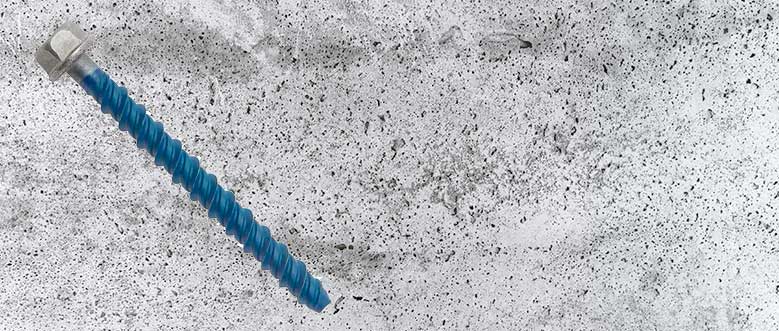
GB stud bolts are high-strength fasteners, integral to numerous industrial applications, particularly within the petrochemical, power generation, and infrastructure sectors. Defined by national standards (GB – Guobiao), these bolts are characterized by a threaded portion along their entire length, designed for insertion through pre-drilled holes in assembled components and secured using nuts on both ends. They occupy a crucial position in the mechanical fastening chain, offering superior tensile strength and load-bearing capacity compared to bolts with threaded ends. This guide provides a comprehensive technical overview of GB stud bolts, covering material science, manufacturing processes, performance characteristics, potential failure modes, and relevant industry standards. A key industry pain point addressed is ensuring consistent material quality and adherence to stringent dimensional tolerances to prevent premature failure in critical applications like pressure vessel assembly and flange connections.
Material Science & Manufacturing
GB stud bolts are predominantly manufactured from carbon steel, alloy steel, and stainless steel. Common carbon steel grades include Q235, 45#, and 60#, selected based on the required tensile strength and yield strength. Alloy steel options, such as 35CrMo4, 42CrMo4, and 10CrMo9-10, provide enhanced strength, toughness, and resistance to creep at elevated temperatures. Stainless steel grades, notably 304/304L and 316/316L, are employed for corrosion resistance in harsh environments. The manufacturing process typically begins with hot forging or cold heading to form the basic stud shape. Following forming, the stud undergoes a machining process to achieve precise thread dimensions, adhering to GB/T 192-2000 (Metric threads) standards. Heat treatment, including quenching and tempering, is critical for achieving the desired mechanical properties. Surface treatment, such as zinc plating, phosphate coating, or PTFE coating, is applied to enhance corrosion resistance and facilitate assembly. Parameter control during heat treatment (temperature, time, cooling rate) is paramount, as it directly impacts the microstructure – specifically, the ferrite-pearlite ratio in carbon steels and the austenite-martensite transformation in alloy steels. Improper heat treatment can lead to reduced ductility and increased susceptibility to brittle fracture. Thread rolling is often preferred over thread cutting, as it imparts compressive residual stresses that improve fatigue life.
Performance & Engineering
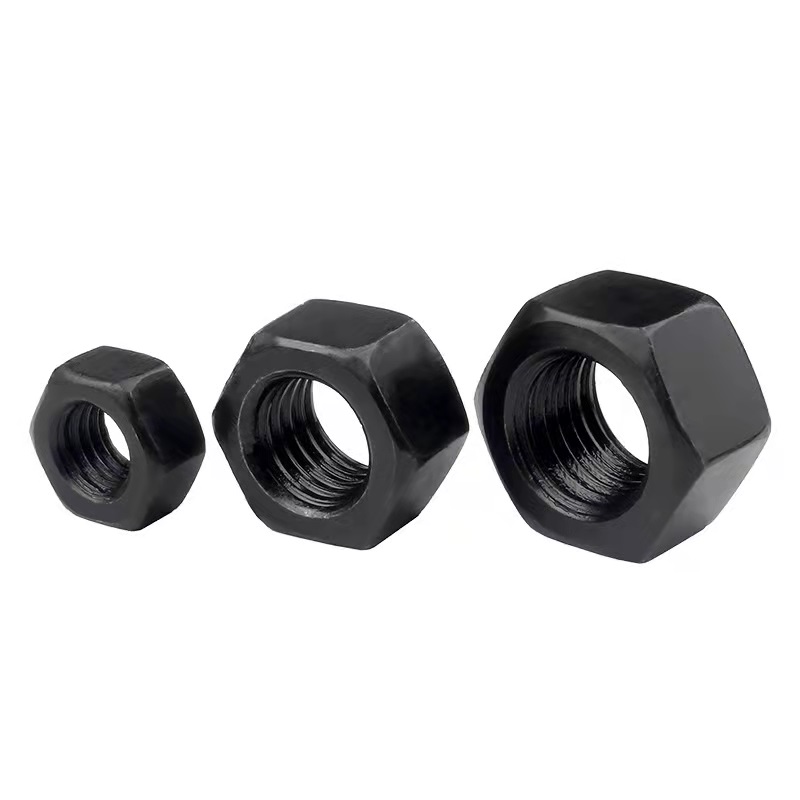
The performance of GB stud bolts is governed by several key engineering principles. Tensile strength, yield strength, and elongation are fundamental mechanical properties defining the bolt’s load-carrying capacity. Pre-load, the initial tension applied to the bolt during tightening, is crucial for preventing joint separation under service loads. The calculation of pre-load relies on torque-tension relationships, which are influenced by thread friction coefficient, bolt diameter, and nut material. Fatigue performance is a significant concern in applications involving cyclic loading. Factors influencing fatigue life include stress concentration at the thread root, surface finish, and the presence of corrosive environments. Creep resistance is paramount in high-temperature applications, where sustained loads can cause slow deformation over time. Finite Element Analysis (FEA) is often employed to optimize stud bolt geometry and predict stress distribution under complex loading scenarios. Environmental resistance, particularly corrosion resistance, is critical for ensuring long-term reliability. Galvanic corrosion can occur when dissimilar metals are in contact in a corrosive environment, necessitating careful material selection and the use of insulating washers. Compliance requirements, such as ASME Section VIII Div. 1 (Pressure Vessels) and PED (Pressure Equipment Directive), dictate specific design and testing criteria for stud bolts used in critical pressure-containing systems.
Technical Specifications
| Grade | Tensile Strength (MPa) | Yield Strength (MPa) | Hardness (HB) | Material | Typical Applications |
|---|---|---|---|---|---|
| 4.8 | 400-500 | 240-330 | 140-180 | Q235 | Low-stress applications, general machinery |
| 8.8 | 800-900 | 500-600 | 245-325 | 45# | General industrial applications, automotive |
| 10.9 | 980-1100 | 690-830 | 320-380 | 35CrMo4 | High-strength applications, pressure vessels |
| 12.9 | 1100-1200 | 900-1100 | 340-400 | 42CrMo4 | Critical applications, high-temperature service |
| 304/304L | 500-700 | 205-310 | 180-210 | 304/304L Stainless Steel | Corrosive environments, food processing |
| 316/316L | 620-800 | 280-380 | 190-230 | 316/316L Stainless Steel | Highly corrosive environments, marine applications |
Failure Mode & Maintenance
GB stud bolts are susceptible to several failure modes. Fatigue failure, resulting from cyclic loading, often initiates at stress concentration points, such as the thread root. Hydrogen embrittlement, caused by the ingress of hydrogen into the metal lattice, can lead to brittle fracture, particularly in high-strength steels. Corrosion, particularly pitting corrosion in stainless steels, weakens the bolt and reduces its load-carrying capacity. Thread stripping can occur due to excessive tightening torque or the use of incompatible nut materials. Creep, at elevated temperatures, can result in gradual deformation and eventual failure. Failure analysis typically involves visual inspection, metallographic examination, and fracture surface analysis (using Scanning Electron Microscopy – SEM). Preventative maintenance includes regular inspection for corrosion, proper lubrication of threads, and adherence to recommended tightening torques. Periodic re-tightening may be necessary to compensate for creep relaxation or gasket settlement. Non-Destructive Testing (NDT) methods, such as Magnetic Particle Inspection (MPI) and Ultrasonic Testing (UT), can be employed to detect subsurface defects before they lead to catastrophic failure. Replacement of corroded or damaged stud bolts is essential to maintain the integrity of the assembled structure.
Industry FAQ
Q: What is the impact of thread form on the fatigue life of a GB stud bolt?
A: The thread form significantly impacts fatigue life. A sharper thread root creates a higher stress concentration, reducing fatigue resistance. A rolled thread form, as opposed to a cut thread form, introduces compressive residual stresses at the surface, which enhance fatigue life by delaying crack initiation and propagation. The root radius of the thread also plays a crucial role, with larger radii generally improving fatigue performance.
Q: How does the material grade selection affect corrosion resistance?
A: Material grade selection is paramount for corrosion resistance. Carbon steel grades are susceptible to corrosion and require protective coatings. Alloy steels offer improved corrosion resistance compared to carbon steels, but stainless steel grades (304/304L and 316/316L) provide the highest level of corrosion protection. 316/316L is particularly resistant to pitting corrosion in chloride-containing environments.
Q: What are the critical considerations when using GB stud bolts in high-temperature applications?
A: In high-temperature applications, creep resistance and oxidation resistance are critical. Alloy steel grades with molybdenum and chromium additions (e.g., 42CrMo4) are preferred for their creep strength. Surface treatments, such as aluminizing, can provide oxidation protection. The bolt pre-load must be carefully controlled to account for thermal expansion and contraction.
Q: What is the importance of proper torque control during installation?
A: Proper torque control is essential to achieve the desired pre-load. Under-tightening can lead to joint separation, while over-tightening can cause thread stripping or bolt failure. The torque-tension relationship is influenced by thread friction coefficient and surface finish. Calibrated torque wrenches and controlled tightening procedures are necessary to ensure consistent and accurate pre-load.
Q: How do international standards impact the quality control of GB stud bolts?
A: International standards such as ISO 898-1 (Mechanical properties of fasteners) and ASTM A307/A307M (Carbon steel bolts and studs for general purposes) define the requirements for material composition, mechanical properties, dimensional tolerances, and testing procedures. Adherence to these standards ensures consistent quality and reliability.
Conclusion
GB stud bolts represent a critical fastening solution across a broad spectrum of industrial applications. Their performance relies heavily on a confluence of factors, encompassing material selection, precise manufacturing processes, and diligent engineering considerations. The proper understanding of their mechanical properties, potential failure modes, and adherence to relevant industry standards are essential for ensuring the long-term integrity and safety of assembled structures. Selecting the correct grade and material for the specific application environment, coupled with meticulous installation procedures, is paramount.
Moving forward, advancements in materials science, particularly the development of high-strength, corrosion-resistant alloys, will continue to enhance the performance of GB stud bolts. Increased adoption of digital technologies, such as FEA and predictive maintenance algorithms, will enable engineers to optimize bolt designs and proactively identify potential failure risks. Maintaining a robust quality control system aligned with international standards will be crucial for sustaining the reliability and safety of these vital fasteners.