
Introduction
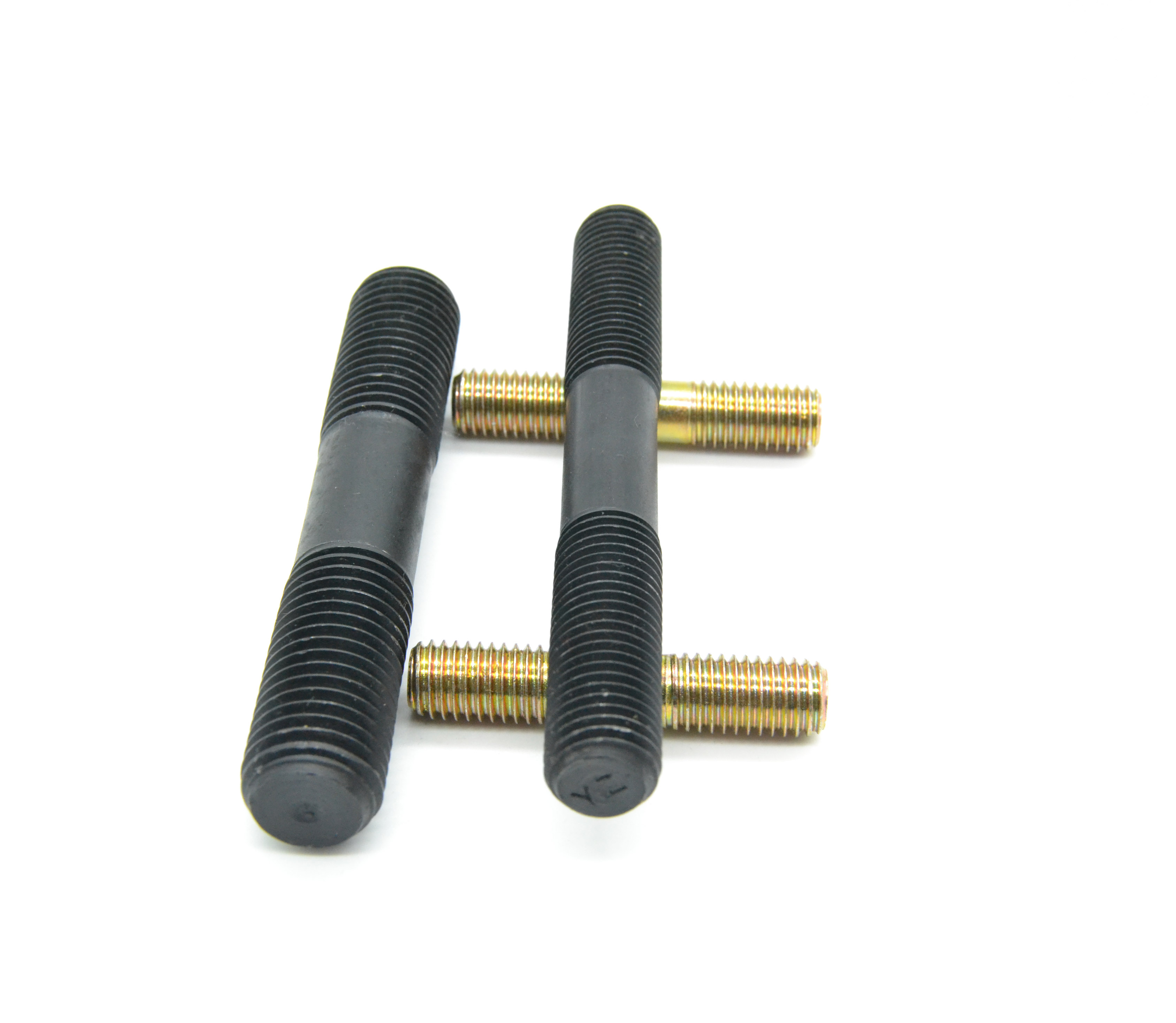
DIN 938 stud bolts are non-headed fasteners, threaded along their entire length, primarily used in applications requiring a strong, secure connection and allowing for ease of disassembly. These bolts differ from traditional bolts as they lack a head and rely on a nut to provide the clamping force. They find extensive use in pressure vessel assembly, flange connections, and machinery where frequent maintenance or adjustments are necessary. Their design facilitates precise positioning and offers superior fatigue resistance compared to fully threaded bolts. The performance of DIN 938 stud bolts is critically dependent on material selection, thread accuracy, and proper installation torque, making a thorough understanding of these factors essential for engineers and procurement specialists. Core pain points within the industry relate to consistent material quality, achieving the correct preload, and preventing galling during assembly, particularly in high-temperature or corrosive environments.
Material Science & Manufacturing
DIN 938 stud bolts are commonly manufactured from carbon steel, alloy steel, and stainless steel grades, with material selection driven by the application's operational environment and load requirements. Carbon steels (e.g., SAE 1045, ASTM A307) offer high strength and are suitable for general applications, but require protective coatings to prevent corrosion. Alloy steels (e.g., 40CrMo, ASTM A193 Grade B8) provide enhanced strength, toughness, and hardenability, making them ideal for high-stress, high-temperature, or corrosive environments. Stainless steels (e.g., 304, 316, ASTM A193 Grade B8M) exhibit excellent corrosion resistance, making them suitable for applications in chemical processing, marine environments, and food processing.
The manufacturing process typically involves cold heading or machining followed by thread rolling. Cold heading provides excellent material flow, enhancing the bolt’s mechanical properties, particularly its tensile strength. Thread rolling forms the threads without removing material, increasing fatigue strength compared to machining. Key parameters during manufacturing include controlling the cold working rate during heading to avoid internal stresses, maintaining precise thread pitch and form to ensure proper engagement with the nut, and employing heat treatment processes (e.g., quenching and tempering) to achieve the desired hardness and ductility. Surface treatments such as zinc plating, hot-dip galvanizing, or PTFE coating are often applied to enhance corrosion resistance and reduce friction during assembly. Quality control measures include dimensional checks, hardness testing, tensile testing, and non-destructive testing (NDT) such as magnetic particle inspection (MPI) or ultrasonic testing (UT) to detect surface and internal defects.
Performance & Engineering
The performance of DIN 938 stud bolts is governed by several engineering principles. Tensile strength is a critical parameter, dictating the maximum load the bolt can withstand before fracturing. Yield strength defines the stress level at which the bolt begins to deform permanently. Preload, the initial tension applied to the bolt during tightening, is crucial for maintaining joint integrity and preventing loosening under vibration or dynamic loading. Proper preload ensures optimal clamping force and distributes the load evenly across the joint surfaces.
Environmental resistance is also paramount. Corrosion can significantly reduce a bolt’s strength and lead to failure. In corrosive environments, selecting appropriate materials and applying protective coatings are essential. Temperature fluctuations can affect a bolt’s mechanical properties; high temperatures can reduce strength, while low temperatures can increase brittleness. Fatigue resistance is important in applications subject to cyclical loading. Thread form and surface finish influence fatigue life. Compliance requirements vary depending on the application and industry. Pressure vessel applications, for example, adhere to ASME Boiler and Pressure Vessel Code Section VIII, Division 1, which specifies requirements for bolt materials, installation, and inspection. Proper installation procedures, including correct tightening torque and lubrication, are critical for achieving optimal performance and preventing failures. Force analysis utilizing Finite Element Analysis (FEA) can optimize bolt preload and geometry to maximize joint reliability.
Technical Specifications
| Diameter (mm) | Thread Pitch (mm) | Material Grade | Tensile Strength (MPa) |
|---|---|---|---|
| M8 | 1.25 | 8.8 | 800 |
| M10 | 1.5 | 8.8 | 800 |
| M12 | 1.75 | 8.8 | 800 |
| M16 | 2.0 | 8.8 | 800 |
| M20 | 2.5 | 8.8 | 800 |
| M24 | 3.0 | 8.8 | 800 |
Failure Mode & Maintenance
DIN 938 stud bolts are susceptible to several failure modes. Fatigue cracking can occur under cyclical loading, initiating at stress concentrations such as thread roots or surface imperfections. Hydrogen embrittlement, particularly in high-strength steels, can lead to brittle fracture in the presence of hydrogen. Corrosion, as previously mentioned, weakens the bolt material and promotes pitting corrosion, leading to premature failure. Galling, a form of adhesive wear, can occur during assembly or disassembly, particularly with improperly lubricated or incompatible materials. Thread stripping can result from excessive tightening torque or damaged threads.
Preventative maintenance is crucial for ensuring long-term reliability. Regular visual inspections should be conducted to identify signs of corrosion, damage, or deformation. Periodic torque checks are essential to maintain proper preload. Lubrication with appropriate anti-seize compounds can prevent galling and facilitate disassembly. In corrosive environments, protective coatings should be inspected and reapplied as needed. If a bolt exhibits signs of fatigue cracking or other significant damage, it should be replaced immediately. Detailed documentation of inspection and maintenance activities is recommended. Failure analysis should be performed on any failed bolts to identify the root cause and prevent future occurrences. This may involve metallographic examination, fracture surface analysis, and chemical composition analysis.
Industry FAQ
Q: What is the significance of the material grade marking on a DIN 938 stud bolt?
A: The material grade marking indicates the steel alloy and its corresponding mechanical properties, such as tensile strength and yield strength. A higher grade generally signifies greater strength and durability. For example, 8.8 indicates a tensile strength of approximately 800 MPa and a yield strength of 80% of the tensile strength. Knowing the material grade is critical for ensuring the bolt can withstand the intended load and operating conditions.
Q: What is the recommended torque for tightening a DIN 938 stud bolt?
A: Recommended torque values depend on the bolt diameter, material grade, lubrication, and the joint’s specific requirements. Torque charts provided by bolt manufacturers or engineering handbooks should be consulted. Applying excessive torque can lead to thread stripping or bolt fracture, while insufficient torque can result in joint loosening. Using a calibrated torque wrench is crucial for accurate tightening.
Q: How does thread engagement length affect the performance of a DIN 938 stud bolt?
A: Sufficient thread engagement length is essential for distributing the load effectively and preventing thread stripping. A minimum engagement length of at least 1.5 times the bolt diameter is generally recommended. Insufficient engagement reduces the bolt’s load-carrying capacity and increases the risk of failure.
Q: What are the common causes of corrosion in DIN 938 stud bolts and how can it be prevented?
A: Corrosion can be caused by exposure to moisture, chemicals, or saline environments. Galvanic corrosion can occur when dissimilar metals are in contact. Preventing corrosion involves selecting corrosion-resistant materials (e.g., stainless steel), applying protective coatings (e.g., zinc plating, hot-dip galvanizing), using compatible materials, and implementing proper maintenance practices.
Q: What are the advantages of using DIN 938 stud bolts over fully threaded bolts in flange connections?
A: DIN 938 stud bolts offer several advantages in flange connections. The unthreaded portion of the bolt allows for greater flexibility in positioning and alignment. They provide a more consistent clamping force due to the reduced thread stress. The lack of a bolt head simplifies installation and maintenance in tight spaces. They often exhibit superior fatigue resistance compared to fully threaded bolts.
Conclusion
DIN 938 stud bolts are indispensable fasteners in numerous industrial applications, characterized by their robust design and versatility. Understanding the nuances of their material science, manufacturing processes, and performance characteristics is crucial for ensuring reliable and safe operation. The selection of appropriate materials, proper installation techniques, and consistent maintenance practices are paramount for mitigating potential failure modes and maximizing the lifespan of these critical components.
The continued advancement in fastener technology emphasizes the importance of corrosion-resistant alloys, advanced coatings, and sophisticated analytical tools for optimizing bolt performance. Future developments may focus on incorporating smart fastener technologies, such as strain gauges or wireless sensors, to monitor preload and detect potential failures in real-time. Adhering to established industry standards and best practices remains essential for maintaining the integrity and reliability of bolted joints.