
Introduction
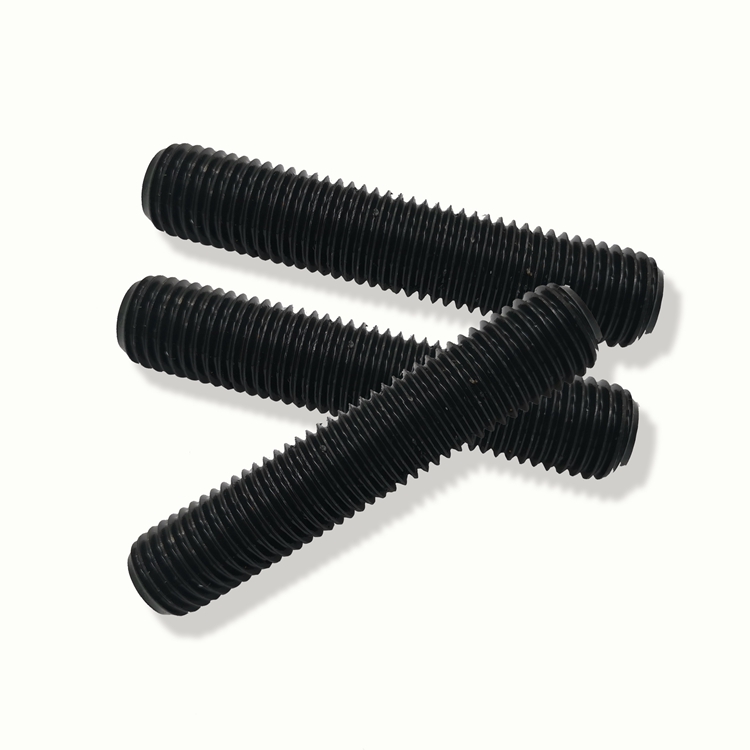
Carbon steel stud bolts are a crucial fastening element within numerous industrial applications, particularly in sectors demanding high tensile strength and reliable joint integrity. These bolts, distinguished by their threaded ends at both ends (a 'stud' configuration), are primarily employed in high-pressure and high-temperature systems, flange connections, and as critical components in pressure vessel assemblies. They are categorized within the broader family of externally threaded fasteners but differ from conventional bolts by eliminating the need for a nut on one side of the joint, often being screwed into a tapped hole. Their performance is deeply intertwined with the carbon steel alloy used, its heat treatment, and the applied surface finish. The core function of a stud bolt extends beyond simple clamping force; they contribute significantly to the structural integrity and operational safety of complex industrial systems. This guide provides a comprehensive technical overview of carbon steel stud bolts, encompassing material science, manufacturing processes, performance characteristics, failure modes, and relevant industry standards.
Material Science & Manufacturing
The predominant material for carbon steel stud bolts is medium to high carbon steel, typically conforming to standards like ASTM A193 Grade B7, A307 Grade A, or A574. The specific carbon content dictates the steel’s hardness, tensile strength, and ductility. Higher carbon content (typically 0.25% - 0.55% for Grade B7) increases hardness and tensile strength but reduces weldability and ductility. Lower carbon content (typically below 0.30% for Grade A) provides better ductility and weldability but lower strength. The manufacturing process begins with steel billet production, followed by hot forging to create the stud bolt’s basic shape. Critical parameters during forging include controlling the forging temperature, deformation rate, and die geometry to ensure grain flow aligns with the axis of the bolt, maximizing tensile strength. Subsequent machining operations, including rolling of threads (typically using a thread rolling process for improved fatigue resistance compared to cutting) and precise diameter control, are crucial. Heat treatment, often involving quenching and tempering, is then applied to achieve the desired mechanical properties. Quenching hardens the steel, while tempering reduces brittleness. Surface treatments such as zinc plating, phosphate coating, or specialized coatings (e.g., PTFE, Xylan) are commonly applied to enhance corrosion resistance and reduce galling. Chemical composition analysis is performed throughout the process to ensure adherence to specified standards. The material microstructure, particularly the presence of inclusions and grain size, significantly impacts bolt performance.
Performance & Engineering
The performance of carbon steel stud bolts is governed by several engineering principles. Tensile strength, yield strength, and elongation are primary mechanical properties defining a bolt's load-bearing capacity. Preload, the initial tension applied to the bolt during tightening, is critical; insufficient preload can lead to joint loosening under dynamic loads, while excessive preload can cause bolt yielding or failure. The bolt’s performance under fluctuating loads (fatigue resistance) is crucial, particularly in applications subject to vibration or cyclic stresses. Fatigue life is significantly influenced by the surface finish of the threads and the presence of stress concentrators (e.g., sharp corners, defects). Environmental resistance is also vital; corrosion can degrade the bolt material, reducing its cross-sectional area and ultimately leading to failure. The selection of an appropriate surface coating depends on the operating environment (e.g., seawater, acidic conditions, high temperatures). Furthermore, the bolt's behavior under elevated temperatures needs consideration, as both strength and creep resistance decrease with increasing temperature. Force analysis involves calculating the clamping force generated by the bolt based on its preload, diameter, and material properties. Compliance requirements, such as those stipulated by ASME Boiler and Pressure Vessel Code Section VIII Division 1, dictate the minimum tensile strength, hardness, and other critical parameters. Proper installation torque is crucial and is calculated based on bolt size, material, and surface condition utilizing established torque-tension relationships.
Technical Specifications
| Grade | Tensile Strength (MPa) | Yield Strength (MPa) | Hardness (Rockwell C) | Typical Applications | Corrosion Resistance |
|---|---|---|---|---|---|
| ASTM A193 Grade B7 | 690 - 827 | 483 - 620 | 30-34 | High-pressure flanges, pressure vessels | Moderate (requires coatings for severe environments) |
| ASTM A307 Grade A | 400 - 517 | 241 - 345 | 20-25 | General purpose fastening, structural applications | Low (requires coatings) |
| ASTM A574 | 517 - 690 | 310 - 448 | 25-32 | High-strength applications, elevated temperature service | Moderate (requires coatings for severe environments) |
| SAE J429 Grade 5 | 620 | 360 | 28-32 | Automotive, machinery, general industrial | Low (requires coatings) |
| SAE J429 Grade 8 | 830 | 590 | 33-39 | Heavy-duty applications, high-stress components | Low (requires coatings) |
| ISO 8.8 | 800 | 600 | 30-38 | General purpose, construction, automotive | Moderate (requires coatings for severe environments) |
Failure Mode & Maintenance
Carbon steel stud bolts are susceptible to several failure modes. Fatigue cracking, driven by cyclic loading, initiates at stress concentrators (e.g., thread roots, corrosion pits) and propagates until critical failure. Hydrogen embrittlement, prevalent in high-strength steels exposed to hydrogen-containing environments (e.g., sour gas), reduces ductility and promotes brittle fracture. Corrosion, particularly galvanic corrosion when dissimilar metals are in contact, weakens the bolt material. Thread stripping occurs when the tensile load exceeds the shear strength of the threads. Creep, at elevated temperatures, causes slow plastic deformation and eventual failure. Loosening, due to vibration or relaxation of preload, compromises joint integrity. Maintenance involves regular visual inspections for signs of corrosion, damage, or loosening. Periodic torque checks are crucial to maintain proper preload. Lubrication of threads during installation and re-tightening reduces friction and prevents galling. Protective coatings should be inspected and repaired as needed. In critical applications, non-destructive testing methods (e.g., ultrasonic testing, magnetic particle inspection) can detect internal flaws and assess bolt integrity. When replacing a failed stud bolt, it's essential to use a bolt of the same material grade and specification. Bolt removal should be performed carefully to avoid damaging the tapped hole.
Industry FAQ
Q: What is the impact of thread form on the fatigue life of a carbon steel stud bolt?
A: The thread form significantly impacts fatigue life. A rolled thread generally exhibits superior fatigue resistance compared to a cut thread due to the compressive residual stresses induced during the rolling process. These compressive stresses counteract tensile stresses during loading, delaying crack initiation and propagation. Additionally, the smoother surface finish of a rolled thread reduces stress concentration. Thread geometry, including pitch and root radius, also play a role; a larger root radius minimizes stress concentration.
Q: How does surface finish affect the corrosion resistance of a stud bolt?
A: A smoother surface finish reduces the number of potential nucleation sites for corrosion. Rough surfaces provide more areas where corrosive agents can initiate attack. Surface treatments, like zinc plating, galvanizing, or specialized coatings (e.g., PTFE, Xylan), create a barrier between the steel and the corrosive environment, significantly improving corrosion resistance. The quality and thickness of the coating are critical factors.
Q: What are the key considerations when selecting a stud bolt for a high-temperature application?
A: When selecting a stud bolt for high-temperature service, creep resistance is paramount. Materials like ASTM A574 are often preferred due to their improved elevated temperature performance compared to lower grade materials. The bolt’s preload must be carefully calculated, considering the reduction in strength at elevated temperatures. Oxidation resistance is also important, and appropriate coatings may be required to prevent scaling. The joint design should accommodate thermal expansion and contraction to avoid inducing excessive stress on the bolts.
Q: What is the role of preload in preventing joint loosening and fatigue failure?
A: Preload is a critical parameter. A sufficient preload creates a clamping force that opposes external loads, preventing joint separation and minimizing relative movement between the joined surfaces. This reduces the magnitude of fluctuating stresses on the bolt, thereby improving fatigue life. However, excessive preload can lead to bolt yielding or stripping of the threads. Accurate torque control during installation is essential to achieve the desired preload.
Q: What are the risks associated with using dissimilar metals in a bolted joint?
A: Using dissimilar metals can lead to galvanic corrosion, where one metal corrodes preferentially when in electrical contact with another in the presence of an electrolyte. The potential difference between the metals drives the corrosion process. To mitigate this risk, it's crucial to select materials with similar electrochemical potentials or to use insulating materials (e.g., gaskets, sleeves) to break the electrical contact. Coatings can also provide a barrier against corrosion.
Conclusion
Carbon steel stud bolts remain indispensable components in a vast array of industrial applications, their reliable performance being a cornerstone of many critical systems. A thorough understanding of their material properties, manufacturing processes, and failure mechanisms is paramount for engineers and procurement professionals. Selecting the appropriate grade of steel, implementing proper heat treatment and surface finishing, and ensuring accurate installation torque are vital to maximizing bolt life and maintaining joint integrity.
Future advancements in stud bolt technology will likely focus on developing new materials with enhanced corrosion resistance and strength-to-weight ratios. Furthermore, the integration of smart fasteners equipped with sensors to monitor preload and detect early signs of failure will offer opportunities for predictive maintenance and improved operational safety. Continued adherence to established industry standards, coupled with ongoing research and development, will ensure the continued reliability of carbon steel stud bolts in demanding industrial environments.