
Introduction
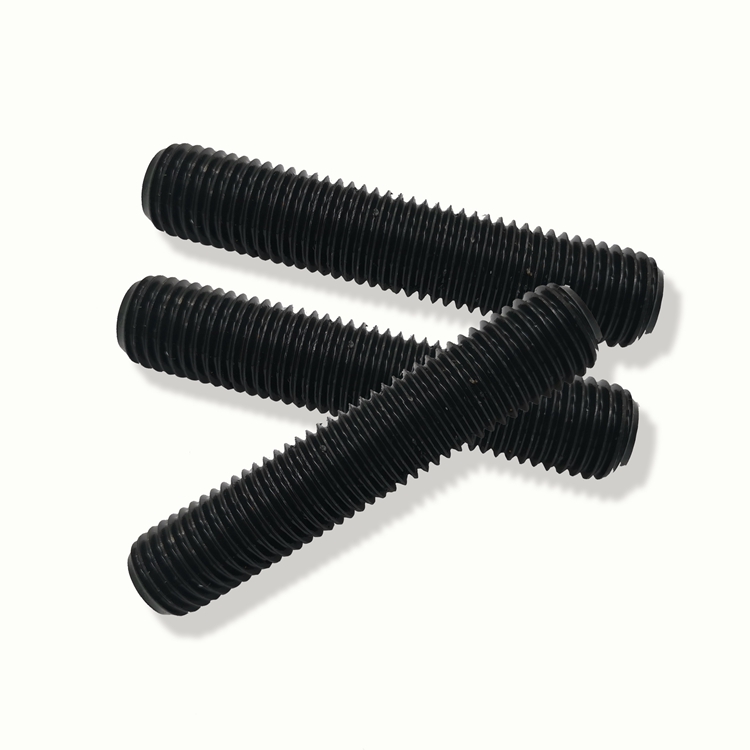
35crmoa stud bolts are high-strength fasteners composed of medium carbon alloy steel, primarily utilized in critical applications demanding robust mechanical properties and resistance to elevated temperatures. They occupy a significant position in the power generation, petrochemical, and general industrial sectors, functioning as essential components in flanged joints, pressure vessels, and structural assemblies. These bolts differ from standard threaded rods by possessing a shoulder diameter larger than the thread diameter, providing enhanced support and load distribution. Core performance characteristics include high tensile strength, yield strength, fatigue resistance, and creep resistance at elevated temperatures, making them suitable for high-stress, high-temperature service environments. A critical industry pain point revolves around ensuring consistent material quality and traceability to mitigate the risk of premature failure in demanding applications, particularly those subject to rigorous safety regulations.
Material Science & Manufacturing
The base material for 35crmoa stud bolts is a medium carbon alloy steel conforming to EN 10222-3 standards. The ‘35’ denotes a minimum tensile strength of 350 MPa, ‘CrMo’ signifies the presence of chromium and molybdenum alloying elements, and ‘a’ indicates the quality grade according to EN standards. The chemical composition typically includes 0.32-0.43% Carbon, 0.80-1.10% Chromium, 0.15-0.30% Molybdenum, with controlled levels of Manganese, Silicon, Phosphorus, and Sulfur. These alloying elements contribute to enhanced hardenability, toughness, and creep resistance. Manufacturing begins with steelmaking, often utilizing an electric arc furnace (EAF) or basic oxygen furnace (BOF) followed by secondary refining processes like vacuum degassing to remove dissolved gases and impurities. The steel billet is then hot-rolled into bar stock. Critical parameters during rolling include temperature control to achieve the desired grain structure and dimensional accuracy. Subsequently, the bar stock undergoes cold drawing to achieve the final dimensions and surface finish. Thread rolling, a cold forming process, is preferred for creating threads as it enhances surface hardness and fatigue strength compared to machining. Heat treatment is crucial, typically involving austenitizing followed by quenching and tempering. Precise control of austenitizing temperature and quenching medium (oil or water) is essential to achieve the desired microstructure – a tempered martensitic structure offering optimal strength and toughness. Post-heat treatment, the bolts undergo dimensional inspection, non-destructive testing (NDT) like magnetic particle inspection (MPI) or ultrasonic testing (UT) to detect surface and subsurface flaws, and finally, coating with a protective layer like phosphate or zinc plating to enhance corrosion resistance.
Performance & Engineering
The performance of 35crmoa stud bolts is governed by factors including applied load, temperature, and environmental conditions. Force analysis dictates that the bolt must withstand tensile stress from clamping force, shear stress from external loads, and bending stress from misalignment. Finite element analysis (FEA) is commonly employed to optimize bolt geometry and predict stress distribution under complex loading scenarios. Environmental resistance is particularly important in corrosive environments. The alloy steel’s inherent corrosion resistance is improved by surface coatings. However, prolonged exposure to harsh chemicals or saltwater can lead to corrosion, reducing the bolt’s load-carrying capacity. Compliance requirements vary depending on the application and region. For pressure vessels, adherence to ASME Boiler and Pressure Vessel Code Section VIII, Division 1 is critical. For power generation, standards like ASTM A193 Grade B16 are often mandated. Functional implementation involves proper bolt tightening procedures using calibrated torque wrenches or hydraulic tensioners. The correct tightening torque is crucial to achieve the desired preload, ensuring adequate clamping force and preventing joint separation. Failure to achieve proper preload can lead to loosening under vibration or dynamic loading. The influence of creep at elevated temperatures must also be considered. Creep is the time-dependent deformation of a material under sustained stress, and can lead to bolt elongation and eventual failure. Selecting appropriate bolt dimensions and materials, and controlling operating temperature are critical to mitigate creep effects.
Technical Specifications
| Property | Specification | Testing Standard | Typical Value |
|---|---|---|---|
| Tensile Strength | ≥ 350 MPa | EN 10002-1 | 400-450 MPa |
| Yield Strength | ≥ 240 MPa | EN 10002-1 | 280-320 MPa |
| Elongation | ≥ 18% | EN 10002-1 | 20-22% |
| Hardness | 28-34 HRC | EN ISO 6508-1 | 30 HRC |
| Chemical Composition (Cr) | 0.80-1.10% | EN 10083 | 0.95% |
| Chemical Composition (Mo) | 0.15-0.30% | EN 10083 | 0.22% |
Failure Mode & Maintenance
35crmoa stud bolts are susceptible to several failure modes. Fatigue cracking is a common issue in dynamically loaded applications, initiated by stress concentrations at the thread root or under the bolt head. Corrosion is a significant concern, particularly in environments containing chlorides or sulfides, leading to pitting corrosion and reduced cross-sectional area. Hydrogen embrittlement, a phenomenon where hydrogen atoms diffuse into the metal lattice, causing embrittlement and premature failure, can occur in high-strength bolts exposed to hydrogen-containing environments. Creep failure occurs at elevated temperatures due to time-dependent deformation under sustained stress. Thread stripping, resulting from excessive load or improper tightening, can lead to joint failure. Maintenance involves regular visual inspections for signs of corrosion, cracking, or deformation. Torque checks should be performed periodically to ensure adequate preload. Lubrication of threads can prevent galling and facilitate easy removal. In corrosive environments, protective coatings should be inspected and re-applied as needed. If cracking is detected, the bolt should be replaced immediately. Non-destructive testing (NDT) methods, such as magnetic particle inspection or ultrasonic testing, can be employed to detect subsurface flaws that are not visible to the naked eye. Proper storage conditions are also crucial; bolts should be stored in a dry, protected environment to prevent corrosion.
Industry FAQ
Q: What is the impact of varying the tempering temperature during heat treatment on the final mechanical properties of the 35crmoa stud bolt?
A: Varying the tempering temperature directly impacts the balance between hardness and toughness. Higher tempering temperatures reduce hardness and tensile strength, but significantly increase ductility and impact toughness. Conversely, lower tempering temperatures increase hardness and strength, but reduce ductility and impact resistance. Precise control of tempering temperature is therefore vital to achieve the optimal mechanical properties for the intended application. A typical tempering range is 200-250°C, carefully calibrated to achieve the desired balance.
Q: How does the surface finish of the bolt influence its fatigue life, and what are acceptable surface roughness parameters?
A: Surface finish profoundly affects fatigue life. Rough surfaces introduce stress concentrations, initiating fatigue cracks at lower stress levels. A smoother surface reduces stress concentration and extends fatigue life. Acceptable surface roughness parameters, as defined by ISO 4287, typically specify an Ra (average roughness) value of ≤ 1.6 µm for threaded portions and ≤ 2.5 µm for unthreaded areas. Electropolishing or shot peening can be employed to improve surface finish and introduce compressive residual stresses, further enhancing fatigue resistance.
Q: What are the key considerations when selecting a protective coating for 35crmoa stud bolts used in a sour gas environment (H2S)?
A: Sour gas environments are highly corrosive due to the presence of hydrogen sulfide (H2S). Standard zinc plating offers limited protection. For sour gas applications, specialized coatings such as sulfidation coatings (e.g., zinc-nickel), duplex coatings (e.g., zinc + chromate conversion coating), or ceramic coatings are necessary. The coating must be resistant to sulfide stress cracking (SSC) and provide a barrier against H2S penetration. Compliance with NACE MR0175/ISO 15156 is essential to ensure the coating’s suitability for sour service.
Q: What is the role of preload in preventing joint loosening, and how is it accurately measured and maintained?
A: Preload, or the initial tensile stress induced in the bolt, is crucial for preventing joint loosening. Preload creates friction between the bolted surfaces, resisting external loads and vibrations. Accurate preload measurement is achieved using calibrated torque wrenches (for lower strength bolts) or hydraulic tensioners (for high-strength bolts). Hydraulic tensioners provide more precise control and are preferred for critical applications. Maintaining preload requires proper tightening procedures, periodic torque checks, and the use of locking mechanisms like lock washers or chemical thread lockers.
Q: How do variations in material composition (within the EN 10222-3 standard) impact the corrosion resistance and weldability of 35crmoa stud bolts?
A: Variations in chemical composition within the EN 10222-3 standard can subtly impact corrosion resistance and weldability. Higher levels of chromium and molybdenum generally improve corrosion resistance, particularly in elevated temperature environments. However, increased carbon content can reduce weldability, increasing the risk of cracking during welding. Careful control of the carbon equivalent (CE) value is crucial for ensuring adequate weldability. The standard provides guidelines for acceptable compositional ranges to balance mechanical properties, corrosion resistance, and weldability.
Conclusion
35crmoa stud bolts represent a critical fastening solution for demanding industrial applications requiring high strength, temperature resistance, and reliability. Their performance is intricately linked to material composition, manufacturing processes, and proper engineering considerations. Maintaining precise control over these factors is paramount to preventing premature failure and ensuring the long-term integrity of bolted joints.
The selection and application of 35crmoa stud bolts necessitate a thorough understanding of relevant industry standards, potential failure modes, and appropriate maintenance procedures. Future advancements in materials science and coating technologies will likely lead to further improvements in corrosion resistance and fatigue life, extending the service life of these essential components and minimizing operational risks.