
Introduction
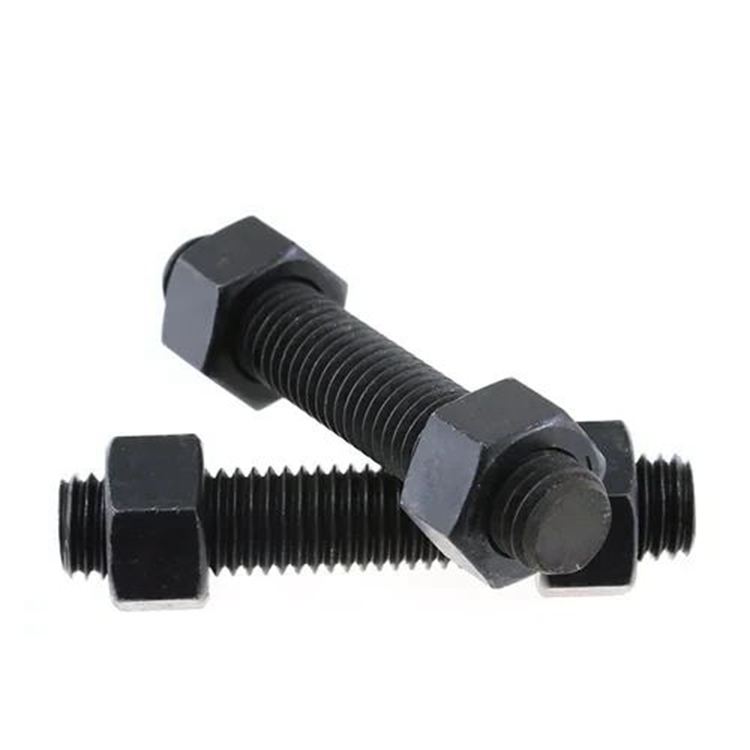
ISO stud bolts are externally threaded fasteners, typically used in applications requiring high clamping force and resistance to loosening. Positioned within the broader fastener industry, they function as critical components in bolted joints across a wide spectrum of engineering disciplines including pressure vessel construction, pipeline systems, petrochemical processing, and structural steelwork. Unlike through-bolts, stud bolts do not have a head at one end; both ends are threaded, allowing for precise control of tension and facilitating use with nuts and washers on both sides of the joint. Their core performance characteristics revolve around tensile strength, yield strength, fatigue resistance, and corrosion protection, all dictated by material grade, thread form, and surface treatment. The increasing demand for high-integrity bolted joints in critical applications is driving advancements in stud bolt manufacturing and quality control.
Material Science & Manufacturing
ISO stud bolts are commonly manufactured from carbon steel, alloy steel, and stainless steel. Carbon steel grades like ASTM A193 B7 and B8 are prevalent due to their cost-effectiveness and adequate strength. Alloy steel, such as ASTM A320 Grade L7, offers superior strength and toughness at elevated temperatures. Stainless steels (e.g., ASTM A276 Type 304, 316) provide excellent corrosion resistance. The manufacturing process begins with the selection of appropriate bar stock, followed by cold forming or hot forging to achieve the desired shape. Cold forming enhances the material's tensile strength through work hardening. Critical parameters in the manufacturing process include die design, forming pressure, and lubrication. Thread rolling, rather than thread cutting, is preferred as it maintains the grain flow of the material, improving fatigue life. Heat treatment, including quenching and tempering, is essential to achieve the specified mechanical properties. Surface treatments like zinc plating, phosphate coating, or PTFE coating are applied to enhance corrosion resistance and reduce friction. Dimensional accuracy is maintained through rigorous quality control checks, including thread gauging and non-destructive testing (NDT) methods like magnetic particle inspection (MPI) and ultrasonic testing (UT) to detect surface and internal flaws.
Performance & Engineering
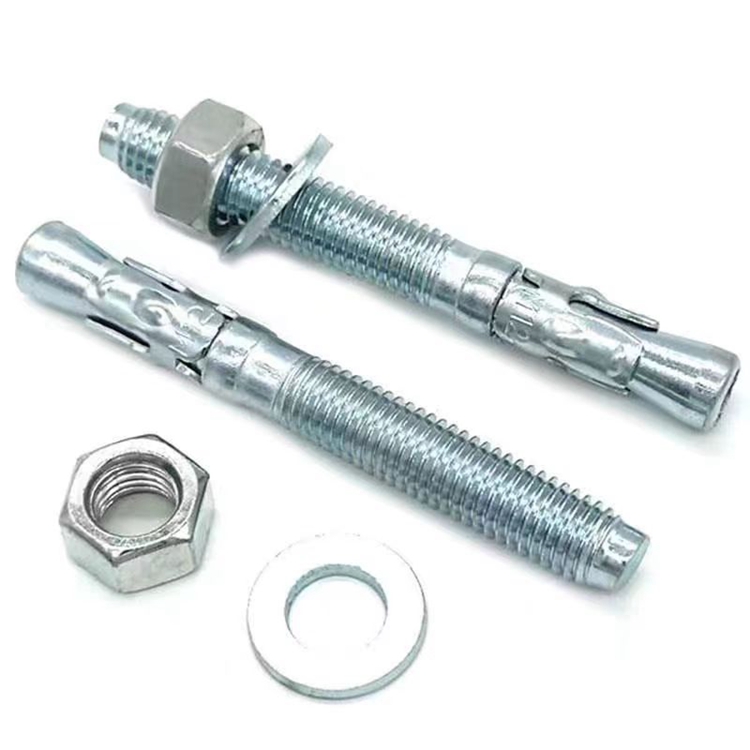
The performance of ISO stud bolts is fundamentally governed by their ability to withstand applied loads without failure. Force analysis, including tensile, shear, and combined loading, is crucial for proper selection. Preload, or the initial tension applied to the bolt, is a critical factor in preventing joint separation and fatigue failure. The preload is typically determined using torque control methods or direct tension indicators. Environmental resistance is paramount, especially in corrosive environments. Galvanic corrosion, crevice corrosion, and pitting corrosion are common failure mechanisms. Material selection and appropriate surface treatments are essential to mitigate these risks. Compliance requirements vary depending on the application. Pressure vessel applications, governed by ASME Boiler and Pressure Vessel Code Section VIII Division 1, mandate specific stud bolt materials, dimensions, and testing procedures. Pipeline systems often adhere to API 6A or API 6D standards. Finite element analysis (FEA) is frequently employed to optimize stud bolt geometry and predict stress distribution under various loading conditions. Fatigue analysis, considering cyclic loading and environmental factors, is essential for ensuring long-term reliability. Proper tightening procedures, including torque sequencing and monitoring, are crucial to achieve the desired preload and prevent bolt failure.
Technical Specifications
| Material Grade | Tensile Strength (MPa) | Yield Strength (MPa) | Thread Type |
|---|---|---|---|
| ASTM A193 B7 | 690 | 415 | UNC/UNF |
| ASTM A193 B8 Class 2 | 860 | 550 | UNC/UNF |
| ASTM A320 Grade L7 | 790 | 517 | UNC/UNF |
| ASTM A276 Type 304 | 517 | 205 | UNC/UNF |
| ASTM A276 Type 316 | 586 | 240 | UNC/UNF |
| ISO 8.8 | 800 | 600 | Metric Coarse/Fine |
Failure Mode & Maintenance
ISO stud bolts are susceptible to several failure modes. Fatigue cracking, particularly under cyclic loading, is a common issue, often initiated at the thread root or under the nut face. Stress corrosion cracking (SCC) can occur in corrosive environments, especially with susceptible materials like stainless steel. Hydrogen embrittlement, a phenomenon where hydrogen diffuses into the metal lattice, reduces ductility and promotes cracking. Galling, a form of adhesive wear, can occur between mating threads due to insufficient lubrication or excessive preload. Thread stripping, resulting from exceeding the material’s shear strength, is another potential failure mode. Corrosion, including uniform corrosion and pitting corrosion, weakens the bolt material over time. Maintenance involves regular inspection for signs of corrosion, damage, or loosening. Applying appropriate lubricants during installation and periodic retightening (using calibrated torque wrenches or tensioning devices) are crucial preventive measures. If corrosion is detected, the studs should be replaced. Non-destructive testing (NDT) methods like dye penetrant inspection (DPI) and ultrasonic testing (UT) can be used to detect internal flaws or cracks. Proper storage in a dry, clean environment is essential to prevent corrosion during prolonged periods of inactivity.
Industry FAQ
Q: What is the difference between a stud bolt and a cap screw?
A: A stud bolt is an externally threaded fastener with no head, designed to be tightened from both ends with nuts and washers. A cap screw, conversely, has an integrated head and is typically tightened from one side. Stud bolts provide better control of preload and are preferred in applications requiring high clamping force and resistance to loosening, while cap screws are suitable for less demanding applications.
Q: How do you determine the appropriate preload for a stud bolt?
A: Preload is determined by factors such as bolt diameter, material grade, joint design, and application requirements. Common methods include using torque control (calculating torque based on friction coefficient and preload target) or direct tension indicators (DTIs) which measure the actual bolt stretch.
Q: What are the common surface treatments applied to stud bolts and why?
A: Common surface treatments include zinc plating (for corrosion resistance), phosphate coating (to improve lubricity and corrosion protection), and PTFE coating (to reduce friction and prevent galling). The selection of treatment depends on the operating environment and application requirements.
Q: How does thread form affect the performance of a stud bolt?
A: Thread form impacts stress distribution and load-carrying capacity. Unified National Coarse (UNC) and Unified National Fine (UNF) threads are common. Finer threads generally provide higher tensile strength and are less prone to stripping, while coarser threads are more resistant to damage during installation.
Q: What are the risks associated with using incompatible materials in a bolted joint?
A: Using incompatible materials can lead to galvanic corrosion, where one metal corrodes preferentially when in electrical contact with another in the presence of an electrolyte. Careful material selection, considering the electrochemical series, is crucial to minimize this risk. Isolating dissimilar metals with non-conductive materials is another preventative measure.
Conclusion
ISO stud bolts represent a crucial fastening technology in a wide range of industrial applications. Their performance is intrinsically linked to material science, manufacturing precision, and proper engineering design. Selecting the appropriate material grade, applying correct installation techniques, and implementing preventative maintenance procedures are all vital to ensure long-term reliability and prevent catastrophic failures. The continued evolution of standards and advancements in NDT techniques will further enhance the integrity and safety of bolted joints utilizing these critical components.
Looking forward, the increasing demand for lightweight materials and high-performance fasteners will drive innovation in stud bolt design and manufacturing. Research into novel materials, such as high-strength alloys and composite materials, will contribute to further improvements in strength-to-weight ratios and corrosion resistance. Advanced tightening techniques, including hydraulic tensioning, will become more prevalent to achieve precise preload control. Adoption of digital technologies, such as RFID tagging and real-time monitoring systems, will enable improved traceability and proactive maintenance, maximizing the lifespan and reliability of bolted joints.