
Introduction
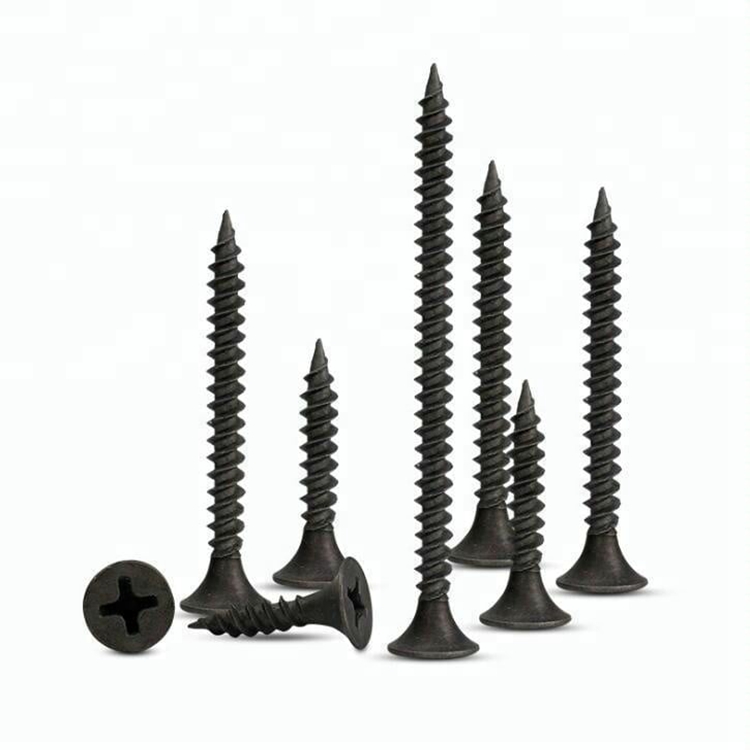
ASTM stud bolts are externally threaded fasteners, unsheathed at one end, used primarily in high-pressure and high-temperature applications. They serve as critical components in flange connections within industries such as petrochemical, power generation, and shipbuilding. Unlike fully threaded bolts, stud bolts offer reduced stress concentration in the threaded region during tightening, enhancing joint reliability. Their primary function is to provide a secure clamping force to prevent leakage or separation of flanged joints, functioning in conjunction with nuts to distribute load evenly. The significance of proper selection and installation, adhering to specific ASTM standards, is paramount for ensuring the integrity and safety of critical infrastructure. The industrial pain point centers around ensuring consistent material quality, proper heat treatment, and dimensional accuracy to prevent premature failure in demanding service environments.
Material Science & Manufacturing
ASTM stud bolts are typically manufactured from carbon steel, alloy steel, and stainless steel alloys, each exhibiting distinct mechanical and corrosion-resistant properties. Carbon steel (e.g., ASTM A193 Grade B7) provides high strength but requires protective coatings for corrosion resistance. Alloy steels (e.g., ASTM A193 Grade B16) incorporate elements like chromium and molybdenum to enhance strength, toughness, and creep resistance at elevated temperatures. Stainless steels (e.g., ASTM A193 Grade B8, A276 Type 304/316) offer superior corrosion resistance but generally have lower tensile strength compared to carbon and alloy steels.
The manufacturing process typically begins with hot forging of the raw material to create the stud bolt blank. This forging process establishes the grain structure, influencing the bolt's fatigue resistance. Following forging, the studs undergo machining operations – rolling or cutting threads – to achieve the desired thread form (UNC or UNF). Thread rolling is preferred as it cold works the metal, enhancing strength and surface finish. Critical parameters during manufacturing include precise control of forging temperature, die design for optimal grain flow, and accurate thread forming to ensure dimensional compliance with ASTM standards. Heat treatment, including quenching and tempering, is then applied to achieve the specified hardness and tensile strength. Finally, the stud bolts may receive surface treatments such as zinc plating, galvanizing, or PTFE coating to improve corrosion resistance and lubricity. Quality control is paramount throughout the process, with non-destructive testing (NDT) methods like ultrasonic testing and magnetic particle inspection used to detect internal flaws and surface defects.
Performance & Engineering
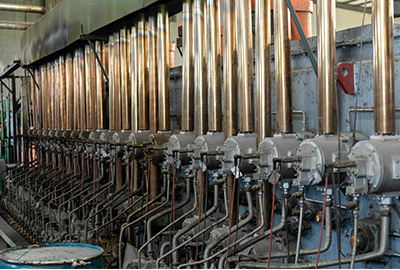
The performance of ASTM stud bolts is governed by several key engineering principles. Tensile strength, yield strength, and elongation determine the bolt’s ability to withstand applied loads without permanent deformation or fracture. Preload, the initial tension applied to the bolt during tightening, is crucial for achieving a secure clamp load and preventing joint separation. Fatigue resistance, the ability to withstand cyclic loading, is particularly important in applications subject to vibration or fluctuating pressures. Creep resistance, the ability to resist deformation under sustained load at elevated temperatures, is critical in power generation and petrochemical facilities.
Engineering calculations must account for factors such as bolt diameter, thread pitch, material properties, and applied load combinations. Stress analysis, employing finite element methods (FEM), is often used to optimize bolt design and predict performance under various loading scenarios. Environmental resistance, particularly corrosion resistance, must be carefully considered when selecting materials for specific applications. Compliance with industry standards, such as ASME Boiler and Pressure Vessel Code (Section VIII, Division 1), is mandatory to ensure safe and reliable operation. Bolted joint design requires careful attention to nut selection (hardness, thread form) and proper tightening procedures (torque control, turn-of-nut method) to achieve the desired preload and clamping force.
Technical Specifications
| ASTM Grade | Material | Tensile Strength (MPa) | Yield Strength (MPa) | Hardness (Rockwell C) |
|---|---|---|---|---|
| A193 Grade B7 | Carbon Steel | 690-827 | 414-552 | 30-34 |
| A193 Grade B16 | Alloy Steel (Cr-Mo) | 896-1034 | 655-793 | 34-38 |
| A193 Grade B8 Class 1 | Stainless Steel (304) | 517-655 | 276-345 | 85-95 |
| A193 Grade B8 Class 2 | Stainless Steel (316) | 552-724 | 276-380 | 85-95 |
| A325 | Carbon Steel | 690 | 483 | 30-34 |
| A570 | Carbon Steel | 400-550 | 240-345 | 60-85 |
Failure Mode & Maintenance
ASTM stud bolts are susceptible to several failure modes. Fatigue cracking, initiated by cyclic loading, often occurs at the thread root or under the bolt head. Stress corrosion cracking (SCC) can occur in corrosive environments, particularly with stainless steels, leading to brittle fracture. Hydrogen embrittlement, induced by exposure to hydrogen-containing environments, can reduce ductility and increase susceptibility to cracking. Thread stripping, resulting from excessive tightening or improper thread engagement, can compromise joint integrity. Corrosion, particularly galvanic corrosion in dissimilar metal joints, can weaken the bolt and lead to failure.
Preventative maintenance is crucial for extending the service life of stud bolts. Regular inspection for signs of corrosion, cracking, or deformation is essential. Proper tightening procedures, using calibrated torque wrenches or the turn-of-nut method, must be followed. Lubrication with appropriate anti-seize compounds can reduce friction and prevent galling. Periodic re-tightening may be necessary to compensate for creep or settlement. In applications exposed to corrosive environments, protective coatings should be inspected and maintained. When replacing stud bolts, it is critical to use materials and grades that meet the original specifications and to ensure proper installation techniques are employed. Failure analysis, including fractographic examination, can help identify the root cause of failure and prevent recurrence.
Industry FAQ
Q: What is the significance of the 'F432M' designation often seen with ASTM A193 stud bolts?
A: ‘F432M’ refers to the metric thread series designation. A193 bolts are available in both Unified National Coarse (UNC) and Unified National Fine (UNF) inch thread series, as well as metric thread series. The 'M' indicates a metric thread, defining the pitch and dimensions based on the ISO metric standard. Selecting the correct thread series is critical for compatibility with the mating nut and flange.
Q: How does the heat treatment process affect the performance of a B7 stud bolt?
A: Heat treatment, specifically quenching and tempering, is vital for achieving the desired mechanical properties of a B7 stud bolt. Quenching hardens the steel, increasing its strength, while tempering reduces brittleness and improves toughness. Incorrect heat treatment can lead to insufficient hardness, reduced tensile strength, or increased susceptibility to brittle fracture.
Q: What are the considerations when selecting stud bolt material for seawater applications?
A: For seawater applications, corrosion resistance is paramount. Stainless steels, specifically A276 Type 316, are preferred due to their superior resistance to chloride-induced pitting and crevice corrosion. However, even 316 stainless steel can experience corrosion in highly saline environments, so proper material selection, surface coatings, and cathodic protection may be necessary.
Q: What is the difference between the turn-of-nut and torque method for tightening stud bolts? Which is preferred?
A: The turn-of-nut method involves tightening the nut a specific number of degrees after achieving a snug-tight condition. The torque method involves applying a specified torque value to the nut. The turn-of-nut method is generally preferred for critical applications as it provides more accurate preload control and is less sensitive to variations in friction. However, it requires accurate measurement of the initial bolt extension.
Q: What non-destructive testing methods are commonly used to inspect ASTM stud bolts?
A: Common NDT methods include Magnetic Particle Inspection (MPI) to detect surface cracks and discontinuities, Ultrasonic Testing (UT) to detect internal flaws, and Dye Penetrant Inspection (DPI) to reveal surface defects. Liquid penetrant testing is often used for identifying surface cracks not easily detected visually, and radiographic testing is utilized for critical components demanding a high level of assurance.
Conclusion
ASTM stud bolts represent a fundamental fastening technology within numerous critical industrial applications. Their performance, and ultimately the safety and reliability of connected systems, is fundamentally tied to precise material selection, rigorous manufacturing controls, and adherence to stringent industry standards. Understanding the material science principles governing their behavior, the potential failure modes, and appropriate maintenance procedures is paramount for engineers and procurement professionals alike.
Looking forward, advancements in bolt material composition (e.g., superalloys, high-strength stainless steels) and surface treatment technologies will continue to enhance the performance and longevity of these critical components. Furthermore, the increasing adoption of digital technologies – such as smart bolting systems with integrated sensors for real-time preload monitoring – will further improve joint integrity and predictive maintenance capabilities. Ensuring ongoing compliance with evolving standards and best practices will remain central to the reliable operation of infrastructure relying on ASTM stud bolt technology.