
Introduction
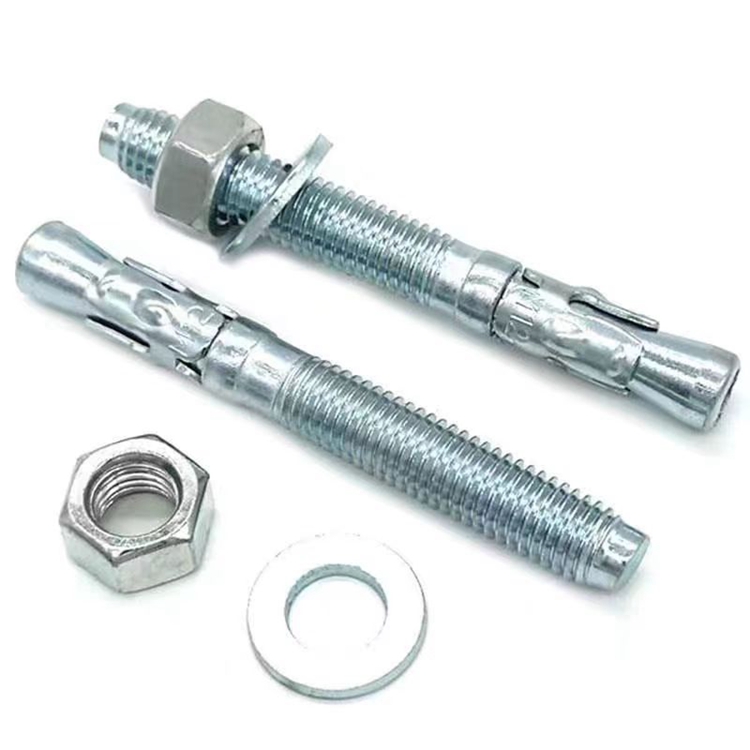
ASTM A193-B7 stud bolts are high-strength fasteners critical in high-temperature, high-pressure applications, predominantly within the petrochemical, power generation, and oil and gas industries. Positioned as a key component in bolted joint assemblies, these bolts provide the clamping force necessary to maintain the integrity of flanges, vessels, and piping systems. Their defining characteristic is their alloy steel composition, designed to maintain mechanical properties at elevated temperatures, typically up to 370°C (700°F). The A193-B7 specification ensures consistent material properties, heat treatment processes, and dimensional accuracy, making them a standardized solution for demanding engineering challenges. Core performance characteristics include high tensile strength, yield strength, and resistance to hydrogen embrittlement, crucial for preventing catastrophic failure in critical infrastructure.
Material Science & Manufacturing
A193-B7 stud bolts are manufactured from alloy steel conforming to ASTM A193 Grade B7. The primary alloying elements include chromium, molybdenum, and manganese, added to carbon steel to enhance strength and hardenability. Chromium contributes to improved corrosion resistance, while molybdenum increases high-temperature creep resistance and toughness. Manganese enhances strength and hardenability during heat treatment. The chemical composition typically ranges from 0.18-0.24% carbon, 0.80-1.10% manganese, 0.50-0.80% silicon, 0.15-0.30% chromium, 0.08-0.12% molybdenum, and a maximum of 0.04% phosphorus and sulfur. Manufacturing commences with hot rolling or forging of the steel billet into the desired stud bolt shape. Critical parameters during forging include controlled temperature and impact force to achieve the desired grain structure and eliminate internal defects. Following forging, the bolts undergo a rigorous heat treatment process: austenitizing, quenching, and tempering. Austenitizing heats the steel to a temperature where it transforms into austenite, allowing for uniform carbon distribution. Quenching rapidly cools the steel, transforming the austenite into martensite, a very hard and brittle microstructure. Tempering reduces the brittleness of the martensite while maintaining a high level of strength. Precise temperature control during each stage is paramount. Final machining operations, including thread rolling and surface finishing, are performed to meet dimensional tolerances and improve fatigue resistance. Thread rolling, as opposed to cutting, work-hardens the threads, increasing their strength and durability.
Performance & Engineering
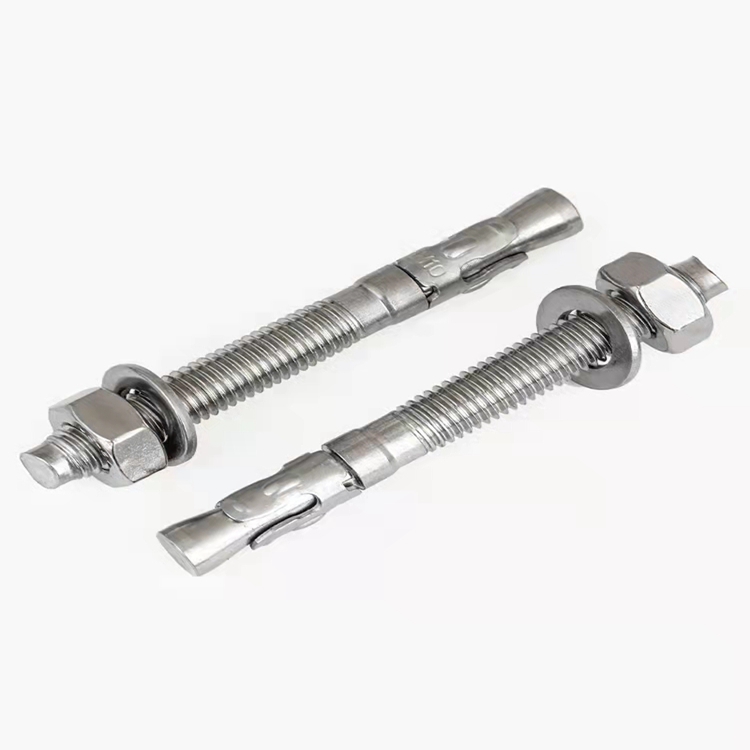
The performance of A193-B7 stud bolts is fundamentally governed by their mechanical properties and resistance to environmental degradation. Force analysis under load considers tensile stress, shear stress, and bending moments. The bolts must withstand significant tensile forces to maintain joint integrity, particularly in pressurized systems. Shear stress arises from the clamping force and is critical in preventing bolt loosening. Bending moments are often present due to misalignment or external loads. Environmental resistance is crucial, specifically resistance to corrosion, hydrogen embrittlement, and high-temperature creep. Corrosion can be mitigated through appropriate material selection and protective coatings. Hydrogen embrittlement, a significant concern in sour gas environments, can lead to brittle fracture. Manufacturers often employ specialized coatings or alloy modifications to enhance resistance. High-temperature creep, the gradual deformation of the bolt under sustained load at elevated temperatures, is addressed through the alloy composition and heat treatment. Compliance requirements are dictated by ASME Boiler and Pressure Vessel Code Section VIII, Division 1 and API standards relevant to the specific application (e.g., API 6A for wellhead equipment, API 6B for gate valves). Finite Element Analysis (FEA) is commonly employed during the design phase to optimize bolt geometry and predict stress distribution under various loading conditions, ensuring structural integrity and preventing premature failure. Preload control is critical; proper bolt tension ensures adequate clamping force and prevents joint separation or fatigue failure.
Technical Specifications
| Property | Metric | Imperial | Standard |
|---|---|---|---|
| Tensile Strength | ≥ 690 MPa | ≥ 100,000 psi | ASTM A193-B7 |
| Yield Strength | ≥ 379 MPa | ≥ 55,000 psi | ASTM A193-B7 |
| Hardness (Rockwell C) | 33-39 HRC | 33-39 HRC | ASTM A193-B7 |
| Elongation in 2 inch gauge length | ≥ 18% | ≥ 18% | ASTM A193-B7 |
| Maximum Service Temperature | 370°C | 700°F | ASTM A193-B7 |
| Thread Type | Unified National Coarse (UNC) | Unified National Coarse (UNC) | ANSI/ASME B1.1 |
Failure Mode & Maintenance
A193-B7 stud bolts are susceptible to several failure modes. Fatigue cracking is a common issue, particularly in cyclically loaded applications. This occurs due to the repeated application of stress, leading to crack initiation and propagation. Hydrogen embrittlement, as previously mentioned, can cause brittle fracture in corrosive environments. Corrosion, specifically pitting corrosion and crevice corrosion, weakens the bolt material and reduces its load-carrying capacity. Thread stripping can occur due to improper installation, excessive torque, or material defects. Creep deformation at elevated temperatures leads to gradual elongation and loss of clamping force. Maintenance involves regular visual inspection for signs of corrosion, cracking, or deformation. Non-destructive testing (NDT) methods, such as Magnetic Particle Inspection (MPI) and Ultrasonic Testing (UT), can detect subsurface cracks. Torque verification using calibrated torque wrenches ensures proper preload. Lubrication of threads with anti-seize compounds prevents galling and facilitates disassembly. If corrosion is present, cleaning and application of protective coatings (e.g., zinc plating, cadmium plating) can extend bolt life. In severe cases, bolts must be replaced. Proper documentation of inspection and maintenance activities is crucial for maintaining a reliable fastening system.
Industry FAQ
Q: What is the significance of the “B7” designation in ASTM A193-B7?
A: The "B7" designation specifies the chemical composition and heat treatment requirements for a particular alloy steel designed for high-strength, high-temperature bolting applications. It ensures that the material meets specific criteria for tensile strength, yield strength, and impact toughness at elevated temperatures, crucial for maintaining integrity in demanding service conditions.
Q: How does hydrogen embrittlement affect A193-B7 stud bolts, and what preventative measures can be taken?
A: Hydrogen embrittlement occurs when atomic hydrogen diffuses into the steel lattice, reducing its ductility and causing brittle fracture. This is particularly prevalent in sour gas environments (containing H2S). Preventative measures include using materials with low sulfur content, applying specialized coatings (e.g., sulfidation-resistant alloys), and controlling the pH of the environment.
Q: What is the role of heat treatment in achieving the desired mechanical properties of A193-B7 bolts?
A: Heat treatment – specifically austenitizing, quenching, and tempering – is fundamental. Austenitizing ensures uniform carbon distribution; quenching hardens the steel by forming martensite; and tempering reduces brittleness while retaining strength. Precise temperature control during each stage is vital for achieving the specified mechanical properties.
Q: What are the implications of exceeding the maximum service temperature of 370°C (700°F) for A193-B7 bolts?
A: Exceeding the maximum service temperature can lead to a significant reduction in tensile strength and yield strength, increasing the risk of creep deformation and premature failure. Long-term exposure above this temperature can alter the microstructure of the steel, compromising its mechanical integrity.
Q: What NDT methods are most effective for detecting flaws in A193-B7 stud bolts during routine inspections?
A: Magnetic Particle Inspection (MPI) is highly effective at detecting surface and near-surface cracks. Ultrasonic Testing (UT) can detect both surface and subsurface flaws, providing a more comprehensive assessment of bolt integrity. Dye penetrant inspection is useful for detecting surface cracks but less effective for subsurface defects.
Conclusion
A193-B7 stud bolts represent a critical fastening solution in high-demand industrial applications, offering a combination of high strength, temperature resistance, and reliability. Their performance is intrinsically linked to their material composition, manufacturing processes (particularly heat treatment), and adherence to stringent industry standards. Understanding the potential failure modes – fatigue, hydrogen embrittlement, and corrosion – and implementing appropriate preventative maintenance strategies are essential for ensuring long-term structural integrity and operational safety.
The consistent application of non-destructive testing, torque verification, and proper lubrication are paramount. Future advancements may focus on developing even more corrosion-resistant alloys, improved coating technologies, and more sophisticated FEA modeling techniques to optimize bolt design and predict performance under increasingly challenging conditions, furthering the lifespan and reliability of critical infrastructure components.