
Introduction
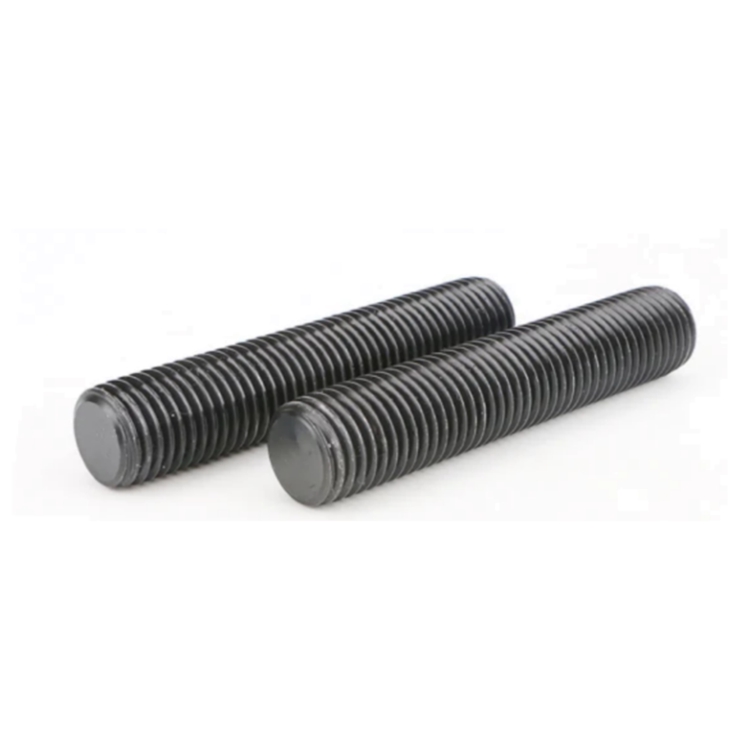
BS stud bolts are high-strength, fully threaded fasteners conforming to British Standard EN 24572 (superseding BS 1769). They are critical components in bolted joints requiring exceptional shear and tensile strength, typically employed in applications demanding high reliability and safety. Unlike bolts intended for through-hole applications with nuts on both ends, stud bolts are screwed into a tapped hole at one end and protrude for securing with a nut(s) on the other. Their primary position in the industry chain lies within the capital equipment manufacturing sector, specifically power generation (nuclear, fossil fuel), petrochemical processing, oil and gas pipelines, and large-scale construction projects. Core performance characteristics include load-bearing capacity, fatigue resistance, corrosion resistance (dependent on material grade and coating), and dimensional accuracy, directly influencing the integrity and longevity of the assembled structure. A key industry pain point is ensuring consistent material quality and traceability to mitigate the risk of fastener failure, particularly in critical applications where inspection and replacement are costly and potentially dangerous. Selecting the correct material grade, thread form, and surface treatment for the operating environment is paramount to prevent issues like stress corrosion cracking and hydrogen embrittlement.
Material Science & Manufacturing
BS stud bolts are predominantly manufactured from alloy steels, with common grades including 8.8, 10.9, and 12.9, defined by their tensile strength. The base material typically comprises carbon steel alloyed with elements like manganese, chromium, molybdenum, and nickel to enhance strength, toughness, and hardenability. The chemical composition directly influences the mechanical properties, requiring stringent control during steelmaking. Manufacturing begins with hot rolling or forging to produce a bar of the desired size and shape. This is followed by cold drawing to achieve the final dimensions and thread form. The threading process, crucial for precise fit and load distribution, utilizes CNC thread rolling machines to ensure accuracy and consistency. Heat treatment is a critical step, involving austenitizing, quenching, and tempering to achieve the required hardness and tensile strength while maintaining ductility. Surface treatments, such as zinc plating, phosphate coating, or specialized coatings like PTFE, are applied to enhance corrosion resistance. Critical parameters controlled during manufacturing include steel composition, grain size, hardness (measured using Rockwell or Vickers scales), thread pitch, and coating thickness. Hydrogen embrittlement is a concern during electroplating; therefore, baking treatments post-plating are often implemented to diffuse hydrogen from the steel. Non-destructive testing, including magnetic particle inspection (MPI) and ultrasonic testing (UT), are employed to detect surface and internal flaws.
Performance & Engineering
The performance of BS stud bolts is governed by principles of mechanical engineering, specifically stress analysis and fatigue resistance. The bolt experiences tensile stress due to clamping force and shear stress due to external loads. Accurate calculation of preload is vital, as insufficient preload can lead to joint separation, while excessive preload can cause bolt failure. The bolt’s cross-sectional area, material yield strength, and thread engagement length determine its load-bearing capacity. Fatigue performance is critical in applications involving cyclic loading, such as those found in rotating machinery or structures subject to vibration. Fatigue life is influenced by stress concentration at the thread root, surface finish, and the presence of any defects. Environmental resistance is another key consideration. Exposure to corrosive environments can lead to pitting corrosion, stress corrosion cracking, and hydrogen embrittlement, reducing the bolt’s strength and service life. Compliance requirements, stipulated by relevant standards (detailed in the footer), dictate material selection, manufacturing processes, and testing procedures. Functional implementation involves careful consideration of joint design, including gasket selection, surface preparation, and tightening procedures. Torque-controlled tightening is commonly employed, utilizing calibrated torque wrenches and appropriate lubrication to achieve the desired preload accurately. Finite Element Analysis (FEA) is frequently used to simulate stress distribution within the bolted joint and optimize design parameters.
Technical Specifications
| Grade | Tensile Strength (MPa) | Yield Strength (MPa) | Hardness (HRC) | Typical Applications | Coating Options |
|---|---|---|---|---|---|
| 8.8 | 800 | 600 | 33-39 | General engineering applications, machinery assembly | Zinc Plating, Phosphate Coating |
| 10.9 | 1000 | 900 | 37-45 | Heavy machinery, pressure vessels, structural steel | Zinc Plating, Geomet, PTFE |
| 12.9 | 1200 | 1100 | 42-50 | High-stress applications, power generation, petrochemicals | Dacromet, Ceramic Coating, Hot Dip Galvanizing |
| A4-80 (Stainless Steel) | 800 | 520 | 28-32 | Corrosive environments, marine applications | Passivation, Electropolishing |
| A2-70 (Stainless Steel) | 700 | 430 | 25-30 | Mildly corrosive environments, food processing | Passivation, Electropolishing |
| B7 (Alloy Steel) | 690 | 517 | 30-35 | High-temperature, high-pressure applications | Zinc Nickel, Cadmium (restricted use) |
Failure Mode & Maintenance
BS stud bolts are susceptible to several failure modes, including fatigue cracking, stress corrosion cracking, thread stripping, and hydrogen embrittlement. Fatigue cracking initiates at stress concentration points, such as the thread root, and propagates under cyclic loading. Stress corrosion cracking occurs in corrosive environments, where tensile stress and a corrosive agent combine to induce crack growth. Thread stripping results from exceeding the yield strength of the threads, often due to improper tightening or excessive load. Hydrogen embrittlement, prevalent in high-strength steels exposed to hydrogen-containing environments, reduces ductility and promotes brittle fracture. Maintenance is crucial for preventing premature failure. Regular inspection for corrosion, cracks, and deformation is essential. Lubrication of threads prevents galling and facilitates accurate torque application. Re-tightening may be necessary after initial loading or during periods of significant temperature fluctuation. If a stud bolt shows signs of damage, it must be replaced with a bolt of the same material grade and specification. Non-destructive testing methods, such as dye penetrant inspection and ultrasonic testing, can be used to detect hidden flaws. Detailed records of inspection and maintenance activities should be maintained for traceability and compliance purposes. Proper storage is also vital; bolts should be protected from corrosion during storage and handling.
Industry FAQ
Q: What is the significance of traceability for BS stud bolts in critical applications?
A: Traceability is paramount. It allows for verification of material origin, manufacturing processes, and heat treatment records. In the event of a failure, traceability enables identification of potential systemic issues and prevents recurrence. Standards often require full material certification and traceability back to the steel mill.
Q: How does thread form (e.g., metric, unified) impact the performance of a BS stud bolt?
A: Thread form influences load distribution and engagement area. Metric threads are generally preferred for their higher strength and efficiency. Unified threads are more common in North American applications. Proper thread engagement length is crucial regardless of the thread form, ensuring adequate stress transfer.
Q: What are the implications of using an incorrect surface treatment on a BS stud bolt?
A: An incorrect surface treatment can significantly reduce corrosion resistance and lead to premature failure. Selecting the appropriate coating depends on the operating environment. For example, zinc plating is suitable for mild environments, while ceramic coatings provide superior protection in harsh conditions.
Q: What is the impact of using improper tightening techniques (e.g., impact wrench instead of torque wrench)?
A: Improper tightening can lead to under-tightening (resulting in joint separation) or over-tightening (causing bolt failure). Torque wrenches, calibrated to accurate standards, are essential for achieving the correct preload. Impact wrenches are generally unsuitable for critical bolted joints.
Q: How does material selection affect the susceptibility to hydrogen embrittlement?
A: High-strength steels are more susceptible to hydrogen embrittlement. Alloying elements and heat treatment processes can influence resistance. Avoiding processes that introduce hydrogen (e.g., certain electroplating methods) and implementing post-plating baking treatments can mitigate the risk.
Conclusion
BS stud bolts represent a cornerstone of reliable joint design across numerous critical industries. Their robust performance is intrinsically linked to meticulous material selection, precise manufacturing processes, and adherence to stringent quality control measures. Understanding the nuances of material science, stress analysis, and potential failure modes is critical for engineers and procurement professionals alike.
Looking ahead, advancements in fastener technology will likely focus on developing coatings with enhanced corrosion resistance, implementing sophisticated non-destructive testing methods for improved defect detection, and refining FEA models for optimized joint design. Continued adherence to international standards and a commitment to traceability will remain paramount for ensuring the long-term integrity and safety of bolted joints in demanding applications.