
Introduction
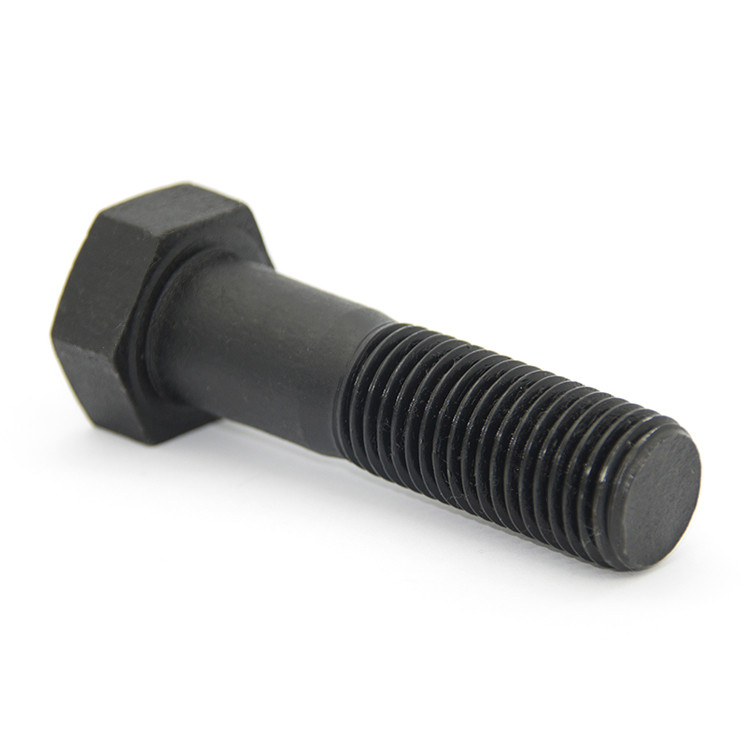
ISO hex bolts are externally threaded fasteners designed for assembly applications requiring a high degree of clamping force and resistance to loosening. These bolts are produced to International Organization for Standardization (ISO) standards, specifically ISO 898-1 for metric bolts, ensuring interchangeability and quality control across global industries. They represent a foundational element within mechanical engineering, utilized extensively in automotive, construction, aerospace, and general machinery. Their prevalence stems from a combination of simple design, relatively low manufacturing cost, and robust performance characteristics. The core performance metrics defining an ISO hex bolt include tensile strength, yield strength, proof load, and resistance to prevailing torque (when applicable, as with self-locking nuts). Understanding these properties is critical for specifying the appropriate bolt grade for a given application, mitigating risks associated with joint failure, and ensuring structural integrity.
Material Science & Manufacturing
The most common material for ISO hex bolts is carbon steel, with varying grades based on tensile strength. Specifically, SAE grades 5, 8, and 10 are frequently employed, corresponding to property classes 4.8, 8.8, and 10.9 respectively. The numbers represent the ultimate tensile strength (in MPa x 100) and the yield strength (as a proportion of the ultimate tensile strength). For example, a 4.8 bolt has an ultimate tensile strength of 400 MPa and a yield strength of 0.8 400 MPa = 320 MPa. Alloy steels, such as those containing chromium, molybdenum, and vanadium, are used for higher-strength applications and improved corrosion resistance. Stainless steels (e.g., 304, 316) are selected for environments requiring resistance to corrosion and oxidation. The manufacturing process typically begins with hot forging of the steel billet into the bolt shape. This is followed by heat treatment, including hardening and tempering, to achieve the desired mechanical properties. Threading is accomplished through rolling, which imparts compressive stresses to the surface, increasing fatigue resistance, or through cutting, which is less desirable but may be necessary for larger bolt sizes or specific thread forms. Surface treatments such as zinc plating, galvanizing, or phosphate coating are applied to enhance corrosion resistance. Quality control measures, including dimensional inspection, hardness testing, and proof load testing, are crucial throughout the manufacturing process to ensure compliance with ISO standards. Careful control of cooling rates during heat treatment is paramount, as it directly influences the resulting microstructure (e.g., martensite, bainite, pearlite) and, consequently, the mechanical properties.
Performance & Engineering
The performance of an ISO hex bolt in a bolted joint is governed by several engineering principles. The bolt is subjected to tensile stress due to the clamping force, and shear stress due to external loads acting on the joint. The bolt's preload, or initial tension, is a critical parameter influencing the joint's fatigue life and resistance to loosening. Higher preload generally increases fatigue resistance but can also increase the risk of yielding. The joint's stiffness, determined by the bolt stiffness, the clamped member stiffness, and the thread geometry, affects the load distribution between the bolt and the clamped members. Finite element analysis (FEA) is often employed to model bolted joint behavior and optimize bolt size, preload, and material selection. Environmental factors, such as temperature and humidity, can significantly impact bolt performance. Temperature variations cause thermal expansion and contraction, altering the preload. Corrosive environments can lead to stress corrosion cracking and hydrogen embrittlement, reducing the bolt's load-carrying capacity. Compliance with industry-specific standards, such as those pertaining to pressure vessels (ASME Boiler and Pressure Vessel Code) or structural steel design (AISC Steel Construction Manual), is often mandated. Prevailing torque hex bolts, utilizing nylon inserts or deformed threads, are engineered to resist loosening under vibration or dynamic loading. The performance characteristics of these self-locking bolts are determined by the friction generated between the insert/thread deformation and the mating nut threads.
Technical Specifications
| Property Class | Ultimate Tensile Strength (MPa) | Yield Strength (MPa) | Hardness (HV) | Typical Applications |
|---|---|---|---|---|
| 4.8 | 400 | 320 | 170-220 | General purpose applications, low-stress joints |
| 8.8 | 800 | 640 | 240-350 | Automotive, machinery, structural applications |
| 10.9 | 1000 | 900 | 300-400 | High-strength applications, critical joints |
| A2-70 (SS304) | 700 | 210 | 180-250 | Corrosion-resistant applications, food processing |
| A4-80 (SS316) | 800 | 260 | 200-300 | Marine environments, chemical processing |
| 12.9 | 1200 | 1080 | 380-450 | Aerospace, high-performance engines |
Failure Mode & Maintenance
ISO hex bolts are susceptible to several failure modes. Tensile failure occurs when the bolt is subjected to a load exceeding its ultimate tensile strength. Shear failure occurs when the shear stress exceeds the bolt's shear strength. Fatigue failure arises from repeated loading and unloading, leading to crack initiation and propagation. Hydrogen embrittlement, particularly in high-strength bolts, can occur in corrosive environments, significantly reducing ductility and causing brittle fracture. Stress corrosion cracking is another corrosion-related failure mode, occurring under sustained tensile stress in a corrosive environment. Thread stripping can occur if the bolt is overtightened or if the nut material is weaker than the bolt material. Prevailing torque bolts can experience loss of locking force due to wear of the nylon insert or deformation of the thread. Maintenance primarily involves periodic inspection for corrosion, damage, and loosening. Torque wrenches should be used to ensure proper preload during assembly and re-tightening. Lubrication of threads can reduce friction and prevent galling. In corrosive environments, the use of corrosion inhibitors and protective coatings is recommended. Regular replacement of bolts showing signs of degradation or fatigue is crucial to prevent catastrophic failure. Non-destructive testing methods, such as ultrasonic testing or magnetic particle inspection, can be employed to detect internal flaws without disassembling the joint.
Industry FAQ
Q: What is the difference between a property class 4.8 and an 8.8 hex bolt, and when would I choose one over the other?
A: The primary difference lies in their mechanical properties. An 8.8 bolt offers significantly higher tensile and yield strength compared to a 4.8 bolt. Choose a 4.8 bolt for general-purpose applications with low stress requirements. Opt for an 8.8 bolt when the application demands greater strength, such as in automotive suspension systems, structural steel connections, or machinery subjected to dynamic loads. The increased strength of the 8.8 bolt allows for a smaller bolt size for equivalent load-carrying capacity, potentially reducing weight and cost.
Q: How does the threading process (rolling vs. cutting) affect the fatigue life of an ISO hex bolt?
A: Cold rolling is generally preferred over cutting for producing bolt threads. Rolling imparts compressive residual stresses to the surface of the bolt, which significantly increases its fatigue resistance. These compressive stresses counteract tensile stresses induced by applied loads, delaying crack initiation. Cutting, conversely, can introduce tensile residual stresses, making the bolt more susceptible to fatigue failure. Therefore, rolled threads offer a longer fatigue life for applications involving cyclic loading.
Q: What surface treatments are commonly used on ISO hex bolts to prevent corrosion, and what are their limitations?
A: Common surface treatments include zinc plating, galvanizing, and phosphate coating. Zinc plating provides a sacrificial corrosion protection layer, corroding preferentially to the steel. Galvanizing offers a thicker zinc coating for enhanced corrosion resistance. Phosphate coating creates a conversion layer that improves paint adhesion and offers limited corrosion protection. Limitations include: zinc plating provides limited protection in marine environments; galvanizing can be brittle and prone to cracking; phosphate coating requires subsequent painting for effective corrosion protection. Stainless steel bolts offer superior corrosion resistance but are more expensive.
Q: How critical is proper torque application when assembling bolted joints using ISO hex bolts? What are the consequences of under-torquing or over-torquing?
A: Proper torque application is absolutely critical. Under-torquing results in insufficient clamping force, leading to joint loosening, fatigue failure, and potential vibration-induced failures. Over-torquing can cause bolt yielding, thread stripping, or damage to the clamped components. Utilizing a calibrated torque wrench and following manufacturer's recommended torque specifications is essential. Dynamic torque control, which accounts for friction variations, is often preferred for critical applications.
Q: What are the implications of using mismatched bolt and nut materials in a bolted joint adhering to ISO standards?
A: Using mismatched materials can lead to galvanic corrosion, particularly in wet or corrosive environments. If the two metals have a significant difference in electrochemical potential, the more active metal will corrode preferentially. For example, coupling a carbon steel bolt with an aluminum alloy nut will result in accelerated corrosion of the aluminum. It’s best practice to use compatible materials or employ corrosion-inhibiting coatings and isolators to mitigate galvanic corrosion risks. Always refer to material compatibility charts and consider the service environment.
Conclusion
ISO hex bolts are indispensable fasteners playing a critical role in countless engineering applications. Their standardized design, coupled with a range of material grades and surface treatments, allows for optimization based on specific performance requirements. A comprehensive understanding of material science, manufacturing processes, mechanical properties, and potential failure modes is paramount for ensuring the reliable performance and longevity of bolted joints. Correct specification, proper installation, and routine maintenance are all vital components of a successful fastening strategy.
Looking forward, advancements in bolt materials, such as high-strength alloy steels and innovative coatings, will continue to enhance performance and extend service life. Digital technologies, including smart bolts with integrated sensors for monitoring preload and detecting corrosion, are emerging and will provide valuable insights into joint health. Continued adherence to ISO standards and rigorous quality control procedures will remain fundamental to maintaining the integrity and safety of engineered structures and machinery.