
Introduction
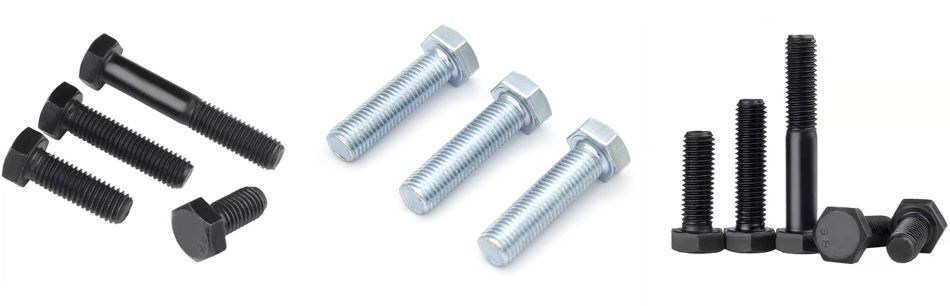
BS Hex bolts, conforming to British Standard EN ISO 898-1, represent a fundamental fastening element in a broad spectrum of engineering applications. These bolts, characterized by their hexagonal heads, are employed in structural steelwork, machinery assembly, automotive manufacturing, and countless other industrial sectors. Their core function is to create a clamp load by converting rotational force into axial tension, securely joining materials. The significance of a properly specified BS Hex bolt extends beyond simple connection; it impacts the structural integrity, safety, and longevity of the assembled product. The industry faces consistent challenges regarding material traceability, ensuring correct grade selection for load-bearing applications, and maintaining consistent quality to prevent premature failure, particularly in dynamic loading conditions. Understanding the nuances of material composition, mechanical properties, and tightening procedures is critical for engineering professionals and procurement managers.
Material Science & Manufacturing
BS Hex bolts are primarily manufactured from carbon steel, alloy steel, and stainless steel. Carbon steel grades, such as Grade 4.6, 5.6, and 8.8, represent the most common materials due to their cost-effectiveness and adequate strength for many applications. Alloy steels, incorporating elements like manganese, chromium, and molybdenum, provide enhanced strength, toughness, and hardenability, making them suitable for high-stress environments (e.g., Grade 10.9, 12.9). Stainless steels (A2, A4) offer superior corrosion resistance, critical in outdoor or corrosive environments. The manufacturing process begins with raw material selection and often involves cold forging or hot forging, followed by machining, threading, and heat treatment. Cold forging improves the material’s grain structure, enhancing strength. Heat treatment – including hardening, tempering, and case hardening – is paramount in achieving the desired mechanical properties. Precise control of temperature and cooling rates during heat treatment is essential to avoid distortion or the formation of undesirable microstructures (e.g., martensite embrittlement). Thread rolling, rather than cutting, is preferred for creating threads as it maintains grain flow and increases thread strength. Quality control procedures, including dimensional checks, hardness testing (Rockwell, Vickers), and material composition verification (chemical analysis), are vital throughout the process.
Performance & Engineering
The performance of a BS Hex bolt is dictated by its mechanical properties: tensile strength, yield strength, proof load, and elongation. Tensile strength represents the maximum stress the bolt can withstand before fracturing. Yield strength defines the point at which the bolt begins to deform permanently. Proof load is the maximum tensile load that can be applied without causing permanent deformation. Elongation measures the ductility of the material, indicating its ability to deform before failure. When subjected to external loads, the bolt experiences shear stress, bending stress (due to misalignment), and tensile stress (due to clamping force). Finite Element Analysis (FEA) is frequently employed to model these stresses and optimize bolt geometry for specific applications. Fatigue loading, where the bolt is subjected to repeated stress cycles, is a critical consideration in dynamic applications. Corrosion resistance is another crucial performance factor, particularly in exposed environments. Galvanizing, phosphate coating, and other surface treatments are used to mitigate corrosion. The correct tightening torque is paramount for achieving the desired clamp load. Under-tightening can lead to joint loosening, while over-tightening can cause bolt failure or damage to the joined materials. Torque-controlled tightening methods, utilizing calibrated torque wrenches, are essential for consistent and reliable joint performance. Compliance with British Standards (BS EN ISO 898-1) and other relevant industry standards (e.g., DIN, ASTM) ensures that bolts meet specified performance criteria.
Technical Specifications
| Bolt Grade | Tensile Strength (MPa) | Yield Strength (MPa) | Hardness (Brinell) | Typical Applications |
|---|---|---|---|---|
| 4.6 | 400 | 240 | 120-150 | General purpose fastening, low-stress applications |
| 5.6 | 490 | 290 | 140-170 | Machinery, automotive components (non-critical) |
| 8.8 | 800 | 600 | 240-300 | Structural steelwork, high-stress fasteners |
| 10.9 | 1000 | 900 | 320-380 | Critical structural connections, heavy machinery |
| 12.9 | 1200 | 1100 | 370-430 | High-performance applications, aerospace, defense |
| A2 Stainless Steel | 700 | 210 | 180-240 | Corrosive environments, food processing, marine applications |
Failure Mode & Maintenance
BS Hex bolts are susceptible to several failure modes. Fatigue cracking, caused by repeated cyclic loading, often initiates at stress concentration points such as thread roots or under the bolt head. Hydrogen embrittlement, particularly in high-strength steels, can lead to brittle fracture. Corrosion, especially in chloride-rich environments, weakens the bolt and reduces its load-carrying capacity. Striping of threads due to insufficient clamping force or improper installation is a common failure mechanism. Over-tightening can cause bolt elongation or fracture. Shear failure can occur if the bolt is subjected to excessive shear loads. Preventive maintenance includes regular visual inspections for signs of corrosion, cracks, or thread damage. Lubrication of threads reduces friction and prevents galling during installation and tightening. Torque checks should be performed periodically to ensure that the clamp load remains within acceptable limits. If a bolt exhibits signs of damage or corrosion, it should be replaced immediately. When replacing bolts, it's crucial to use the correct grade and size to ensure compatibility and maintain structural integrity. Consider utilizing corrosion inhibitors in particularly aggressive environments.
Industry FAQ
Q: What is the difference between proof load and tensile strength, and which is more important for bolt selection?
A: Tensile strength is the maximum stress a bolt can withstand before fracture, representing an absolute limit. Proof load, however, is the maximum stress a bolt can withstand without permanent deformation. For most engineering applications, the proof load is more critical. Exceeding the proof load compromises the bolt’s ability to maintain clamping force over time, potentially leading to joint failure. While tensile strength is important for safety margin, the proof load governs the long-term functional performance of the bolted joint.
Q: How does thread pitch affect the performance of a BS Hex bolt?
A: Thread pitch, the distance between adjacent threads, influences the bolt’s shear strength and stripping resistance. A finer thread pitch generally provides greater shear strength and resistance to stripping, as there are more threads engaging with the nut. However, finer threads can be more susceptible to corrosion and require more torque to achieve the desired clamping force. Coarser threads are easier to install and less prone to corrosion but offer lower shear strength.
Q: What are the implications of using an incorrect torque value when tightening a BS Hex bolt?
A: Incorrect torque values can have severe consequences. Under-tightening results in insufficient clamping force, leading to joint loosening, vibration, and potential failure. Over-tightening can exceed the bolt’s yield strength, causing plastic deformation, stress relaxation, or even fracture. Using a calibrated torque wrench and adhering to the manufacturer’s recommended torque specifications is crucial for ensuring proper joint performance.
Q: What surface treatments are commonly applied to BS Hex bolts to enhance corrosion resistance?
A: Common surface treatments include galvanizing (zinc coating), phosphate coating, and various organic coatings (e.g., epoxy, PTFE). Galvanizing provides a sacrificial barrier, protecting the steel from corrosion. Phosphate coating creates a conversion coating that enhances paint adhesion and offers moderate corrosion resistance. Organic coatings offer varying levels of corrosion protection depending on the specific coating type.
Q: How do I interpret the markings on a BS Hex bolt?
A: Markings on a BS Hex bolt typically indicate the bolt’s grade, manufacturer’s identification, and sometimes the material. For example, "8.8" indicates a bolt made from a high-strength alloy steel with a tensile strength of 800 MPa and a yield strength of 600 MPa. The markings are crucial for verifying that the bolt meets the required specifications for the application.
Conclusion
The BS Hex bolt, despite its seemingly simple design, is a complex component governed by stringent material science principles and engineering considerations. Selecting the correct grade, ensuring proper installation techniques, and implementing a robust maintenance schedule are paramount for maximizing the performance and lifespan of bolted joints. A thorough understanding of mechanical properties, potential failure modes, and relevant industry standards is crucial for engineers and procurement professionals.
Future advancements in fastener technology will likely focus on developing lighter-weight materials, improving corrosion resistance, and incorporating smart features for real-time monitoring of bolt load and integrity. Utilizing digital twins to model bolted joint performance and predict failure will become increasingly common. Continued research into advanced surface treatments and coating technologies will play a vital role in enhancing the durability and reliability of BS Hex bolts across diverse industrial applications.