
Introduction
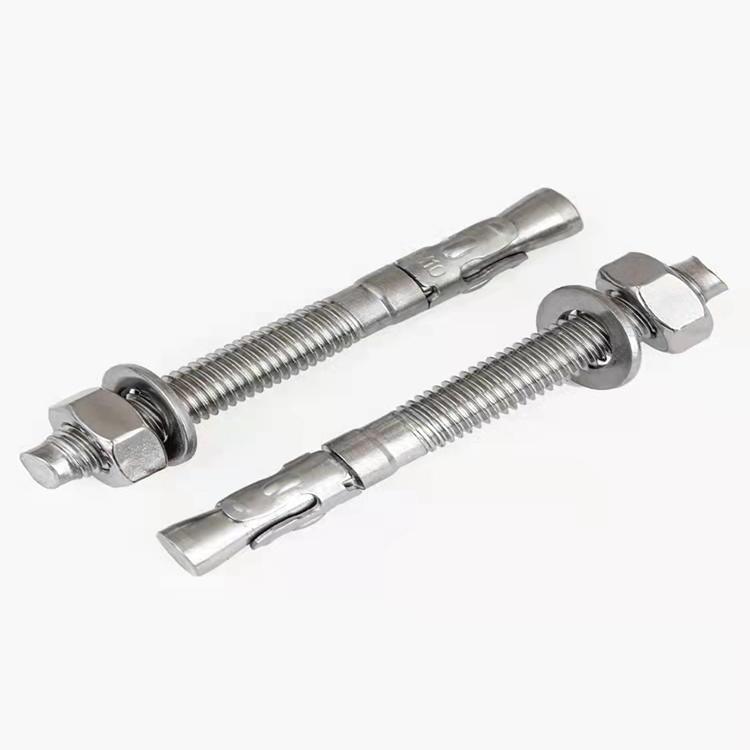
Coarse thread hex bolts are externally threaded fasteners, characterized by a lower thread count per inch than fine thread bolts. They are fundamental components in mechanical assemblies across numerous industries, including automotive, construction, and manufacturing. Their primary function is to securely join materials by converting rotational motion into axial clamping force. The coarse thread design offers advantages in applications susceptible to vibration and corrosion, due to its larger thread form providing increased resistance to stripping and easier cleaning. This guide provides a comprehensive technical overview of coarse thread hex bolts, covering material science, manufacturing processes, performance characteristics, potential failure modes, and relevant industry standards. The selection of the appropriate bolt grade and coating is critical to ensure long-term reliability and prevent catastrophic failures in service. Understanding these parameters is paramount for engineers, procurement professionals, and maintenance personnel alike.
Material Science & Manufacturing
Coarse thread hex bolts are commonly manufactured from carbon steel, alloy steel, and stainless steel. Carbon steel, such as SAE Grade 2, 5, and 8, provides high tensile strength at a relatively low cost. Alloy steels, incorporating elements like manganese, chromium, and molybdenum, enhance strength, toughness, and hardenability, commonly represented by SAE Grades 8, 9, and 10. Stainless steel (e.g., 304, 316) offers superior corrosion resistance, making it ideal for outdoor or harsh chemical environments. The manufacturing process typically begins with raw material stock, which is then cold-formed or hot-forged into the bolt shape. Cold forming enhances the grain structure, increasing tensile strength. Following forming, the bolt undergoes thread rolling, a process that cold-deforms the material to create the threads, resulting in a work-hardened surface with improved fatigue resistance. Heat treatment, including quenching and tempering, is applied to achieve the desired mechanical properties. Surface treatments like zinc plating, black oxide, or hot-dip galvanization are frequently used to enhance corrosion protection. Critical parameters during manufacturing include thread pitch accuracy, head geometry tolerances, and material composition verification through chemical analysis. Hydrogen embrittlement is a potential concern during electroplating, requiring post-plating baking to diffuse hydrogen out of the material.
Performance & Engineering
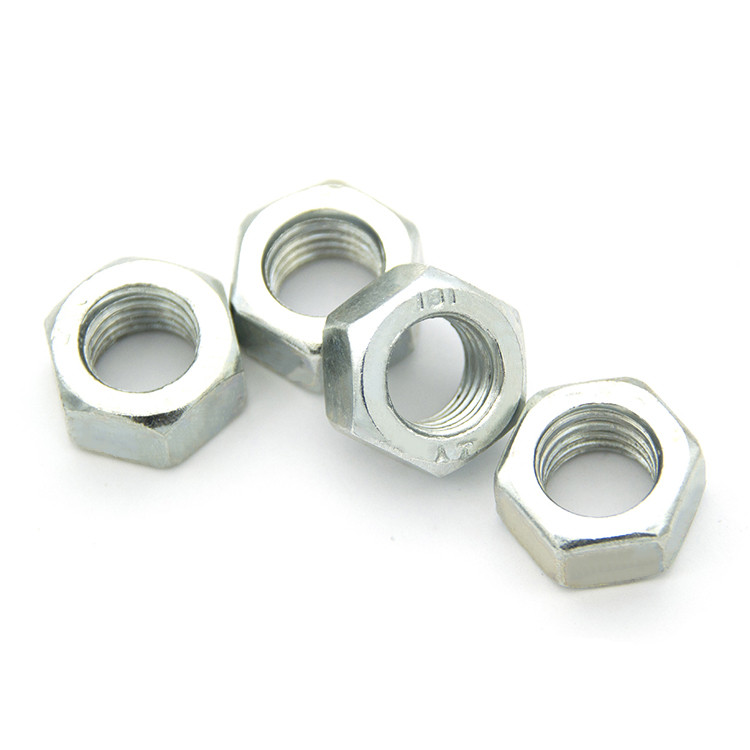
The performance of a coarse thread hex bolt is dictated by its tensile strength, yield strength, shear strength, and fatigue resistance. Tensile strength represents the maximum stress the bolt can withstand before fracture, while yield strength indicates the point at which permanent deformation occurs. Shear strength is important when the bolt is subjected to transverse loads. Fatigue resistance determines the bolt’s ability to withstand cyclic loading. The thread pitch of a coarse thread (typically 7-14 threads per inch) provides a larger shear area compared to fine threads, making them more resistant to stripping under impact or vibration. The clamping force exerted by the bolt is crucial for maintaining joint integrity. Preload, the initial tension applied to the bolt, significantly influences the joint's resistance to loosening. Environmental factors such as temperature, humidity, and corrosive substances can degrade bolt performance. Galvanic corrosion can occur when dissimilar metals are in contact in the presence of an electrolyte. Finite element analysis (FEA) is frequently used to optimize bolt design and predict stress distribution under various loading conditions. Compliance requirements, such as those outlined in ASTM standards, dictate acceptable levels of variation in mechanical properties and dimensional tolerances. Understanding the bolt’s Proof Load (the maximum tensile load that the bolt can withstand without experiencing permanent deformation) and Tensile Strength are essential in structural engineering applications.
Technical Specifications
| Grade | Tensile Strength (MPa) | Yield Strength (MPa) | Hardness (Rockwell C) | Typical Applications |
|---|---|---|---|---|
| SAE Grade 2 | 690 | 310 | 30-35 | Low-stress applications, furniture assembly |
| SAE Grade 5 | 830 | 440 | 35-45 | Automotive chassis, general machinery |
| SAE Grade 8 | 1040 | 690 | 45-55 | High-stress applications, structural connections |
| Stainless Steel 304 | 517 | 205 | 20-30 | Corrosive environments, food processing equipment |
| Stainless Steel 316 | 620 | 240 | 25-35 | Marine applications, chemical processing |
| A4-80 (SS316 Equivalent) | 800 | 580 | 30-35 | High-strength corrosion resistant applications |
Failure Mode & Maintenance
Coarse thread hex bolts are susceptible to several failure modes. Tensile failure occurs when the bolt is overloaded and exceeds its tensile strength. Shear failure happens when the bolt is subjected to excessive shear stress. Fatigue failure arises from repeated cyclic loading, leading to crack initiation and propagation. Thread stripping can occur due to excessive torque or corrosion. Hydrogen embrittlement, particularly in high-strength steels, can lead to brittle fracture. Corrosion, particularly in harsh environments, weakens the bolt material. To mitigate these failures, regular inspection and maintenance are crucial. Visual inspection can identify signs of corrosion, damage, or deformation. Torque checks should be performed periodically to ensure proper clamping force. Lubrication can reduce friction and prevent galling during tightening. Non-destructive testing methods, such as ultrasonic testing or magnetic particle inspection, can detect internal cracks or flaws. If a bolt shows signs of damage or corrosion, it should be replaced immediately. Proper storage in a dry environment can prevent corrosion. When replacing bolts, ensure the new bolt meets or exceeds the original specifications, and utilize appropriate thread locking compounds where necessary.
Industry FAQ
Q: What is the difference between a Grade 5 and a Grade 8 bolt, and when would I choose one over the other?
A: Grade 8 bolts possess significantly higher tensile and yield strength than Grade 5 bolts. They are manufactured from higher carbon alloy steel and are generally black oxide finished. Grade 5 bolts are sufficient for many general-purpose applications where lower stress levels are present. Grade 8 bolts are crucial for high-stress applications like suspension components, engine parts, and structural connections where failure could have severe consequences. The higher cost of Grade 8 bolts is justified by the increased safety and reliability they provide in demanding environments.
Q: How does thread pitch affect the performance of a bolt, and why are coarse threads preferred for softer materials?
A: Thread pitch refers to the distance between adjacent threads. Coarse threads (fewer threads per inch) have a larger thread cross-section, which provides a greater shear area and more engagement with the tapped hole. This makes them more resistant to stripping, especially in softer materials like aluminum or plastic. Fine threads offer more precise adjustment and are often used in applications requiring high clamping force in a limited space, but are more prone to stripping in softer materials.
Q: What is the impact of corrosion on bolt performance, and what preventative measures can be taken?
A: Corrosion weakens the bolt material, reduces its tensile strength, and can lead to thread galling and ultimately failure. Preventative measures include selecting corrosion-resistant materials (stainless steel), applying protective coatings (zinc plating, galvanization), using dissimilar metal corrosion inhibitors, and regularly inspecting bolts for signs of corrosion. In marine or highly corrosive environments, sacrificial anodes can be used to protect the bolts.
Q: What is preload, and why is it important for bolted joint performance?
A: Preload is the initial tension applied to a bolt when it’s tightened. It creates clamping force that holds the joined components together. Adequate preload is critical for preventing joint loosening due to vibration, thermal expansion/contraction, or external loads. Insufficient preload can lead to fatigue failure, while excessive preload can lead to bolt stretching or yielding. Accurate torque control is essential for achieving the correct preload.
Q: What is the role of thread locking compounds in bolted joint applications?
A: Thread locking compounds, such as Loctite, prevent bolts from loosening due to vibration. They work by filling the gaps between the threads, creating friction that resists relative movement. Different formulations offer varying levels of locking strength, ranging from low-strength removable compounds to high-strength permanent compounds. The appropriate thread locking compound is selected based on the application's requirements and the desired level of security.
Conclusion
Coarse thread hex bolts are essential fastening elements in a broad spectrum of engineering applications. Their performance is intricately linked to material selection, manufacturing processes, and environmental factors. A thorough understanding of their mechanical properties, potential failure modes, and relevant industry standards is paramount for ensuring joint integrity and preventing catastrophic failures. Proper selection, installation, and maintenance are critical to maximizing bolt life and maintaining structural reliability.
Future advancements in bolt technology will likely focus on developing new materials with enhanced strength and corrosion resistance, refining manufacturing techniques to improve dimensional accuracy and surface finish, and incorporating smart sensor technology for real-time monitoring of bolt preload and condition. Continued research into failure mechanisms and preventative maintenance strategies will further enhance the long-term reliability of bolted joints across all industries.