
Introduction
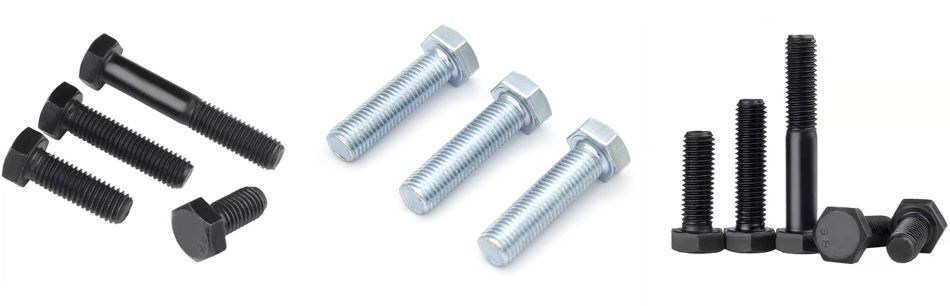
Carbon steel hex bolts are externally threaded fasteners distinguished by their hexagonal heads. They represent a foundational component within mechanical engineering, utilized extensively across a vast spectrum of industrial applications including automotive assembly, construction, machinery fastening, and infrastructure projects. These bolts function by converting rotational motion into linear force, securely clamping components together through a combination of tension and friction. The selection of appropriate carbon steel grade and bolt size is paramount to ensuring structural integrity and preventing failures in critical applications. The industry currently faces challenges in mitigating corrosion, ensuring consistent material properties with varying manufacturing processes, and meeting increasingly stringent performance standards dictated by evolving international regulations. Their prevalence stems from a favorable strength-to-cost ratio and relative ease of manufacturing, although limitations exist concerning corrosion resistance compared to alloyed alternatives. This guide provides a comprehensive technical overview of carbon steel hex bolts, encompassing material science, manufacturing processes, performance characteristics, potential failure modes, and relevant industry standards.
Material Science & Manufacturing
Carbon steel hex bolts are predominantly manufactured from various grades of carbon steel, categorized by their carbon content. Common grades include SAE Grade 2 (low carbon), SAE Grade 5 (medium carbon), and SAE Grade 8 (medium-high carbon). The carbon content directly impacts the steel's hardness, tensile strength, and ductility. Lower carbon steels exhibit increased ductility and weldability, while higher carbon steels demonstrate superior strength but reduced ductility and weldability. Other alloying elements, such as manganese, silicon, and phosphorus, are added in controlled quantities to modify specific properties like hardenability and toughness. Manufacturing typically begins with hot rolling of steel billets into bars of the desired diameter. These bars are then subjected to cold drawing to achieve precise dimensional tolerances and improved surface finish. The hex head is formed through a process called upset forging, where the end of the bolt is compressed between dies. This process enhances the grain structure in the head, increasing its strength and resistance to deformation. Thread rolling, rather than cutting, is the preferred method for forming the threads, as it maintains the grain flow of the metal, resulting in stronger and more fatigue-resistant threads. Critical parameters during manufacturing include temperature control during forging, lubrication during cold drawing, and precise die alignment during thread rolling. Surface treatments like zinc plating or black oxide coating are often applied to enhance corrosion resistance, though these coatings provide limited protection against prolonged exposure to harsh environments. Hydrogen embrittlement during plating must be carefully managed through proper post-treatment processes like baking.
Performance & Engineering
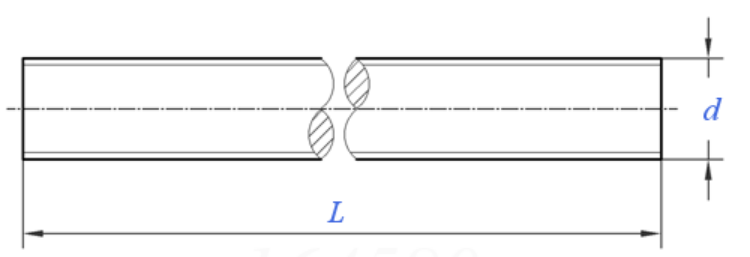
The performance of carbon steel hex bolts is fundamentally governed by their mechanical properties, primarily tensile strength, yield strength, and shear strength. Tensile strength represents the maximum stress the bolt can withstand before fracturing, while yield strength defines the stress at which permanent deformation begins. Shear strength indicates the bolt’s resistance to forces applied parallel to its cross-section. These properties are directly related to the steel grade and heat treatment processes employed during manufacturing. Engineering design must account for several critical factors. Firstly, preload, the initial tension applied to the bolt during tightening, is crucial for maintaining clamping force under dynamic loading conditions. Insufficient preload can lead to joint loosening and fatigue failure, while excessive preload can cause bolt stretching or stripping of threads. Torque-angle tightening methods are commonly used to achieve precise preload control. Secondly, environmental resistance, particularly corrosion, is a significant concern. Exposure to corrosive environments can significantly reduce the bolt's load-carrying capacity over time. Selecting appropriate coatings and materials, or employing corrosion allowance in the design, is essential. Thirdly, fatigue performance is critical in applications involving cyclic loading. Fatigue failures typically initiate at stress concentrations, such as the thread root or under the bolt head. Proper surface finish and thread quality are crucial for maximizing fatigue life. Finally, compliance with relevant industry standards (ISO 898-1, ASTM A307, ASTM A325) is non-negotiable, ensuring that the bolts meet minimum performance requirements and are suitable for their intended applications.
Technical Specifications
| Grade | Tensile Strength (MPa) | Yield Strength (MPa) | Hardness (Rockwell C) | Typical Applications | Coating Options |
|---|---|---|---|---|---|
| SAE Grade 2 | 400-517 | 240-345 | C34-C45 | Low-stress applications, indoor use | Zinc Plating, Black Oxide |
| SAE Grade 5 | 690-827 | 380-517 | C38-C45 | General purpose fastening, automotive | Zinc Plating, Black Oxide, Dacromet |
| SAE Grade 8 | 830-1040 | 570-758 | C40-C48 | High-stress applications, structural connections | Zinc Plating, Black Oxide, Hot Dip Galvanizing |
| ASTM A307 Grade A | 400-790 | 210-485 | Variable | General purpose, low-stress | Zinc Plating |
| ASTM A325 | 830-1040 | 570-758 | C36-C44 | Structural steel connections, high-strength bolting | Hot Dip Galvanizing, Mechanical Galvanizing |
| ISO 8.8 | 800-1000 | 600-800 | 33-39 HRC | General mechanical applications, automotive | Zinc Plating, Geomet |
Failure Mode & Maintenance
Carbon steel hex bolts are susceptible to several failure modes, including tensile failure (fracture due to excessive tensile load), shear failure (fracture due to excessive shear stress), fatigue failure (fracture due to cyclic loading), thread stripping (damage to the threads preventing proper clamping force), and corrosion-induced failure (weakening of the bolt due to rust or other corrosion products). Fatigue cracking often initiates at stress concentrators like the thread root or under the bolt head. Corrosion, particularly in marine or industrial environments, accelerates fatigue crack propagation and reduces the bolt’s effective strength. Hydrogen embrittlement, a phenomenon where hydrogen atoms diffuse into the steel lattice, can drastically reduce ductility and promote brittle fracture, especially in high-strength bolts. Preventive maintenance is crucial for ensuring long-term reliability. Regular inspections should be conducted to identify signs of corrosion, thread damage, or loosening. Torque re-checking should be performed periodically, especially in applications subject to vibration or thermal cycling. If corrosion is detected, the bolts should be replaced. Lubricating the threads during installation and periodically during service can reduce friction and prevent galling. The use of corrosion inhibitors or protective coatings can also extend the service life of the bolts. Proper storage of bolts in a dry environment is essential to prevent premature corrosion.
Industry FAQ
Q: What is the difference between Grade 5 and Grade 8 bolts, and when would I choose one over the other?
A: Grade 8 bolts have a significantly higher tensile strength and yield strength compared to Grade 5 bolts. This makes them suitable for applications requiring greater load-carrying capacity and resistance to deformation, such as structural connections and critical automotive components. Grade 5 bolts are more appropriate for general-purpose fastening where high strength is not a primary concern, and some degree of ductility is desired. Cost is also a factor; Grade 5 bolts are generally less expensive.
Q: How does thread pitch affect the strength of a carbon steel hex bolt?
A: Generally, a coarser thread pitch (fewer threads per inch) offers greater shear strength, as there is more material resisting shear forces. However, finer threads provide a larger tensile stress area, which can improve tensile strength. The optimal thread pitch depends on the specific application and loading conditions.
Q: What surface treatments are effective in preventing corrosion of carbon steel hex bolts?
A: Zinc plating is a common and cost-effective method for providing moderate corrosion resistance. Black oxide offers minimal corrosion protection but improves appearance. Hot-dip galvanizing provides superior corrosion resistance, especially in harsh environments, but can alter dimensional tolerances. Dacromet and Geomet are more advanced coatings offering excellent corrosion protection and controlled friction characteristics.
Q: What is the importance of preload in bolted joint design?
A: Preload creates clamping force that resists external loads and prevents joint separation. Proper preload increases fatigue life, reduces the risk of loosening due to vibration, and distributes the load more evenly across the joint. Insufficient preload can lead to joint failure, while excessive preload can cause bolt stretching or thread stripping.
Q: What standards govern the dimensional tolerances and mechanical properties of carbon steel hex bolts?
A: Several standards are relevant, including ISO 898-1 (General purpose metric bolts), ASTM A307 (Carbon steel bolts for general purpose applications), ASTM A325 (Structural bolts), and DIN 933 (Hex bolts for general purpose applications). Compliance with these standards ensures consistent quality and performance.
Conclusion
Carbon steel hex bolts remain a cornerstone of mechanical fastening due to their favorable balance of strength, cost, and manufacturability. Understanding the intricacies of material science, manufacturing processes, and performance characteristics is crucial for selecting the appropriate bolt grade and ensuring reliable joint performance. Challenges surrounding corrosion, fatigue, and the need for precise preload control require careful consideration during design and maintenance.
Future advancements in bolt technology will likely focus on the development of corrosion-resistant coatings, improved manufacturing techniques to enhance fatigue life, and the integration of smart monitoring systems to detect loosening or corrosion in real-time. Adhering to established industry standards and implementing robust preventative maintenance programs are paramount to maximizing the longevity and safety of bolted connections in demanding industrial applications.