
Introduction
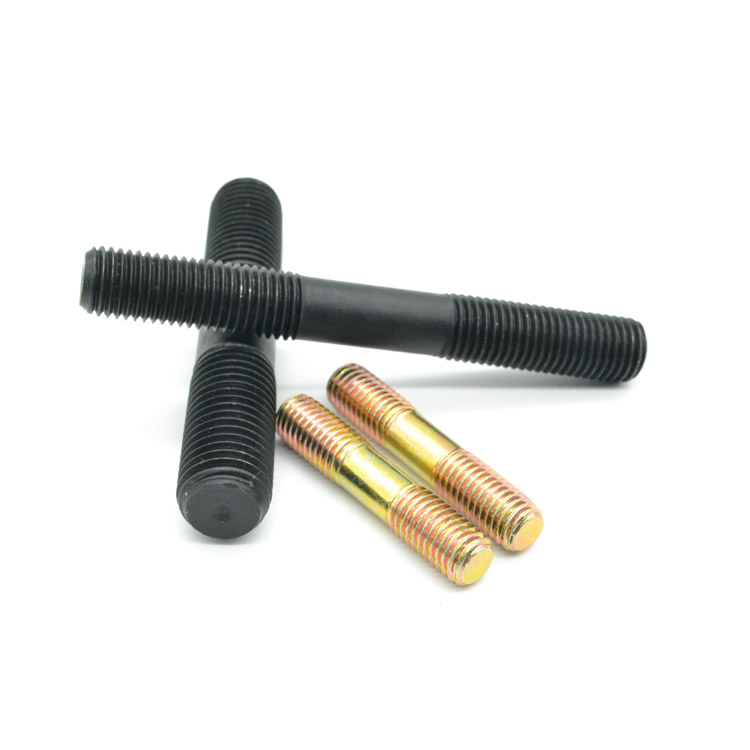
Grade 8.8 hex bolts are a fundamental fastening component widely utilized across numerous industries, including automotive, construction, machinery, and infrastructure. Designated according to the International Organization for Standardization (ISO) 898-1 standard, the ‘8.8’ nomenclature denotes the tensile strength and yield strength of the material. Specifically, 8.8 indicates a tensile strength of 800 MPa and a yield strength of 640 MPa. These bolts typically consist of medium carbon steel that is quenched and tempered to achieve these mechanical properties. They function by utilizing a threaded shaft to create a clamping force when tightened into a tapped hole or a nut, effectively joining materials together. A primary industry pain point is ensuring consistent material composition and heat treatment to guarantee the stated mechanical properties, as deviations can lead to catastrophic failures. Their prevalence stems from their cost-effectiveness and reliable performance in a wide range of applications, though careful consideration of corrosion resistance and load requirements is critical for long-term structural integrity.
Material Science & Manufacturing
Grade 8.8 hex bolts are predominantly manufactured from medium carbon steel, typically conforming to standards like ISO 898-1, DIN 936, or ASTM A307. The core material is generally a carbon steel containing 0.25-0.35% carbon. Other alloying elements such as manganese (0.60-1.00%), silicon (0.15-0.35%), and chromium (0.08-0.12%) are added to enhance strength, hardenability, and improve mechanical properties. The manufacturing process begins with hot forging of the steel billet into a bolt blank. This process aligns the grain structure, enhancing the bolt's strength. Following forging, the bolts undergo heat treatment, a critical step involving austenitizing (heating to a temperature above the critical point) followed by quenching (rapid cooling) and tempering (reheating to a lower temperature). Quenching hardens the steel, while tempering reduces brittleness and improves toughness. The precise temperature control during these stages is paramount; even slight variations can significantly alter the final mechanical properties. Thread rolling is then employed to form the threads, inducing compressive residual stresses that improve fatigue resistance. Finally, the bolts are typically surface treated with coatings like zinc plating, phosphate coating, or mechanical galvanizing to provide corrosion protection. Ensuring consistent chemical composition of the steel, accurate temperature control during heat treatment, and proper thread rolling parameters are key manufacturing challenges impacting final product quality.
Performance & Engineering
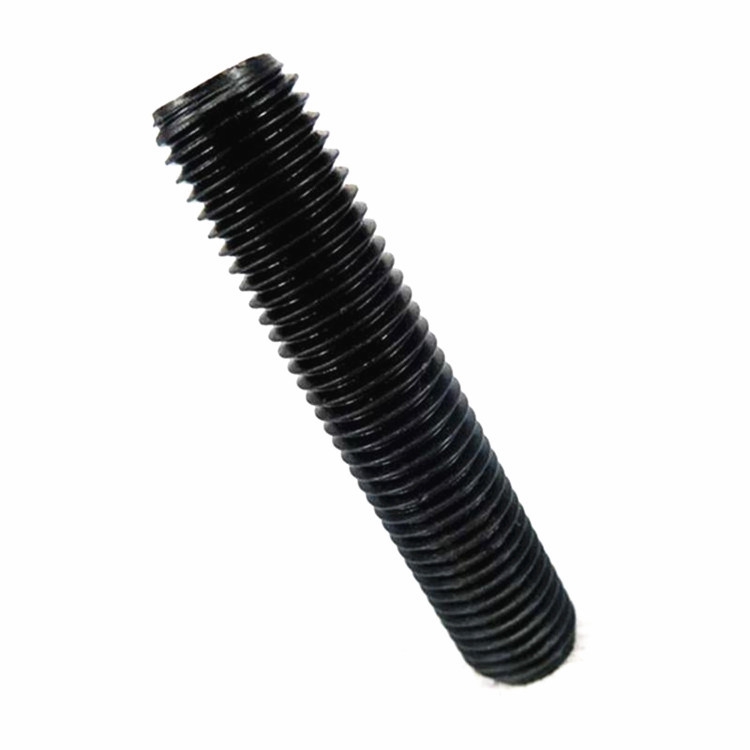
The performance of Grade 8.8 hex bolts is dictated by their mechanical properties and their ability to withstand various loading conditions. Tensile strength, as stated, is 800 MPa, representing the maximum stress the bolt can endure before fracturing under tension. Yield strength is 640 MPa, denoting the stress at which the bolt begins to undergo permanent deformation. Beyond these, shear strength (approximately 50% of tensile strength) is critical when the bolt is subjected to transverse forces. Fatigue strength is a significant consideration in applications involving cyclic loading. Repeated stress cycles can lead to fatigue cracking, initiating at stress concentrators like thread roots or under the bolt head. Preload, the tension applied to the bolt during tightening, is a critical engineering parameter. Achieving the correct preload is essential for maintaining clamping force, preventing loosening due to vibration, and maximizing fatigue life. The clamping force generated is proportional to the bolt’s preload and the friction coefficient between the bolt and the joined materials. Environmental resistance is another critical performance factor. Exposure to corrosive environments can lead to corrosion, reducing the bolt’s effective cross-sectional area and ultimately leading to failure. Material selection and surface treatments play a key role in mitigating corrosion. Compliance requirements such as RoHS and REACH are also essential for ensuring environmental sustainability and regulatory adherence.
Technical Specifications
| Parameter | Unit | Value (Grade 8.8) | Testing Standard |
|---|---|---|---|
| Tensile Strength | MPa | 800 | ISO 898-1 |
| Yield Strength | MPa | 640 | ISO 898-1 |
| Hardness (Core) | HRC | 33-39 | ASTM A307 |
| Hardness (Surface) | HRC | 30-36 | ASTM A307 |
| Elongation | % | ≥ 16 | ISO 6892-1 |
| Shear Strength | MPa | 400 (approx.) | Calculated from Tensile Strength |
Failure Mode & Maintenance
Grade 8.8 hex bolts are susceptible to several failure modes in practical applications. Fatigue failure is common in dynamically loaded connections, initiated by stress concentrations at thread roots or under the bolt head. This manifests as gradual crack propagation until eventual fracture. Thread stripping, where the threads in either the bolt or the nut/tapped hole are deformed or sheared, occurs due to excessive loading or improper tightening. Hydrogen embrittlement, a phenomenon where atomic hydrogen diffuses into the steel, reducing its ductility and increasing its susceptibility to cracking, can occur in corrosive environments or during electroplating processes. Corrosion, particularly in humid or corrosive atmospheres, weakens the bolt material and reduces its load-carrying capacity. Over-tightening can lead to yielding or fracture of the bolt. Under-tightening can result in loosening due to vibration. Maintenance involves regular visual inspections for signs of corrosion, thread damage, or elongation. Torque checks should be performed periodically to ensure adequate clamping force, using a calibrated torque wrench. Lubricating the threads before tightening reduces friction and ensures accurate preload. Replacing bolts showing signs of damage or corrosion is crucial. In critical applications, non-destructive testing methods like ultrasonic testing or magnetic particle inspection can detect internal flaws before they lead to catastrophic failure. Periodic re-tightening, especially in applications subject to vibration, is also recommended.
Industry FAQ
Q: What is the significance of the '8.8' marking on a hex bolt, and how does it relate to its intended application?
A: The ‘8.8’ marking indicates the bolt’s mechanical properties – a tensile strength of 800 MPa and a yield strength of 640 MPa. This dictates its suitability for specific load-bearing applications. Higher-strength bolts (e.g., 10.9 or 12.9) are used where higher clamping forces or greater resistance to shear and tensile stresses are required, such as in automotive engine components or heavy machinery. Lower-strength bolts might be acceptable for less critical applications where lower loads are expected.
Q: How does heat treatment affect the performance of a Grade 8.8 bolt, and what quality control measures are in place to ensure consistency?
A: Heat treatment – quenching and tempering – is fundamental to achieving the desired mechanical properties of a Grade 8.8 bolt. Quenching hardens the steel, and tempering imparts toughness. Inconsistent heat treatment can lead to variations in hardness, tensile strength, and ductility, significantly impacting performance. Quality control involves hardness testing (Rockwell or Vickers), tensile testing, and microstructural analysis to verify that the heat treatment process has been correctly executed and that the bolt meets the specified requirements.
Q: What are the most effective corrosion protection methods for Grade 8.8 hex bolts used in outdoor or corrosive environments?
A: Several methods are employed for corrosion protection. Zinc plating is a common and cost-effective option, providing a sacrificial barrier. Phosphate coating creates a conversion layer that enhances paint adhesion and provides some corrosion resistance. Mechanical galvanizing (e.g., using zinc flake coatings) offers superior corrosion protection compared to standard zinc plating. For highly corrosive environments, stainless steel bolts (e.g., Grade A2 or A4) should be considered, although they come at a higher cost.
Q: What is the impact of improper torque application on the performance and longevity of Grade 8.8 bolts?
A: Improper torque application is a significant contributor to bolt failure. Over-tightening can yield or fracture the bolt, reducing its clamping force and potentially damaging the joined components. Under-tightening can lead to loosening due to vibration, resulting in joint failure. Using a calibrated torque wrench and adhering to recommended torque specifications for the bolt size, material, and application is crucial. Lubricating the threads before tightening helps ensure accurate preload.
Q: What standards govern the dimensional accuracy and mechanical properties of Grade 8.8 hex bolts, and how do these standards ensure interchangeability and quality?
A: Key standards governing Grade 8.8 hex bolts include ISO 898-1 (Mechanical properties), ISO 898-6 (Dimensions), DIN 936 (Hex bolts for general purposes), and ASTM A307 (Carbon Steel Bolts and Screws for General Purpose Applications). These standards define acceptable tolerances for dimensions, mechanical properties, and surface finish. Compliance with these standards ensures interchangeability between bolts from different manufacturers and provides a baseline level of quality and reliability.
Conclusion
Grade 8.8 hex bolts represent a critical component in numerous engineering applications, providing a reliable and cost-effective fastening solution. Their performance is directly linked to meticulous material selection, precise manufacturing processes – particularly heat treatment – and adherence to stringent quality control standards. Understanding the inherent failure modes, such as fatigue, corrosion, and thread stripping, is paramount for ensuring long-term structural integrity.
Proper application, including correct torque specifications and periodic maintenance, is equally essential. As engineering demands evolve, advancements in surface treatments and alloy compositions will continue to enhance the performance and durability of Grade 8.8 bolts, meeting the increasingly rigorous requirements of modern industry. Continued emphasis on standardized testing and certification will be crucial for maintaining quality and ensuring consistent performance across global supply chains.