
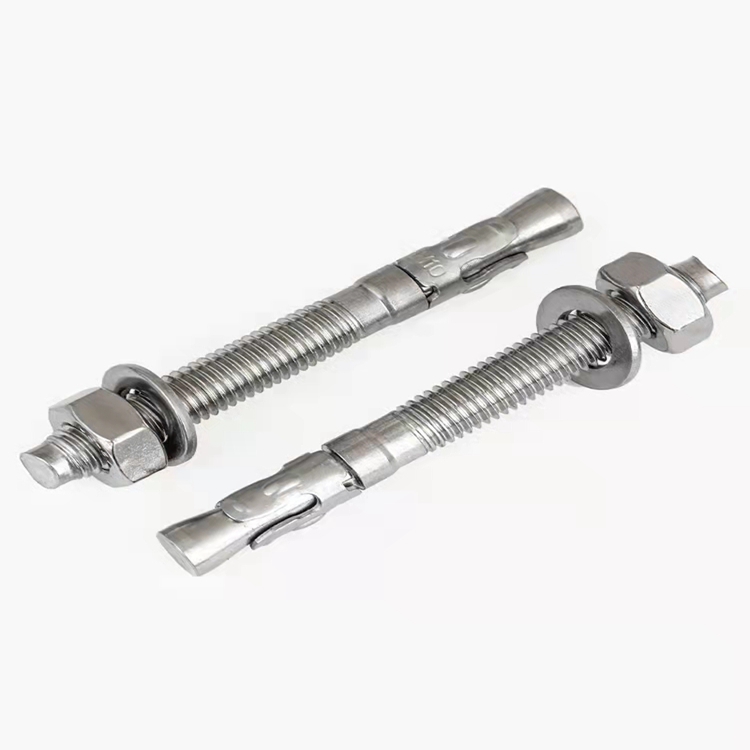
Introduction
Grade 4.8 hex bolts represent a common yet critical fastening element utilized across a vast spectrum of industrial applications. Their designation, ‘4.8’, signifies a specific combination of tensile strength and yield strength, defining their mechanical properties according to international standards. Positioned within the fastener supply chain, these bolts bridge component assembly in sectors ranging from automotive and construction to machinery and infrastructure. Core performance characteristics include reliable clamping force, resistance to shear stress, and predictable load-bearing capacity, making them integral to structural integrity and operational safety. A key pain point in industry revolves around ensuring consistent quality control, preventing premature failure due to material defects or improper heat treatment, and adhering to increasingly stringent safety regulations.
Material Science & Manufacturing
Grade 4.8 hex bolts are predominantly manufactured from medium carbon steel, typically conforming to standards such as ISO 898-1 or DIN 933. The raw material’s chemical composition typically includes carbon (0.25-0.30%), manganese (0.60-0.90%), silicon (0.20-0.35%), phosphorus (≤0.035%) and sulfur (≤0.035%). These elements influence the steel’s hardenability, ductility, and weldability. The manufacturing process begins with hot-forming the steel into the bolt shape, followed by heat treatment. This critical step involves austenitizing (heating to a specific temperature to transform the microstructure to austenite), quenching (rapid cooling to create a martensitic structure), and tempering (reheating to a lower temperature to reduce brittleness and increase toughness). Precise control of these parameters – temperature, cooling rate, and tempering time – is paramount to achieving the desired mechanical properties. Surface treatments such as zinc plating or phosphate coating are commonly applied to enhance corrosion resistance. Bolt threads are formed through rolling or cutting, with rolling generally preferred due to its increased fatigue strength. Quality control encompasses dimensional checks, hardness testing (using Rockwell or Vickers scales), and material composition analysis to verify adherence to specifications.
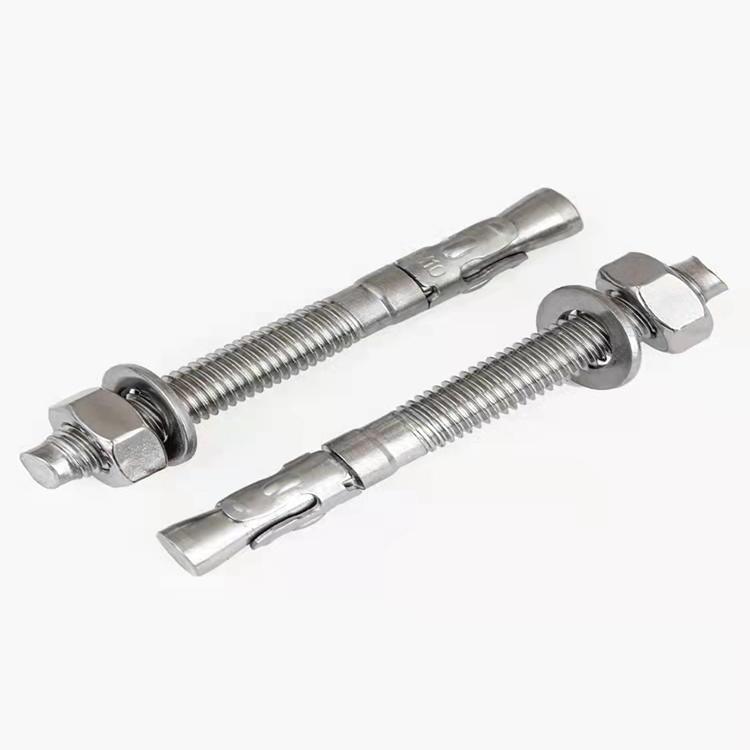
Performance & Engineering
The performance of a grade 4.8 hex bolt is fundamentally governed by its mechanical properties. Tensile strength, typically around 400 MPa, dictates the maximum stress the bolt can withstand before fracturing when subjected to a tensile load. Yield strength, approximately 240 MPa, defines the point at which the bolt will undergo permanent deformation. Shear strength is also crucial, particularly in applications involving transverse loads. Engineering considerations extend to factors like bolt preload, which is the tension applied to the bolt during tightening. Proper preload ensures adequate clamping force, preventing joint separation and fatigue failure. Environmental resistance is another key performance aspect. Exposure to corrosive environments can lead to degradation of the bolt material, reducing its strength and increasing the risk of failure. Finite element analysis (FEA) is frequently employed to simulate stress distributions within bolted joints, optimizing bolt size, preload, and material selection for specific applications. Compliance with relevant standards, such as ISO 898-1, is essential to ensure structural integrity and safety. Failure to meet these standards can result in catastrophic consequences in critical applications.
Technical Specifications
| Parameter | Value (Typical) | Test Standard | Tolerance |
|---|---|---|---|
| Tensile Strength (MPa) | 400 | ISO 898-1 | ± 20 MPa |
| Yield Strength (MPa) | 240 | ISO 898-1 | ± 15 MPa |
| Hardness (Rockwell C) | 28-34 | ISO 6508 | ± 2 HRC |
| Elongation (%) | 16 | ISO 898-1 | ± 2% |
| Shear Strength (MPa) | 320 | ISO 898-1 | N/A |
| Proof Load (kN) | Varies by Diameter | ISO 898-1 | ±5% |
Failure Mode & Maintenance
Grade 4.8 hex bolts are susceptible to several failure modes. Fatigue cracking, induced by cyclic loading, is a common issue, particularly in applications involving vibration or dynamic stresses. This typically initiates at stress concentration points, such as thread roots. Corrosion is another significant concern, especially in harsh environments, leading to pitting corrosion and reduced cross-sectional area. Hydrogen embrittlement can occur in high-strength bolts exposed to hydrogen-containing environments, making them brittle and prone to failure. Shear failure, resulting from excessive transverse loads, can also occur. Thread stripping, caused by improper tightening or overloading, is a frequent issue. Preventative maintenance involves regular inspections for signs of corrosion, cracks, or deformation. Proper torque application is critical during installation to achieve the correct preload. Lubrication of threads reduces friction and prevents galling. Periodic retightening may be necessary in applications subject to vibration or thermal cycling. In cases of suspected fatigue damage, non-destructive testing methods, such as ultrasonic inspection or magnetic particle inspection, can be employed to detect cracks. Replacement of damaged bolts with certified equivalents is essential to maintain structural integrity.
Industry FAQ
Q: What is the significance of the '4.8' marking on a hex bolt?
A: The '4.8' marking indicates the bolt's mechanical properties, specifically its tensile strength (400 MPa) and yield strength (240 MPa). This marking confirms that the bolt meets the requirements of relevant international standards, assuring a certain level of performance and reliability.
Q: How does heat treatment affect the performance of a grade 4.8 bolt?
A: Heat treatment is crucial for achieving the desired mechanical properties. Proper austenitizing, quenching, and tempering create a microstructure that provides the necessary strength, ductility, and toughness. Improper heat treatment can lead to bolts that are either too brittle or too soft, compromising their performance.
Q: What types of corrosion protection are typically applied to grade 4.8 bolts?
A: Common corrosion protection methods include zinc plating, phosphate coating, and applying specialized coatings like Dacromet. These treatments create a barrier between the steel and the environment, reducing the rate of corrosion and extending the bolt's service life. The choice of coating depends on the severity of the corrosive environment.
Q: What is the correct method for tightening a grade 4.8 hex bolt to achieve proper preload?
A: The preferred method is using a calibrated torque wrench. The correct torque value depends on the bolt diameter, thread pitch, and lubrication. Alternatively, a turn-of-nut method can be used, involving tightening the bolt to a snug fit and then turning it a specified number of degrees. Proper lubrication of the threads is essential for accurate torque readings.
Q: What are the potential consequences of using a bolt that does not meet grade 4.8 specifications?
A: Using a bolt with lower mechanical properties than required can lead to premature failure, potentially causing catastrophic damage to the assembled structure. This can result in equipment downtime, safety hazards, and significant financial losses. Always verify the bolt's markings and material certification.
Conclusion
Grade 4.8 hex bolts represent a foundational element in countless engineering applications. Their defined mechanical properties, achieved through precise material selection and manufacturing processes, ensure reliable performance under specified loads. Understanding the potential failure modes, including fatigue, corrosion, and thread stripping, is critical for implementing effective preventative maintenance strategies.
Adherence to international standards like ISO 898-1 is paramount for ensuring quality control and safety. Future developments may focus on advanced materials and coatings to enhance corrosion resistance and fatigue life, as well as the integration of smart fasteners with embedded sensors for real-time monitoring of bolt preload and structural health.