
Introduction
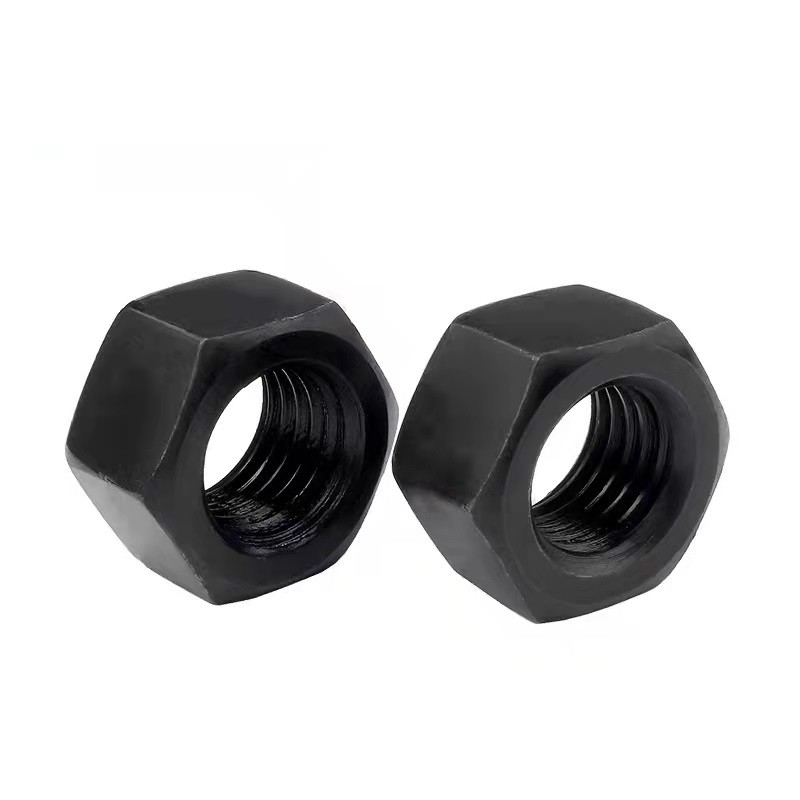
Half thread hex bolts, also known as two-thread bolts, represent a specialized fastening solution within the broader hex bolt family. Their defining characteristic is the threaded portion extending only half the length of the bolt shank. This design deviates from fully threaded bolts and offers specific advantages in applications requiring a reduced stress concentration area and facilitating easier installation and removal in certain joint configurations. Positioned within the industrial supply chain as a critical component for mechanical assemblies across diverse sectors – including automotive, aerospace, heavy machinery, and structural engineering – these bolts are typically manufactured from carbon steel, alloy steel, or stainless steel, chosen based on load requirements, environmental conditions, and corrosion resistance needs. Core performance attributes include tensile strength, yield strength, fatigue resistance, and thread conformity to standardized specifications. Understanding these attributes is critical for ensuring joint integrity and long-term structural reliability.
Material Science & Manufacturing
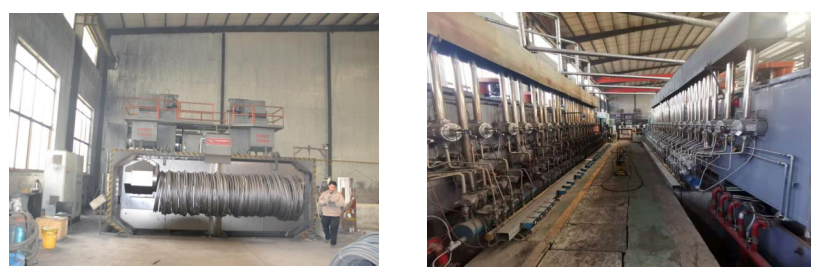
The material selection for half thread hex bolts is paramount, dictated by the intended application's demands. Common materials include carbon steels (e.g., AISI 1045, SAE 4140) providing high tensile strength and cost-effectiveness; alloy steels (e.g., 40CrMnTi, 35CrMo) offering enhanced hardenability, toughness, and wear resistance; and stainless steels (e.g., 304, 316) delivering superior corrosion resistance, crucial in harsh environments. Raw material properties, such as chemical composition and initial microstructure, directly influence the final bolt performance. Manufacturing typically begins with hot forging of the bolt blank from these materials. This process aligns the grain structure, increasing strength. Subsequent machining operations – including thread rolling, hex head forming, and shank preparation – refine the bolt to precise dimensions. Thread rolling, as opposed to thread cutting, imparts compressive residual stresses to the threads, enhancing fatigue life. Heat treatment, including hardening and tempering, is critical to achieving the desired mechanical properties. Precise control of temperature and time during these stages is essential to avoid introducing undesirable microstructural changes like martensite formation (leading to brittleness) or incomplete austenitization. Surface treatments, such as zinc plating, galvanizing, or phosphate coating, are commonly applied to enhance corrosion resistance. Quality control throughout the process involves dimensional inspections, hardness testing (Rockwell or Vickers), and microstructural analysis to ensure compliance with relevant standards.
Performance & Engineering
The performance of half thread hex bolts is fundamentally governed by principles of mechanics and material behavior. Force analysis focuses on tensile stress (resistance to pulling forces), shear stress (resistance to forces acting parallel to the cross-section), and bending stress (caused by off-center loading). The shorter threaded length reduces the effective tensile stress area compared to fully threaded bolts of the same dimensions, concentrating stress at the shank transition. Engineers must account for this in joint design. Fatigue resistance is a critical consideration in dynamically loaded applications. The partial thread design can reduce stress concentration at the thread root, potentially improving fatigue life under cyclic loading conditions, especially if the unthreaded portion is subjected to bending. Environmental resistance encompasses corrosion, oxidation, and temperature effects. Selection of appropriate materials and coatings is vital for maintaining bolt integrity in corrosive environments. Compliance with industry standards, such as ISO 898-1, SAE J499, and ASTM A307, ensures consistent quality and performance. These standards specify requirements for material properties, dimensions, mechanical testing, and surface treatments. Proper tightening torque is essential for achieving the desired clamping force. Torque-tension relationships are defined by the bolt size, material, and lubrication conditions. Incorrect torque application can lead to joint failure – either through insufficient clamping force (resulting in loosening) or over-tightening (causing bolt yielding or stripping of threads).
Technical Specifications
| Property | Grade 4.8 (Typical Carbon Steel) | Grade 8.8 (High-Strength Carbon Steel) | A2 Stainless Steel (304) | A4 Stainless Steel (316) |
|---|---|---|---|---|
| Tensile Strength (MPa) | 400 | 800 | 700 | 930 |
| Yield Strength (MPa) | 240 | 600 | 210 | 290 |
| Hardness (Brinell) | 170-210 | 310-370 | 150-210 | 180-240 |
| Typical Thread Diameter (mm) | M6 - M24 | M8 - M36 | M5 - M20 | M5 - M20 |
| Corrosion Resistance | Low (Requires Coating) | Low (Requires Coating) | Good | Excellent |
| Operating Temperature Range (°C) | -20 to 200 | -20 to 250 | -200 to 600 | -200 to 850 |
Failure Mode & Maintenance
Failure modes in half thread hex bolts are diverse and application-dependent. Fatigue cracking is a common failure mechanism in dynamically loaded joints, initiating at stress concentration points, primarily at the thread root or shank transition. Corrosion, particularly in environments containing chlorides or other aggressive agents, can lead to pitting corrosion and eventual fracture. Hydrogen embrittlement, a concern with high-strength steels, can reduce ductility and promote brittle failure. Shear failure can occur if the bolt is subjected to excessive shear loads, exceeding its shear strength. Stripping of threads, resulting from over-tightening or improper thread engagement, renders the joint ineffective. Maintenance strategies center on preventative measures and regular inspections. Periodic visual inspections should identify signs of corrosion, cracking, or deformation. Torque checks, using calibrated torque wrenches, ensure proper clamping force. Lubrication of threads minimizes friction and prevents galling during installation and removal. In corrosive environments, protective coatings should be inspected for damage and repaired or reapplied as necessary. For critical applications, non-destructive testing methods, such as ultrasonic inspection or magnetic particle inspection, can detect subsurface cracks. Replacement of bolts exhibiting signs of damage or corrosion is crucial to prevent catastrophic failure. Proper storage of spare bolts, protected from moisture and contaminants, is also essential for maintaining their integrity.
Industry FAQ
Q: What are the primary benefits of using a half thread hex bolt compared to a fully threaded bolt in a structural application?
A: The primary benefits stem from reduced stress concentration. The shorter threaded length reduces the effective tensile stress area and concentrates stress less at the thread root. This can translate to improved fatigue resistance, particularly in dynamically loaded applications. Additionally, the unthreaded portion provides a smoother bearing surface against the clamped material.
Q: How does the material selection impact the corrosion resistance of half thread hex bolts, and what coatings are commonly used?
A: Material selection is fundamental. Carbon and alloy steels are susceptible to corrosion and typically require coatings. Stainless steels (304, 316) offer inherent corrosion resistance. Common coatings include zinc plating (cost-effective but limited protection), galvanizing (superior corrosion protection), and phosphate coating (provides a base for subsequent painting or coating). The coating must be appropriate for the specific environment.
Q: What is the significance of heat treatment in the manufacturing process, and what parameters are critical to control?
A: Heat treatment is essential for achieving the desired mechanical properties. Critical parameters include austenitizing temperature, quenching medium, and tempering temperature. Improper heat treatment can lead to undesirable microstructural changes, such as excessive hardness and brittleness or incomplete hardening. Precise control is required to optimize strength, toughness, and ductility.
Q: What torque specifications should be followed when tightening half thread hex bolts, and how are they determined?
A: Torque specifications depend on the bolt size, material, thread condition (lubricated or dry), and clamping force requirements. Manufacturers typically provide torque charts based on standardized formulas and testing. Using a calibrated torque wrench is crucial. Over-tightening can yield the bolt or strip the threads, while under-tightening can lead to joint loosening.
Q: What non-destructive testing methods can be employed to detect defects in half thread hex bolts, and when are they typically used?
A: Common non-destructive testing (NDT) methods include ultrasonic inspection (detects subsurface cracks and voids), magnetic particle inspection (detects surface and near-surface cracks in ferromagnetic materials), and dye penetrant inspection (detects surface cracks). NDT is typically used for critical applications, such as aerospace or high-pressure systems, where the consequences of failure are severe.
Conclusion
Half thread hex bolts provide a specialized fastening solution optimized for applications where reduced stress concentration and improved fatigue resistance are paramount. Their performance is intrinsically linked to material selection, precise manufacturing processes, and adherence to relevant industry standards. Understanding the potential failure modes – including fatigue cracking, corrosion, and thread stripping – is crucial for implementing effective maintenance strategies and ensuring long-term joint integrity.
Future developments may focus on advanced materials (e.g., titanium alloys, nickel-based superalloys) offering even higher strength-to-weight ratios and superior corrosion resistance. Furthermore, incorporating digital technologies, such as smart bolts equipped with sensors for real-time monitoring of torque and stress, could provide enhanced predictive maintenance capabilities and further enhance the reliability of critical bolted joints.