
Introduction
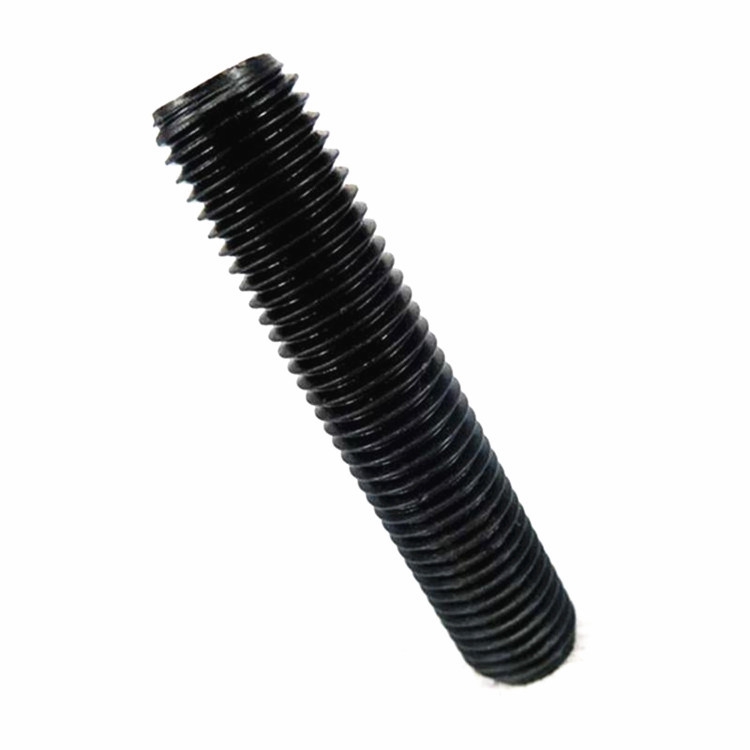
Reduced stem hex bolts represent a critical fastening element in numerous industrial applications. Characterized by a hexagonal head and a threaded shank with a reduced portion of the stem, these bolts are engineered to provide high clamping force while minimizing material usage and weight. Their position within the industrial chain lies directly downstream of steel manufacturing and forging processes, serving as a vital component in assembly across automotive, construction, machinery, and aerospace sectors. Core performance attributes include tensile strength, yield strength, fatigue resistance, and corrosion protection, all crucial for maintaining structural integrity and operational safety in demanding environments. The reduction in stem diameter is a deliberate design choice, often employed where reduced material is required for specific applications, such as interference fit assemblies or where minimizing weight is paramount. Understanding the nuances of their material composition, manufacturing processes, and performance characteristics is essential for engineers and procurement professionals alike.
Material Science & Manufacturing
The primary material for reduced stem hex bolts is typically carbon steel, alloy steel (e.g., 4140, 8.8, 10.9 grades), or stainless steel (e.g., 304, 316). Carbon steel, offering a balance of strength and cost, undergoes processes like forging or cold heading to form the bolt shape. Alloy steels are selected for enhanced mechanical properties like higher tensile strength, improved toughness, and increased resistance to wear. Stainless steels are employed in corrosive environments, providing superior resistance to oxidation and chemical attack. The manufacturing process begins with raw material selection, followed by forging or cold heading to establish the basic bolt geometry. Cold heading, particularly suited for high-volume production, involves plastically deforming the metal at room temperature, resulting in improved grain structure and mechanical properties. Subsequent processes include thread rolling, which forms the threads without material removal, enhancing thread strength and fatigue life. Heat treatment, encompassing hardening, tempering, and case hardening (for surface hardness), is critical for achieving desired mechanical properties. Finally, surface treatments like zinc plating, black oxide coating, or passivation (for stainless steel) are applied to provide corrosion resistance. Critical parameters during manufacturing include precise control of forging temperature, heading force, thread pitch, and heat treatment cycle times. Inconsistent control can lead to defects like incomplete filling of die cavities, surface cracks, and improper hardening, compromising bolt performance.
Performance & Engineering
The performance of reduced stem hex bolts is heavily influenced by applied load, environmental conditions, and material properties. Force analysis dictates that the stress concentration is highest at the root of the threads and the transition point between the full stem and the reduced stem. Therefore, proper thread form and smooth transition geometry are crucial to prevent fatigue failure. Finite Element Analysis (FEA) is often employed to model stress distribution under various loading scenarios, optimizing bolt design for specific applications. Environmental resistance is paramount, particularly in applications exposed to corrosive atmospheres or extreme temperatures. Galvanic corrosion can occur when dissimilar metals are in contact, necessitating the use of compatible materials or protective coatings. The reduced stem section introduces unique engineering considerations. It can be strategically utilized to create an interference fit during assembly, providing a secure and vibration-resistant connection. However, the reduced diameter also lowers the shear strength of that section, demanding careful consideration during load calculations. Compliance requirements, such as those mandated by ISO 898-1 for metric bolts or ASTM A307 for carbon steel bolts, specify material properties, dimensional tolerances, and mechanical performance criteria. These standards ensure interchangeability and safety. Fatigue life, representing the number of cycles a bolt can withstand under a given load, is a crucial performance metric. Factors influencing fatigue life include surface finish, residual stress, and the presence of stress concentrators.
Technical Specifications
| Diameter (mm) | Grade | Tensile Strength (MPa) | Yield Strength (MPa) |
|---|---|---|---|
| M6 | 8.8 | 800 | 640 |
| M8 | 10.9 | 1000 | 900 |
| M10 | 12.9 | 1200 | 1100 |
| M12 | A4-80 (SS316) | 800 | 640 |
| M16 | 8.8 | 800 | 640 |
| M20 | 10.9 | 1000 | 900 |
Failure Mode & Maintenance
Reduced stem hex bolts are susceptible to several failure modes. Fatigue cracking, originating at stress concentration points (threads, reduced stem transition), is a common failure mechanism under cyclic loading. Hydrogen embrittlement, induced by exposure to hydrogen-containing environments, can lead to brittle fracture, especially in high-strength steels. Corrosion, particularly in marine or industrial environments, weakens the bolt material and accelerates failure. Thread stripping, resulting from excessive torque or mismatched threads, compromises clamping force. Shear failure, occurring when the load exceeds the shear strength of the bolt, is more likely in the reduced stem section. Improper tightening torque can lead to either insufficient clamping force (resulting in joint separation) or over-tightening (causing thread damage or bolt stretch). Maintenance strategies include regular visual inspection for signs of corrosion, cracking, or deformation. Torque verification using calibrated torque wrenches ensures proper clamping force. Lubrication of threads with appropriate thread lubricants reduces friction and prevents galling. In critical applications, non-destructive testing methods, such as ultrasonic testing or magnetic particle inspection, can detect subsurface cracks. For severely corroded or damaged bolts, replacement is essential. The selection of appropriate coatings and materials based on the operating environment is a preventative maintenance measure, significantly extending bolt service life. A robust preventative maintenance program encompassing proper installation, periodic inspection, and timely replacement is critical for ensuring long-term reliability.
Industry FAQ
Q: What is the impact of the reduced stem diameter on the bolt’s shear strength?
A: The reduced stem diameter directly lowers the shear strength of the bolt in that specific section. This requires careful consideration during design, ensuring that the applied shear load does not exceed the capacity of the reduced diameter. FEA analysis is recommended to accurately assess shear stress distribution and ensure adequate safety margins.
Q: How does the choice of surface coating affect the corrosion resistance of a reduced stem hex bolt?
A: The surface coating is crucial for corrosion protection. Zinc plating provides sacrificial corrosion protection for carbon steel bolts, while stainless steel benefits from passivation. The thickness and quality of the coating directly influence its effectiveness. For highly corrosive environments, more durable coatings like hot-dip galvanizing or specialized polymer coatings may be necessary.
Q: What are the key differences between ISO 898-1 and ASTM A307 standards for hex bolts?
A: ISO 898-1 is a metric standard specifying material, mechanical properties, and dimensions for metric hex bolts. ASTM A307 covers carbon steel bolts intended for general-purpose applications, using inch dimensions. They differ in units of measurement, mechanical property requirements, and testing methods. Selecting the appropriate standard depends on the application and regional requirements.
Q: What are the best practices for torqueing reduced stem hex bolts to ensure proper clamping force?
A: Utilize a calibrated torque wrench and adhere to the manufacturer’s recommended torque specifications. Apply lubricant to the threads to reduce friction and ensure accurate torque readings. Employ a star-pattern tightening sequence to distribute clamping force evenly across the joint. Avoid over-tightening, which can damage the threads or stretch the bolt.
Q: How can I identify potential fatigue failure in a reduced stem hex bolt during routine inspections?
A: Look for signs of surface cracking, particularly at the thread roots and the transition between the full stem and reduced stem. Inspect for discoloration or pitting indicative of corrosion. Conduct visual inspections under magnification to detect subtle cracks. If possible, utilize non-destructive testing methods to identify subsurface defects. Any identified damage warrants immediate bolt replacement.
Conclusion
Reduced stem hex bolts represent a sophisticated fastening solution optimized for applications requiring weight reduction, interference fits, or specific material usage constraints. Their performance is intricately linked to material selection, meticulous manufacturing processes, and adherence to relevant industry standards. Understanding the potential failure modes – fatigue, corrosion, and shear – is paramount for ensuring long-term structural integrity.
The continued advancement in materials science and manufacturing techniques will further enhance the performance and reliability of reduced stem hex bolts. Future trends may include the development of novel high-strength alloys, advanced surface treatments offering superior corrosion resistance, and the integration of smart sensors for real-time monitoring of bolt stress and preload. A thorough understanding of these factors, coupled with rigorous quality control and preventative maintenance practices, is essential for engineers and procurement professionals seeking to optimize fastening solutions in demanding industrial environments.