
Introduction
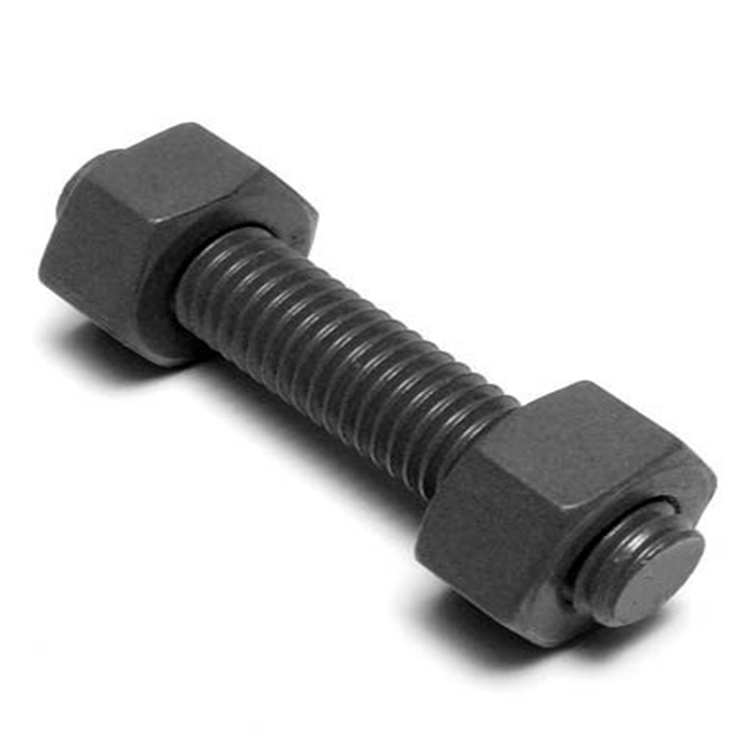
ASTM hex bolts are externally threaded fasteners designed for various applications requiring substantial clamping force. They are characterized by a hexagonal head, allowing for tightening with a wrench. Their position within the industrial chain is fundamental – serving as critical components in assembled structures across automotive, aerospace, construction, and manufacturing sectors. The primary performance metric is tensile strength, closely followed by yield strength, proof load, and resistance to loosening under vibration. These bolts are standardized by ASTM (American Society for Testing and Materials) to ensure consistency in material, dimensions, and mechanical properties, addressing a core industry pain point: unreliable fastening leading to structural failure and costly downtime. The selection of the correct ASTM hex bolt grade is paramount, as it dictates the load-bearing capacity and suitability for specific operating environments. Understanding the nuances of these standards is crucial for engineers and procurement professionals alike.
Material Science & Manufacturing
ASTM hex bolts are primarily manufactured from carbon steel, alloy steel, and stainless steel. Carbon steel, offering a balance of strength and cost, is often used for general applications. Alloy steel, incorporating elements like manganese, chromium, and molybdenum, provides increased strength, toughness, and hardenability, crucial for high-stress environments. Stainless steel, with its chromium content exceeding 10.5%, provides excellent corrosion resistance, essential in marine and chemical processing applications. The manufacturing process typically begins with hot forging or cold heading of the steel stock. Hot forging, while more energy-intensive, results in a finer grain structure and superior strength, particularly for larger bolt sizes. Cold heading, a more efficient process, is suited for smaller diameters. Following forming, the bolts undergo thread rolling, creating precise threads without material removal. Heat treatment, including quenching and tempering, is critical for achieving the desired mechanical properties. Parameter control during heat treatment – specifically temperature and quenching medium – directly impacts the final hardness, tensile strength, and ductility. Surface treatments like zinc plating, black oxide, or hot-dip galvanizing are often applied to enhance corrosion resistance. Hydrogen embrittlement is a critical concern during zinc plating, requiring post-plating baking to remove absorbed hydrogen and prevent premature failure. Material compatibility with the bolted joint materials is also essential to prevent galvanic corrosion.
Performance & Engineering
The performance of ASTM hex bolts is fundamentally governed by their ability to withstand tensile, shear, and torsional loads. Force analysis relies heavily on understanding the bolt's stress area, which directly correlates to its tensile strength. Preload, the initial clamping force applied to the joint, is a crucial engineering parameter. Insufficient preload can lead to joint separation under dynamic loads, while excessive preload can cause bolt yielding or fracture. Environmental resistance is a significant consideration. Corrosion, particularly in harsh environments, can significantly reduce bolt strength and lead to failure. The selection of appropriate materials and surface treatments is paramount. Fatigue resistance is also critical in applications involving cyclic loading. Stress concentration points, such as thread roots and under the bolt head, are susceptible to fatigue cracking. Compliance requirements, dictated by industry standards and regulatory bodies, must be met. For example, in aerospace applications, bolts must conform to stringent quality control procedures and traceability requirements. The functional implementation involves proper tightening torque application. Using a calibrated torque wrench is vital to achieve the correct preload, preventing either loosening or overstressing the bolt. Bolt length and thread engagement length are also key parameters that influence joint strength and reliability. Proper washer selection is critical for distributing load evenly and preventing damage to the joint surfaces.
Technical Specifications
| Grade | Tensile Strength (MPa) | Yield Strength (MPa) | Hardness (Rockwell C) |
|---|---|---|---|
| Grade 2 | 400-570 | 240-360 | 25-35 |
| Grade 5 | 690-830 | 410-590 | 30-40 |
| Grade 8 | 950-1090 | 690-830 | 33-40 |
| A2 Stainless Steel | 500-700 | 200-350 | 22-32 |
| A4 Stainless Steel | 800-1000 | 400-600 | 28-35 |
| B8 Class 4.8 | 400-500 | 240-310 | 24-32 |
Failure Mode & Maintenance
ASTM hex bolts are susceptible to several failure modes. Fatigue cracking, particularly under cyclic loading, initiates at stress concentration points like thread roots. Corrosion, especially in aggressive environments, can lead to pitting corrosion and reduction in cross-sectional area, weakening the bolt. Hydrogen embrittlement, as mentioned earlier, can cause delayed cracking in high-strength bolts. Shear failure occurs when the shear stress exceeds the bolt's shear strength. Tensile overload results in direct fracture of the bolt. Thread stripping, caused by inadequate thread engagement or excessive torque, can lead to joint failure. Loosening under vibration is a common issue, often exacerbated by improper preload or inadequate locking mechanisms. Maintenance strategies include periodic visual inspection for corrosion, cracks, and loosening. Torque checks should be performed regularly, particularly in critical applications. Lubrication of threads can reduce friction and prevent galling. If corrosion is detected, the bolt should be replaced. For high-stress applications, non-destructive testing methods like ultrasonic inspection or magnetic particle inspection can be used to detect internal cracks. Proper storage of bolts is also essential to prevent corrosion. Maintaining a protective coating and avoiding exposure to moisture are crucial.
Industry FAQ
Q: What is the difference between Grade 5 and Grade 8 bolts, and when would I choose one over the other?
A: Grade 8 bolts possess significantly higher tensile and yield strengths compared to Grade 5. Grade 5 bolts are suitable for general-purpose applications where moderate strength is sufficient. Grade 8 bolts are required for high-stress applications like suspension systems or engine components where maximum strength and durability are critical. The higher carbon content in Grade 8 provides greater strength, but also reduced ductility, so they are less forgiving to impact loads.
Q: How does the thread pitch affect the bolt's performance?
A: Thread pitch, the distance between adjacent threads, influences the bolt's shear strength and resistance to loosening. Coarser threads generally offer higher shear strength and are less prone to cross-threading. Finer threads provide a greater clamping force for a given torque and are often preferred for applications requiring precise adjustment. The correct thread pitch must be used to ensure proper engagement with the nut or tapped hole.
Q: What are the risks associated with using incompatible materials in a bolted joint?
A: Using dissimilar metals can lead to galvanic corrosion, where one metal corrodes preferentially when in electrical contact with another in the presence of an electrolyte. For example, steel bolts in contact with aluminum components in a saltwater environment can experience rapid corrosion of the steel. Selecting compatible materials or using insulating washers can mitigate this risk.
Q: What is proof load, and why is it important?
A: Proof load is the maximum tensile stress that a bolt can withstand without permanent deformation. It's a critical parameter for ensuring that the bolt will maintain clamping force under load. Exceeding the proof load can result in the bolt stretching and losing its ability to securely fasten the joint. It's always crucial to design the joint to operate well below the proof load for a safety factor.
Q: How does heat treatment affect the properties of an ASTM hex bolt?
A: Heat treatment – quenching and tempering – fundamentally alters the microstructure of the steel, significantly affecting its mechanical properties. Quenching hardens the steel, increasing its tensile strength, but also making it brittle. Tempering reduces brittleness while maintaining adequate strength. The precise temperature and duration of each stage are crucial for achieving the desired hardness, tensile strength, and ductility. Improper heat treatment can lead to bolts that are either too brittle or too soft.
Conclusion
ASTM hex bolts, as critical fastening components, demand a thorough understanding of material science, manufacturing processes, and engineering principles. Their selection and application require careful consideration of tensile strength, yield strength, corrosion resistance, and environmental factors. Failure to account for these variables can result in structural failures, costly downtime, and potential safety hazards. Adhering to established ASTM standards and implementing robust maintenance procedures are essential for ensuring the long-term reliability and integrity of bolted joints.
The continued development of advanced materials and surface treatments, coupled with increasingly sophisticated analysis tools, will undoubtedly drive further improvements in ASTM hex bolt performance and longevity. Future trends may include the adoption of lightweight materials, such as titanium alloys, and the integration of smart bolt technologies for real-time monitoring of preload and detection of potential failures. Maintaining a proactive approach to bolt selection, inspection, and maintenance will remain paramount for ensuring the safety and efficiency of critical infrastructure and machinery.