
Introduction
Heavy structural hex bolts are externally threaded fasteners designed for critical load-bearing applications in construction, infrastructure, and industrial assembly. These bolts, typically conforming to standards like ASTM A325 and A490, are distinguished by their high strength, large diameters (typically 1/2 inch and above), and robust construction. Their technical position within the industry chain lies between steel manufacturing and final structural assembly, relying on precise material composition, heat treatment, and threading processes. Core performance characteristics include tensile strength, yield strength, proof load, and prevailing torque (when incorporating locking mechanisms). A primary industry pain point centers on ensuring consistent mechanical properties and traceability to mitigate catastrophic failure in high-stress environments, alongside corrosion protection for long-term durability.
Material Science & Manufacturing
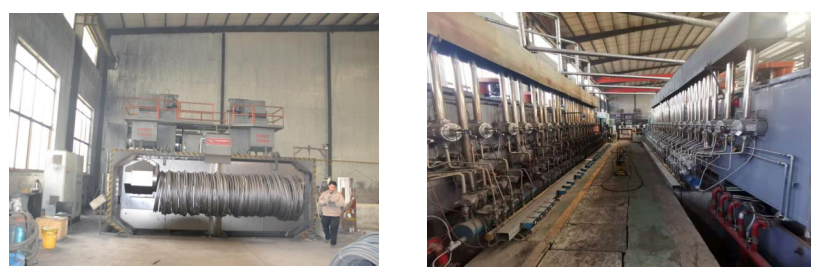
Heavy structural hex bolts are predominantly manufactured from medium carbon alloy steels, specifically AISI 4140, 4340, and 8640. These materials offer a balance of strength, ductility, and hardenability. The steel composition dictates the as-received hardness and responsiveness to heat treatment. Manufacturing begins with hot forging or cold heading to form the bolt blank. Hot forging yields higher strength due to grain flow alignment, but requires more energy. Cold heading offers better dimensional control and surface finish. Following forming, the bolts undergo thread rolling – a cold forming process that improves thread strength compared to machining. Critical parameters in thread rolling include die pressure, feed rate, and lubrication. Heat treatment, a crucial step, typically involves quenching and tempering. Quenching hardens the steel, while tempering reduces brittleness and increases toughness. Precise temperature control during both stages is paramount. Finally, surface treatments such as hot-dip galvanizing, mechanical galvanizing, or PTFE coating are applied for corrosion protection. Hydrogen embrittlement is a risk during galvanizing and requires post-treatment baking to diffuse hydrogen from the steel lattice. Chemical composition must adhere strictly to ASTM specifications, with permissible variances defined for elements like carbon, manganese, silicon, and phosphorus.
Performance & Engineering
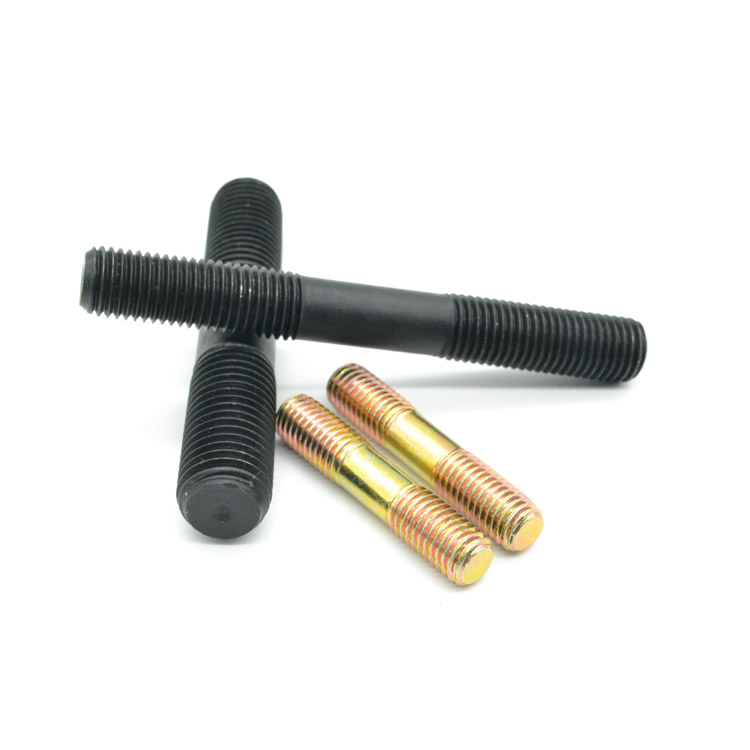
The performance of heavy structural hex bolts is dictated by several engineering principles. Tensile strength, the maximum stress the bolt can withstand before fracture, is critical for resisting axial loads. Yield strength, the stress at which permanent deformation begins, is equally important to prevent loosening under service loads. Proof load, typically defined as 90% of the tensile strength, specifies the maximum allowable tensile load in service. Pre-tensioning, achieved through tightening to a specified torque, is essential to create clamp load – the force holding the joined materials together. Clamp load magnitude directly influences joint fatigue resistance. Environmental resistance is a significant concern; corrosion can degrade bolt strength and lead to failure. Galvanizing and coating selection must be based on the service environment (e.g., marine, industrial, chemical). Fatigue performance is evaluated through cyclic loading tests, considering factors like stress concentration at the thread root and the presence of stress raisers (e.g., corrosion pits). Compliance with building codes (e.g., AISC, Eurocode) and industry standards (e.g., AWS) mandates specific bolt grades and installation procedures. Finite element analysis (FEA) is frequently employed to optimize bolt geometry and predict stress distribution under various loading scenarios. Shear forces, bending moments, and combined loading conditions must all be accounted for in the engineering design.
Technical Specifications
| Grade | Tensile Strength (MPa) | Yield Strength (MPa) | Hardness (HRC) | Minimum Proof Load (kN) - M20 | Typical Coating |
|---|---|---|---|---|---|
| A325 | 690 | 410 | 33-39 | 99 | Zinc Plated |
| A325M | 690 | 410 | 33-39 | 99 | Zinc Plated |
| A490 | 1034 | 690 | 41-47 | 178 | Dacromet |
| A490M | 1034 | 690 | 41-47 | 178 | Dacromet |
| 8.8 (Metric) | 800 | 640 | 32-38 | 88 | Zinc Plated/Galvanized |
| 10.9 (Metric) | 1000 | 900 | 37-43 | 118 | Zinc Plated/Galvanized |
Failure Mode & Maintenance
Heavy structural hex bolts are susceptible to several failure modes. Tensile overload, exceeding the bolt's tensile strength, results in catastrophic fracture. Fatigue failure occurs under cyclic loading, initiating at stress concentration points (thread roots, corrosion pits). Hydrogen embrittlement, particularly in high-strength bolts after galvanizing, reduces ductility and promotes brittle fracture. Corrosion, both general and localized (pitting), weakens the bolt material. Preload loss, due to creep or vibration, reduces clamp load and can lead to joint separation. Thread stripping, caused by excessive tightening or material incompatibility, compromises joint integrity. Maintenance involves regular inspection for corrosion, damage, and preload loss. Torque re-tightening, using calibrated torque wrenches, is essential to maintain adequate clamp load. Ultrasonic testing can non-destructively assess preload. If corrosion is detected, the bolt should be replaced. In highly corrosive environments, upgrading to corrosion-resistant alloys or applying specialized coatings is recommended. Failure analysis, including fracture surface examination and material testing, is crucial to identify the root cause of failure and prevent recurrence. Regularly cleaning and lubricating threads can also prevent galling and facilitate disassembly/reassembly.
Industry FAQ
Q: What is the difference between ASTM A325 and A490 bolts, and when should each be used?
A: ASTM A490 bolts possess significantly higher tensile and yield strengths than A325 bolts. A490 is recommended for applications with higher dynamic loads, larger connection sizes, or where weight reduction is critical. A325 is generally suitable for less demanding applications. The higher strength of A490 necessitates careful torque control to avoid overstressing connected materials.
Q: How does thread engagement length impact the strength of a bolted joint?
A: Increasing thread engagement length generally increases joint strength, as more threads share the load. However, there's a point of diminishing returns. Sufficient thread engagement ensures that the bolt's full strength can be effectively utilized and prevents thread stripping. A minimum of two thread diameters is typically recommended for full strength.
Q: What are the risks associated with using lubrication during bolt tightening?
A: Using the incorrect lubricant, or applying excessive lubricant, can lead to inaccurate torque readings and potentially result in under- or over-tightened bolts. Lubricants reduce friction, requiring adjustments to the torque coefficient. Always use lubricants specifically recommended by the bolt manufacturer and adjust torque values accordingly.
Q: How can hydrogen embrittlement be prevented in high-strength bolts?
A: Hydrogen embrittlement can be mitigated by using low-hydrogen galvanizing processes, employing post-galvanizing baking to remove absorbed hydrogen, and selecting coating systems less prone to hydrogen absorption. Properly controlling steel composition and heat treatment also contributes to improved resistance.
Q: What is the role of proof load in bolt selection and application?
A: Proof load represents the maximum tensile load that a bolt can withstand without permanent deformation. It's a critical parameter in determining the bolt's suitability for a specific application. The working load applied to the bolt should be significantly lower than the proof load, providing a safety factor to prevent yielding and ensure long-term reliability.
Conclusion
Heavy structural hex bolts remain indispensable components in load-critical infrastructure and industrial applications. Their performance hinges on a complex interplay of material science, precise manufacturing processes, and rigorous engineering design. Understanding the nuanced relationship between bolt grade, mechanical properties, preload, and environmental factors is paramount to ensuring joint integrity and preventing catastrophic failure.
Future trends will likely focus on developing advanced coating technologies for enhanced corrosion resistance, exploring higher-strength alloy steels, and integrating smart bolt technologies with embedded sensors for real-time monitoring of preload and structural health. Continued adherence to international standards and best practices in installation and maintenance remains crucial for maximizing the service life and safety of bolted connections.