
Introduction
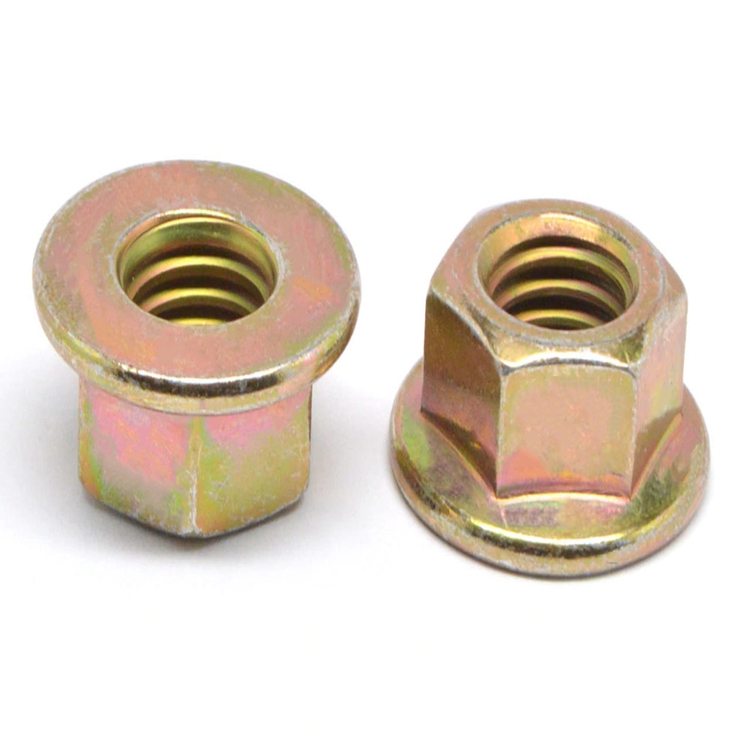
Grade 8.8 flange head bolts are high-strength fasteners crucial in numerous industrial applications demanding robust and reliable jointing solutions. These bolts occupy a specific position within the broader fastener industry, functioning as critical components in structural assemblies, pressure vessel closures, and machinery construction. Classified under the ISO 898-1 standard, a Grade 8.8 designation indicates specific mechanical properties achieved through alloy steel composition and heat treatment processes. Core performance characteristics include tensile strength, yield strength, and resistance to loosening under vibration. These parameters are essential for ensuring the integrity and safety of assembled structures. The flange beneath the head provides increased bearing surface and distributes clamping force effectively, making them particularly well-suited for applications requiring high clamp load and resistance to flange lift. Understanding the nuances of Grade 8.8 flange head bolts is crucial for engineers and procurement professionals aiming to optimize component selection and ensure long-term structural performance.
Material Science & Manufacturing
The foundation of a Grade 8.8 flange head bolt lies in its material composition – medium-carbon alloy steel, typically conforming to standards like S355J2 or 42CrMo4. This steel contains approximately 0.30-0.35% carbon, 0.60-0.90% manganese, 0.20-0.50% silicon, and trace amounts of phosphorus and sulfur. The carbon content provides hardness and strength, while manganese enhances hardenability and toughness. Silicon improves oxidation resistance during hot working. Manufacturing begins with hot rolling or forging of the steel into round bars. These bars are then subjected to cold forming processes – typically upsetting – to create the bolt’s head and shank geometry. Critical parameter control during cold forming includes die lubrication, forming speed, and temperature management to prevent material defects like cracking or laps. Subsequent heat treatment is paramount. This generally involves austenitizing (heating to a specific temperature to transform the microstructure to austenite), quenching (rapid cooling to create martensite), and tempering (reheating to a lower temperature to enhance ductility and reduce brittleness). The tempering temperature is precisely controlled to achieve the desired mechanical properties, defining the Grade 8.8 classification. Thread rolling, rather than thread cutting, is preferred as it work-hardens the threads, increasing their strength and fatigue resistance. Surface treatments such as zinc plating or passivation are often applied to enhance corrosion resistance. Quality control includes rigorous testing of chemical composition, hardness, tensile strength, and dimensional accuracy, adhering to ISO 898-1 specifications.
Performance & Engineering
The performance of Grade 8.8 flange head bolts is primarily governed by their mechanical properties and ability to withstand applied loads. Force analysis focuses on tensile stress (resistance to pulling forces), shear stress (resistance to forces acting parallel to the cross-section), and bending stress (resistance to forces causing deformation). The flange provides a larger bearing area, reducing bearing stress under the bolt head, and minimizing the risk of flange face deformation. Environmental resistance is a crucial consideration. Exposure to corrosive environments – particularly those containing chlorides or sulfates – can induce pitting corrosion and hydrogen embrittlement, weakening the bolt. Protective coatings, like zinc plating or specialized coatings such as Geomet, are employed to mitigate this risk. Compliance requirements are dictated by industry-specific standards. For example, in pressure vessel applications, ASME Boiler and Pressure Vessel Code Section VIII Division 1 specifies stringent requirements for fastener selection and installation. In structural steel design, Eurocode 3 (EN 1993-1-8) provides guidelines for bolted connections, including torque specifications and preloading requirements. Functional implementation involves accurate torque control during installation. Insufficient torque can lead to joint loosening, while excessive torque can yield the bolt or damage the mating components. Preloading – intentionally stretching the bolt during tightening – is often employed to create a clamped joint with higher resistance to external loads and vibration. Finite element analysis (FEA) is frequently used to optimize bolt design and predict stress distribution under various loading conditions.
Technical Specifications
| Property | Value (Typical) | Test Standard | Unit |
|---|---|---|---|
| Tensile Strength | 800 | ISO 898-1 | MPa |
| Yield Strength | 600 | ISO 898-1 | MPa |
| Hardness (Brinell) | 241-335 | ISO 6508-1 | HB |
| Elongation at Break | 16 | ISO 6892-1 | % |
| Thread Pitch | Variable (Dependent on Diameter) | ISO 68-1 | mm |
| Flange Diameter | Variable (Dependent on Bolt Size) | DIN 6921 | mm |
Failure Mode & Maintenance
Grade 8.8 flange head bolts are susceptible to several failure modes in practical applications. Fatigue cracking is a common issue, particularly in applications involving cyclical loading. This occurs due to repeated stress fluctuations exceeding the bolt’s fatigue limit. Hydrogen embrittlement can occur in corrosive environments, causing brittle fracture. Creep, the slow and permanent deformation under sustained load at elevated temperatures, is also a concern in high-temperature applications. Corrosion, including pitting and galvanic corrosion, can weaken the bolt material over time. Thread stripping, caused by excessive torque or improper thread engagement, is another potential failure point. Failure analysis often involves fracture surface examination using scanning electron microscopy (SEM) to identify the root cause of failure. Maintenance strategies include periodic inspections for signs of corrosion or damage. Torque checks should be performed regularly, particularly in critical applications. Lubrication of bolt threads can reduce friction and prevent galling. In corrosive environments, protective coatings should be inspected and re-applied as needed. Replacing bolts exhibiting signs of corrosion, fatigue, or damage is crucial to prevent catastrophic failure. Proper storage of bolts in a dry environment is also important to prevent corrosion during periods of non-use. Furthermore, implementing a bolt tightening procedure that adheres to manufacturer specifications and industry standards is paramount to ensure consistent and reliable clamping force.
Industry FAQ
Q: What is the significance of the ‘8.8’ designation in Grade 8.8 bolts, and how does it relate to material properties?
A: The ‘8.8’ designation is a standardized metric system for defining the mechanical properties of steel fasteners. The first number (8) represents the ultimate tensile strength in hundreds of MPa (megapascals), so 8.8 indicates 800 MPa. The second number (8) represents the yield strength as a proportion of the tensile strength; in this case, 0.8 means the yield strength is 80% of the tensile strength, or 600 MPa. These values dictate the load-bearing capacity and structural integrity of the bolt.
Q: What surface treatments are commonly applied to Grade 8.8 flange head bolts, and what benefits do they provide?
A: Common surface treatments include zinc plating, phosphate coating, and more advanced coatings like Geomet. Zinc plating offers sacrificial corrosion protection, preventing the steel from rusting. Phosphate coating enhances paint adhesion and provides some corrosion resistance. Geomet coatings combine zinc flakes with an aluminum-polymer matrix, providing superior corrosion protection, particularly in aggressive environments. The choice depends on the application and required level of protection.
Q: What are the critical factors to consider when determining the appropriate torque value for a Grade 8.8 flange head bolt?
A: Several factors influence the optimal torque value, including bolt diameter, thread pitch, friction coefficient between the bolt and nut/tapped hole, and lubrication. Torque specifications are often provided by manufacturers or can be calculated using established engineering formulas. Using a calibrated torque wrench is essential for accurate tightening. Preloading requirements – the desired clamping force – also play a crucial role.
Q: How does the flange on a flange head bolt contribute to the performance of the connection?
A: The flange distributes the clamping force over a larger bearing area compared to a standard hex head bolt. This reduces bearing stress on the connected components, minimizing the risk of deformation or crushing. The flange also helps prevent flange lift, which can occur when the bolt is subjected to bending moments or high loads. This increased bearing surface and resistance to flange lift make flange head bolts ideal for applications where high clamp load and stability are critical.
Q: What preventative measures can be taken to mitigate the risk of hydrogen embrittlement in Grade 8.8 bolts used in corrosive environments?
A: Several measures can be employed. Utilizing corrosion-resistant coatings such as Geomet or specialized plating is crucial. Avoiding electroplating processes that can introduce hydrogen into the steel is also important. Applying a sealant to the threads can help prevent ingress of corrosive fluids. Selecting bolts made from alloy steels with lower susceptibility to hydrogen embrittlement can also be considered. Regular inspections and maintenance are essential to identify and address any signs of corrosion.
Conclusion
Grade 8.8 flange head bolts represent a critical fastening solution in numerous industrial applications demanding high strength, reliability, and durability. Their performance is fundamentally tied to the careful selection of alloy steel, precise control of manufacturing processes, and adherence to stringent quality standards like ISO 898-1. Understanding the interplay between mechanical properties, environmental resistance, and proper installation techniques is paramount for ensuring long-term structural integrity and preventing premature failure.
Looking ahead, advancements in materials science and coating technologies will continue to enhance the performance and longevity of these essential fasteners. The growing emphasis on lightweighting and sustainable materials may also drive the development of alternative alloy compositions and manufacturing processes. Furthermore, the increasing adoption of digital technologies, such as smart bolts with integrated sensors for torque monitoring and predictive maintenance, will revolutionize fastener management and enhance the overall safety and efficiency of industrial operations.
