
Introduction
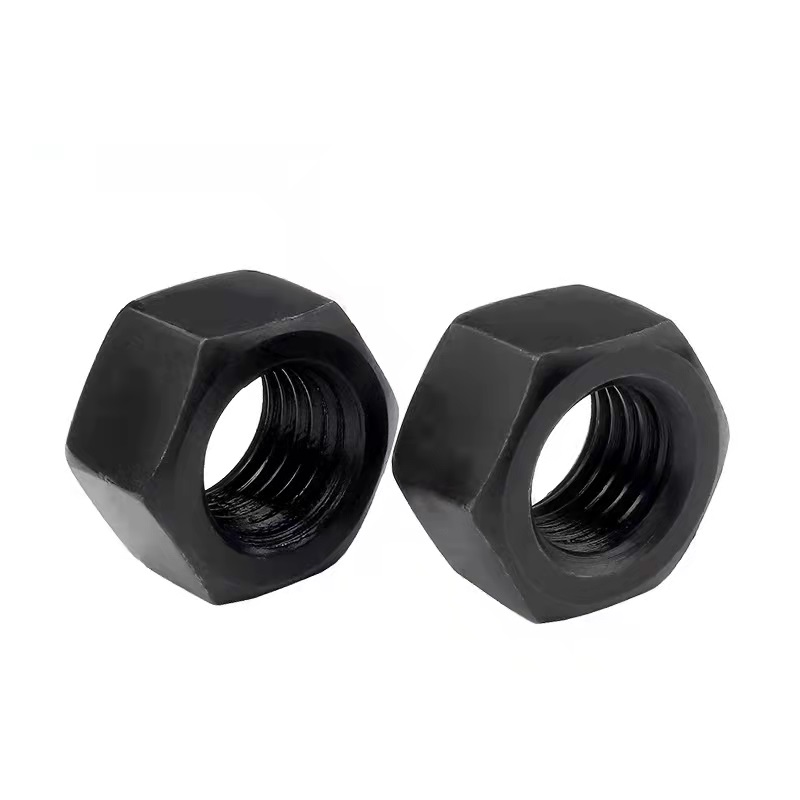
Grade 4.8 flange head bolts are high-strength fasteners widely employed in critical industrial applications demanding robust joint integrity. Positioned within the fastening elements of mechanical assemblies, these bolts bridge components under tensile, shear, and combined loading conditions. The ‘4.8’ designation signifies the material’s tensile strength (400 MPa) and yield strength (240 MPa), respectively. Flange head bolts, characterized by their integrated flange beneath the head, distribute load over a wider surface area, enhancing clamping force and minimizing stress concentration in softer materials. This guide provides an in-depth technical overview of Grade 4.8 flange head bolts, covering material science, manufacturing processes, performance characteristics, potential failure modes, and relevant industry standards. A core pain point in industry is ensuring consistent performance and longevity of bolted joints, particularly in dynamic loading and corrosive environments. Understanding the nuances of material properties and manufacturing quality is paramount to mitigate risks and prevent catastrophic failures.
Material Science & Manufacturing
Grade 4.8 flange head bolts are predominantly manufactured from medium carbon steel, typically conforming to standards like ISO 898-1 or DIN 933. The primary raw material is carbon steel containing approximately 0.25-0.35% carbon, with manganese, silicon, and trace amounts of phosphorus and sulfur. The steel exhibits a ferrite-pearlite microstructure, providing a balance of strength and ductility. Manufacturing commences with hot rolling of steel billets into bars. These bars undergo cold drawing to achieve the desired diameter and surface finish. Thread rolling, a cold forming process, is employed to create the bolt threads, improving fatigue resistance compared to machining. The flange head is formed through forging or cold heading. Heat treatment, specifically quenching and tempering, is crucial. Quenching hardens the steel, while tempering reduces brittleness and imparts toughness. Precise control of temperature and holding time during heat treatment is critical to achieve the 4.8 mechanical properties. Surface treatments such as zinc plating or galvanizing are commonly applied to enhance corrosion resistance. Hydrogen embrittlement can occur during electroplating processes; post-plating baking is often necessary to mitigate this risk. Key parameter control during manufacturing includes monitoring chemical composition, maintaining precise dimensions, ensuring correct thread profile, and verifying hardness through Rockwell or Brinell testing. Improper heat treatment can result in insufficient hardness or residual stresses, compromising bolt performance.
Performance & Engineering
The performance of Grade 4.8 flange head bolts is dictated by their ability to withstand applied loads without failure. Force analysis involves considering tensile stress (σ = F/A, where F is the applied force and A is the cross-sectional area), shear stress (τ = F/A), and bending stress. The flange head's wider bearing surface reduces stress concentration on the joined material, improving joint integrity. Environmental resistance is a critical performance factor. Corrosion, particularly in marine or chemically aggressive environments, can significantly reduce bolt strength. Protective coatings, like zinc plating or galvanizing, provide a sacrificial barrier against corrosion. However, coating performance degrades over time, necessitating periodic inspection and maintenance. Compliance requirements are governed by standards like ISO 898-1, which specifies mechanical properties, dimensions, and testing procedures. Preload, the initial tension applied to the bolt during tightening, is a vital engineering parameter. Insufficient preload can lead to joint loosening, while excessive preload can cause bolt yielding or stripping of threads. Torque control is commonly used to achieve the desired preload, although direct tension indicators are more accurate. Fatigue resistance is important in applications subjected to cyclical loading. The bolt’s surface finish and thread quality significantly impact fatigue life. Creep, the slow deformation under sustained load, can occur at elevated temperatures and is a concern in high-temperature applications.
Technical Specifications
| Property | Value (Typical) | Testing Standard | Unit |
|---|---|---|---|
| Tensile Strength | 400 | ISO 898-1 | MPa |
| Yield Strength | 240 | ISO 898-1 | MPa |
| Elongation at Break | 16 | ISO 898-1 | % |
| Hardness (Brinell) | 170-210 | ISO 6508-1 | HB |
| Thread Pitch | Variable (dependent on diameter) | ISO 68-1 | mm |
| Flange Diameter | Variable (dependent on bolt size) | DIN 933 | mm |
Failure Mode & Maintenance
Grade 4.8 flange head bolts are susceptible to several failure modes. Fatigue cracking, initiated by cyclical loading, typically occurs at stress concentration points, such as thread roots or under the flange head. Corrosion, particularly pitting corrosion, weakens the bolt material and reduces its load-carrying capacity. Hydrogen embrittlement, induced by electroplating, can lead to brittle fracture. Shear failure occurs when the applied shear stress exceeds the bolt’s shear strength. Thread stripping, resulting from excessive preload or improper tightening, compromises joint integrity. Over-tightening can lead to bolt yielding and permanent deformation. Delamination of coatings, reducing corrosion protection, accelerates corrosion-induced failure. Maintenance involves regular inspection for signs of corrosion, fatigue cracking, or thread damage. Torque checks should be performed periodically to ensure adequate preload. Lubrication of threads reduces friction and prevents galling during tightening. Damaged bolts should be replaced immediately. Protective coatings should be reapplied as needed to maintain corrosion resistance. Non-destructive testing methods, such as ultrasonic inspection or magnetic particle inspection, can detect subsurface cracks. Proper storage in a dry environment prevents premature corrosion.
Industry FAQ
Q: What is the impact of using an incorrect torque value during bolt tightening?
A: Using an insufficient torque value results in inadequate preload, leading to joint loosening and potential failure under load. Conversely, excessive torque can cause bolt yielding, thread stripping, or damage to the joined components. Accurate torque control is crucial, and the recommended torque values should be strictly adhered to, based on bolt diameter, material, and lubrication conditions.
Q: How does the choice of surface coating affect the long-term performance of Grade 4.8 flange head bolts?
A: The surface coating provides corrosion protection, which is vital for maintaining bolt strength and preventing failure. Zinc plating is a common and cost-effective option, but its corrosion resistance is limited. Galvanizing offers superior protection, especially in harsh environments. However, the galvanizing process can introduce hydrogen embrittlement, necessitating post-treatment. Proper coating selection depends on the application environment and anticipated service life.
Q: What are the common causes of hydrogen embrittlement in Grade 4.8 bolts?
A: Hydrogen embrittlement is primarily caused by the introduction of atomic hydrogen into the steel during processes like electroplating or pickling. The hydrogen diffuses into the material and reduces its ductility, making it susceptible to brittle fracture. Post-plating baking is a common method to remove hydrogen and mitigate the risk of embrittlement.
Q: What are the critical parameters to monitor during the heat treatment process to ensure the correct Grade 4.8 properties?
A: Critical parameters include quenching temperature, quenching medium, tempering temperature, and holding time at temperature. Precise control of these parameters is essential to achieve the desired hardness, tensile strength, and ductility. Regular hardness testing and microstructural analysis are necessary to verify the effectiveness of the heat treatment process.
Q: How can fatigue cracking be detected early on in Grade 4.8 flange head bolts?
A: Fatigue cracking often initiates at stress concentration points. Visual inspection for surface cracks, particularly around thread roots and under the flange head, can reveal early signs of fatigue damage. Non-destructive testing methods, such as dye penetrant inspection, magnetic particle inspection, or ultrasonic inspection, can detect subsurface cracks that are not visible to the naked eye.
Conclusion
Grade 4.8 flange head bolts represent a critical fastening component in numerous industrial applications. Their performance is intricately linked to material selection, precise manufacturing control, and appropriate application practices. Understanding the material science—specifically the ferrite-pearlite microstructure and the impact of heat treatment—is paramount to achieving the specified mechanical properties. Failure modes such as fatigue cracking, corrosion, and hydrogen embrittlement necessitate regular inspection and preventative maintenance to ensure long-term joint integrity.
Moving forward, advancements in surface coating technologies, such as the development of more durable and corrosion-resistant coatings, will continue to enhance the reliability of these fasteners. Furthermore, the adoption of digital torque wrenches with data logging capabilities and the implementation of predictive maintenance programs based on sensor data will enable proactive management of bolted joints, minimizing downtime and reducing the risk of catastrophic failures. Continued research into high-strength alloys and advanced manufacturing processes will further optimize the performance and longevity of Grade 4.8 flange head bolts.
