
Introduction
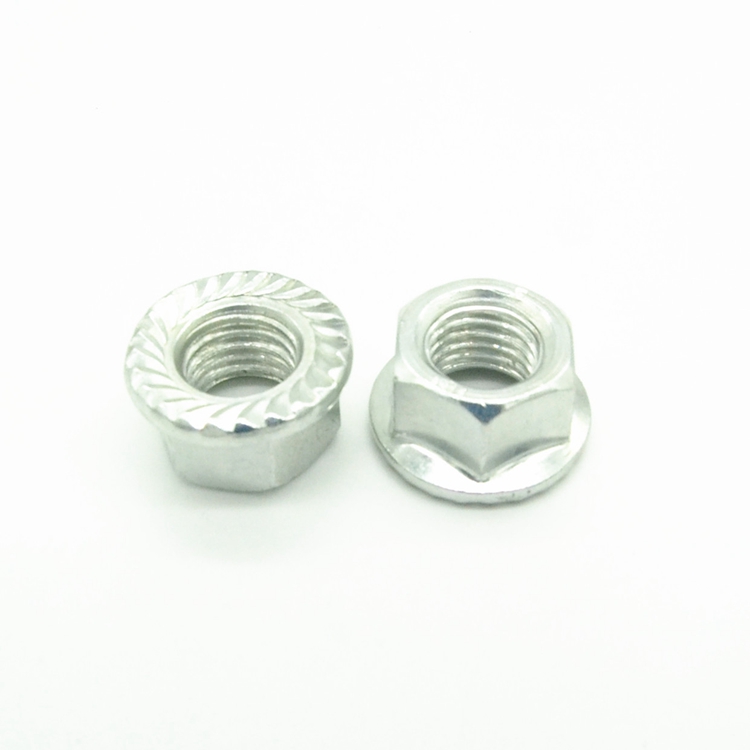
Fine thread flange head bolts represent a critical fastening solution across numerous industrial applications, particularly in sectors demanding high clamp load and resistance to loosening. Positioned within the broader family of hex head bolts, they distinguish themselves through their increased thread count per inch, offering enhanced control over tightening torque and improved resistance to vibrational loosening. These bolts are commonly employed in automotive, aerospace, and heavy machinery applications where reliability and structural integrity are paramount. The flange, integrated directly beneath the bolt head, provides a larger bearing surface, distributing the load over a wider area and minimizing stress concentrations on the joined materials. This guide provides an in-depth examination of their material science, manufacturing processes, performance characteristics, potential failure modes, and relevant industry standards.
Material Science & Manufacturing
The most prevalent material for fine thread flange head bolts is medium carbon steel, typically AISI 1045, selected for its balance of strength, ductility, and cost-effectiveness. Alloy steels, such as 4140 and 4340, are utilized in applications requiring higher tensile strength, impact resistance, and hardenability. Stainless steel variants (304, 316) provide exceptional corrosion resistance, crucial in harsh environments. Manufacturing typically begins with hot forging or cold heading, shaping the bolt blank. Hot forging yields higher strength due to grain flow alignment but requires subsequent machining. Cold heading offers better surface finish and dimensional control, reducing material waste. Following forming, thread rolling is employed to create the fine threads; a process which work-hardens the surface, increasing fatigue resistance compared to thread cutting. Heat treatment – hardening, tempering, and often case hardening (carburizing or nitriding) – is critical to achieve the desired mechanical properties. Flange formation can occur through forging, machining, or impact extrusion. Precise control of process parameters, including forging temperature, cooling rates, and carburizing depth, is vital to prevent microstructural defects like porosity, inclusions, and retained austenite, all of which can compromise bolt performance. Chemical composition is rigorously controlled to meet specifications outlined in standards like ASTM A193 and ISO 898-1.
Performance & Engineering
The performance of fine thread flange head bolts is fundamentally governed by their ability to withstand tensile, shear, and fatigue loads without failure. The fine thread pitch enhances resistance to loosening under vibration, a critical consideration in automotive engine components and aerospace structures. Clamp load, the axial force generated by tightening the bolt, is directly proportional to the applied torque and influenced by the coefficient of friction between the bolt threads and the mating material. Finite Element Analysis (FEA) is routinely employed during the design phase to optimize bolt geometry, predict stress distribution, and evaluate the impact of preload on joint integrity. Corrosion resistance is a primary performance concern, particularly in marine and chemical processing environments. Galvanic corrosion, resulting from dissimilar metal contact, must be addressed through material selection and the application of protective coatings (zinc plating, cadmium plating, or specialized organic coatings). Environmental resistance also extends to temperature fluctuations; prolonged exposure to elevated temperatures can lead to creep and a reduction in bolt preload. Compliance requirements, such as those stipulated by automotive standards (e.g., IATF 16949) and aerospace standards (e.g., AS9100), dictate stringent quality control procedures and traceability requirements throughout the manufacturing process.
Technical Specifications
| Diameter (mm) | Thread Pitch (mm) | Tensile Strength (MPa) | Yield Strength (MPa) |
|---|---|---|---|
| M8 | 1.25 | 800 - 1000 | 600 - 800 |
| M10 | 1.5 | 800 - 1200 | 600 - 900 |
| M12 | 1.75 | 1000 - 1400 | 800 - 1100 |
| M16 | 2.0 | 1200 - 1600 | 1000 - 1400 |
| M20 | 2.5 | 1400 - 1800 | 1100 - 1600 |
| M24 | 3.0 | 1600 - 2000 | 1200 - 1800 |
Failure Mode & Maintenance
Fine thread flange head bolts are susceptible to several failure modes. Fatigue cracking, initiated by cyclic loading, is common in applications involving vibration. Stress corrosion cracking can occur in corrosive environments, particularly with susceptible materials. Hydrogen embrittlement, resulting from hydrogen diffusion into the metal lattice, reduces ductility and promotes cracking. Thread stripping, caused by excessive torque or improper thread engagement, is a frequent issue. Over-tightening can lead to bolt stretching and eventual fracture. Under-tightening results in loosening and potential joint failure. Maintenance involves periodic inspection for signs of corrosion, cracks, and thread damage. Torque verification using calibrated torque wrenches is crucial to ensure proper preload. Lubrication with appropriate thread compounds reduces friction and prevents galling. In critical applications, Non-Destructive Testing (NDT) methods, such as magnetic particle inspection and ultrasonic testing, can detect subsurface flaws. Replacement is necessary for bolts exhibiting any signs of damage or exceeding their service life. Record-keeping of torque values and inspection results is vital for preventative maintenance programs.
Industry FAQ
Q: What is the primary advantage of using a fine thread bolt over a coarse thread bolt in a high-vibration environment?
A: The increased thread count per inch in a fine thread bolt provides greater resistance to loosening under vibration. This is because a finer thread offers a smaller helix angle, requiring more turns to travel the same distance, and thus a greater frictional force to initiate movement.
Q: How does the flange on a flange head bolt contribute to the integrity of the joint?
A: The flange increases the bearing surface area, distributing the clamping force over a wider area. This reduces stress concentration on the joined materials, minimizing the risk of deformation or damage. It also provides a self-centering effect during installation.
Q: What material selection considerations are crucial when using these bolts in a marine application?
A: Corrosion resistance is paramount. Stainless steel alloys, particularly 316 stainless steel, are recommended due to their superior resistance to chloride-induced pitting and crevice corrosion. Consider also applying protective coatings and employing cathodic protection strategies.
Q: What is the significance of heat treatment in the manufacturing process?
A: Heat treatment is critical for achieving the desired mechanical properties – tensile strength, yield strength, and hardness. Proper heat treatment ensures the bolt can withstand the anticipated loads and stresses without failure, and also impacts fatigue life.
Q: What are the key indicators that a fine thread flange head bolt needs to be replaced?
A: Visible signs of corrosion, thread damage (stripped or deformed threads), cracks (detectable through visual inspection or NDT methods), and evidence of stretching or permanent deformation are all indicators requiring immediate replacement. Any bolt exceeding its recommended service life should also be replaced.
Conclusion
Fine thread flange head bolts represent a sophisticated fastening solution engineered for demanding applications. Their superior resistance to loosening, combined with the load-distributing benefits of the integrated flange, makes them ideal for use in critical structural joints. Understanding the nuances of material selection, manufacturing processes, and potential failure modes is essential for ensuring long-term reliability and performance.
Continued advancements in materials science and coating technologies are further enhancing the durability and corrosion resistance of these bolts. Implementing robust inspection and maintenance procedures, guided by industry standards and best practices, is vital for maximizing their service life and preventing catastrophic failures. Properly specified and maintained, fine thread flange head bolts remain a cornerstone of secure and reliable mechanical assemblies.
