
Introduction
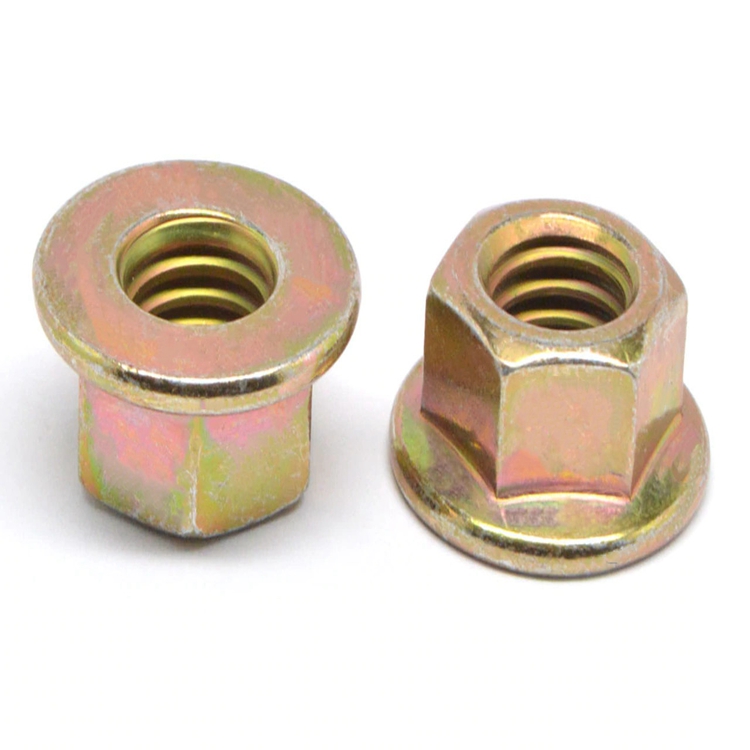
Carbon steel flange head bolts are high-strength fasteners utilized extensively in demanding industrial applications, particularly in flanged joints. These bolts serve as critical components in piping systems, pressure vessels, and machinery where secure and leak-proof connections are paramount. Positioned within the broader fastener industry, they represent a specialized subset distinguished by their integrated flange, which provides a wider bearing surface for improved load distribution and enhanced sealing capabilities. The core performance characteristics – tensile strength, yield strength, and resistance to various forms of corrosion – dictate their suitability across diverse sectors, including oil and gas, petrochemical, power generation, and water treatment. A key industry pain point is maintaining consistent performance under cyclical loading and exposure to harsh operating environments, necessitating rigorous material selection, precise manufacturing, and adherence to stringent quality control protocols. Furthermore, proper bolt selection and installation are vital to prevent failures like joint leakage, bolt fracture, and equipment downtime.
Material Science & Manufacturing
The primary raw material for carbon steel flange head bolts is medium to high carbon steel, typically conforming to standards such as ASTM A193 Grade B7 or equivalent. These steels possess a defined chemical composition, primarily iron with controlled amounts of carbon, manganese, phosphorus, sulfur, and silicon. Carbon content is critical, influencing hardness and strength; higher carbon levels enhance strength but reduce ductility. Manufacturing begins with hot rolling or forging of the steel billet into a precursor bolt shape. This is followed by machining operations – turning, milling, and drilling – to achieve precise dimensions and thread profiles. The flange is typically formed through forging or machining. A critical stage is heat treatment, usually involving quenching and tempering, to achieve the desired mechanical properties. Quenching hardens the steel, while tempering enhances toughness and reduces brittleness. Surface treatments, like zinc plating, phosphate coating, or specialized corrosion-resistant coatings (e.g., PTFE), are applied to improve corrosion resistance and prevent galling. Key parameter control during manufacturing includes maintaining precise thread pitch, ensuring proper flange dimensions, and strictly monitoring heat treatment temperatures and durations to guarantee consistent material properties and prevent microstructural defects like martensite formation or excessive grain growth. Material compatibility with the flanged surfaces (e.g., stainless steel, ductile iron) is also crucial to avoid galvanic corrosion.
Performance & Engineering
The performance of carbon steel flange head bolts is governed by several key engineering principles. Force analysis focuses on tensile load, shear load, and bending moment resistance. The bolt must withstand the clamping force generated by tightening, as well as external loads acting on the flanged joint. The flange provides a larger bearing area, reducing stress concentration and improving load distribution compared to standard bolts. Environmental resistance is a critical factor, particularly in corrosive environments. Carbon steel is susceptible to oxidation and corrosion, which can reduce its strength and lead to failure. Protective coatings and material selection play a vital role in mitigating these risks. Compliance requirements, such as ASME Section VIII Division 1 for pressure vessels and API 6A for wellhead equipment, dictate specific material specifications, manufacturing processes, and testing procedures. Functional implementation relies on proper torque application during installation. Insufficient torque can lead to joint leakage, while excessive torque can cause bolt stretching or thread stripping. The bolt preload, the initial tension applied to the bolt, is a critical parameter affecting joint performance and fatigue life. Fatigue analysis, considering cyclical loading conditions, is often necessary to ensure long-term reliability. Furthermore, consideration must be given to thermal expansion and contraction of the flanged materials, as differential expansion can introduce stresses on the bolts.
Technical Specifications
| Diameter (mm) | Grade | Tensile Strength (MPa) | Yield Strength (MPa) |
|---|---|---|---|
| M12 | ASTM A193 B7 | 800-1000 | 400-550 |
| M16 | ASTM A193 B7 | 800-1000 | 400-550 |
| M20 | ASTM A193 B7 | 800-1000 | 400-550 |
| M24 | ASTM A193 B7 | 800-1000 | 400-550 |
| M30 | ASTM A193 B7 | 800-1000 | 400-550 |
| M36 | ASTM A193 B7 | 800-1000 | 400-550 |
Failure Mode & Maintenance
Carbon steel flange head bolts are susceptible to several failure modes. Fatigue cracking is a common issue under cyclical loading, initiating at stress concentrations such as thread roots or the flange interface. Corrosion, particularly pitting corrosion and crevice corrosion, can weaken the bolt and lead to premature failure. Hydrogen embrittlement, induced by exposure to hydrogen sulfide or other corrosive media, can significantly reduce ductility and cause sudden fracture. Galling, caused by friction between mating surfaces, can damage the threads and prevent proper tightening. Thread stripping occurs when the applied torque exceeds the thread strength. Improper installation, such as over-tightening or under-tightening, contributes significantly to failure rates. Maintenance involves regular inspection for signs of corrosion, cracking, or deformation. Torque checks should be performed periodically to ensure proper clamp load. Lubrication of the threads can prevent galling and facilitate disassembly. In corrosive environments, periodic replacement of the bolts is recommended based on risk assessment and operating conditions. When replacing bolts, ensure compatibility of materials and coatings to prevent galvanic corrosion. Detailed failure analysis, including metallographic examination and fracture surface analysis, is crucial to determine the root cause of failures and implement corrective actions.
Industry FAQ
Q: What is the impact of material composition on the corrosion resistance of these bolts?
A: The carbon content directly affects corrosion susceptibility. Higher carbon content generally reduces corrosion resistance. Alloying elements like chromium, nickel, and molybdenum can significantly improve corrosion resistance, but these are typically found in stainless steel flange head bolts rather than standard carbon steel variants. Surface coatings, such as zinc plating or epoxy coatings, provide a barrier against corrosive elements.
Q: How does the flange design influence the overall performance of the bolted joint?
A: The flange increases the bearing area, distributing load more evenly and reducing stress concentration. This enhances the joint’s ability to withstand high clamping forces and external loads. The flange also contributes to improved sealing performance by providing a larger surface for gasket contact.
Q: What are the critical parameters to control during torque application?
A: Precise torque control is crucial. Using a calibrated torque wrench is essential. The recommended torque value is typically specified by the flange manufacturer or applicable industry standard. Lubrication of the threads affects the torque-tension relationship; lubricated bolts require lower torque to achieve the same preload. Proper tightening sequence is also important to ensure uniform load distribution.
Q: What are the typical failure analysis techniques used to determine the root cause of bolt failures?
A: Failure analysis commonly includes visual inspection for cracks or corrosion, metallographic examination to assess microstructure, fracture surface analysis (e.g., scanning electron microscopy) to determine the fracture mode, and chemical analysis to verify material composition. Load calculations and stress analysis may be performed to assess the operating conditions.
Q: How does temperature affect the performance and longevity of these bolts in high-temperature applications?
A: Elevated temperatures can reduce the yield strength and tensile strength of carbon steel. Creep, the slow deformation under sustained stress, becomes a concern at high temperatures. Oxidation rates increase with temperature, accelerating corrosion. In high-temperature applications, material selection is critical, and specialized alloys (e.g., alloy steels) may be necessary. Regularly scheduled inspections are also necessary.
Conclusion
Carbon steel flange head bolts represent a foundational element in numerous critical industrial applications. Their performance is inextricably linked to material science, manufacturing precision, and adherence to engineering principles. The correct selection, installation, and maintenance of these bolts are paramount to ensuring the long-term integrity and safety of flanged joints. Understanding potential failure modes and implementing proactive maintenance strategies are essential for mitigating risks and preventing costly downtime.
Future developments will likely focus on advanced coatings for enhanced corrosion resistance, improved fatigue performance through optimized material compositions and manufacturing processes, and the integration of smart bolt technologies for real-time monitoring of bolt preload and detection of potential failures. Continued research and development in these areas will contribute to increased reliability and safety in demanding industrial environments.
