
Introduction
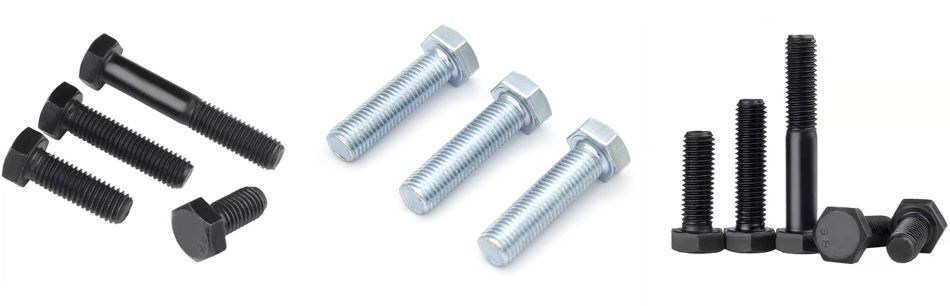
Half thread flange head bolts are high-strength fasteners utilized extensively in applications demanding secure clamping force and resistance to loosening, particularly within the heavy equipment, automotive, and structural engineering sectors. Distinguished by their flange head, which provides a larger bearing surface to distribute load and prevent damage to clamped materials, and the partially threaded shank, these bolts offer a balance between strength and ease of installation. The half-threading configuration reduces stress concentration compared to fully threaded bolts, enhancing fatigue resistance. Their technical position within the industry chain lies between raw material suppliers (steel manufacturers), bolt manufacturers (forming, threading, and heat treating facilities), and end-users – encompassing industries reliant on robust, reliable fastening solutions. Core performance characteristics include tensile strength, yield strength, prevailing torque (if equipped with locking features), fatigue life, and corrosion resistance, critical parameters defining their suitability for specific operating environments and load requirements.
Material Science & Manufacturing
The predominant material for half thread flange head bolts is medium carbon steel, typically AISI/SAE 1045, 10B21, or equivalent alloys conforming to EN 10083-2 standards. These steels offer a desirable combination of strength, ductility, and hardenability. Alloy steels, such as 4140 or 8640, are employed in high-stress applications requiring superior toughness and fatigue resistance. Raw material properties, including chemical composition (carbon content, manganese, silicon, phosphorus, sulfur), grain structure, and initial hardness, are crucial. Manufacturing begins with hot forging or cold heading to form the bolt head and shank. Following forming, the shank undergoes thread rolling, a cold-forming process imparting high tensile strength and favorable surface finish. Heat treatment, encompassing hardening and tempering, is vital for achieving desired mechanical properties. Hardening, typically performed through quenching in oil or water, increases strength and hardness. Tempering reduces brittleness and improves ductility. Surface treatments, such as zinc plating (ISO 4042) or black oxide coating (ASTM 319), provide corrosion protection. Critical parameters during manufacturing include precise thread pitch control, consistent heat treatment cycles (temperature and time), and accurate head dimensions to ensure proper fit and clamping force. Improper heat treatment can lead to martensitic cracking or insufficient hardness, compromising bolt integrity. Variations in thread pitch introduce installation challenges and reduce clamping efficiency.
Performance & Engineering
Performance of half thread flange head bolts is dictated by several engineering considerations. Force analysis involves evaluating tensile stress, shear stress, and bending moment under applied loads. The flange head's increased bearing area minimizes stress concentration on the clamped material, reducing the risk of crushing or deformation. The partial threading reduces stress concentration within the bolt itself, improving fatigue life, especially under dynamic loading. Environmental resistance is critical, particularly in corrosive environments. Galvanic corrosion can occur when dissimilar metals are in contact, necessitating careful material selection and the use of protective coatings. Compliance requirements vary based on application; automotive applications adhere to IATF 16949 standards, aerospace to AS9100, and general industrial applications to ISO 9001. Prevailing torque, achieved through features like nylon inserts (Nylock) or deformed threads, prevents loosening due to vibration. The preload (tightening torque) is a crucial parameter; insufficient preload results in joint slippage, while excessive preload can lead to bolt stretching or failure. Finite Element Analysis (FEA) is commonly employed to optimize bolt geometry and predict stress distribution under various loading scenarios. Bolt material selection, thread form (metric, UNC, UNF), and surface finish are all vital engineering parameters influencing performance and longevity.
Technical Specifications
| Parameter | Grade 8.8 (SAE J429/ASTM A574) | Grade 10.9 (SAE J429/ASTM A574) | Grade 12.9 (SAE J429/ASTM A574) | Typical Dimensions (M12 x 30mm) |
|---|---|---|---|---|
| Tensile Strength (MPa) | 800 | 1000 | 1200 | - |
| Yield Strength (MPa) | 640 | 900 | 1100 | - |
| Hardness (HRC) | 33-39 | 37-43 | 42-48 | - |
| Proof Load (kN) | 50.6 | 68.6 | 82.3 | - |
| Thread Pitch (mm) | 1.75 (for M12) | 1.75 (for M12) | 1.75 (for M12) | 1.75 |
| Flange Diameter (mm) | - | - | - | 20-22 |
Failure Mode & Maintenance
Half thread flange head bolts are susceptible to several failure modes. Fatigue cracking, initiated by repeated stress cycles, is common in dynamic applications. This can begin at stress concentrators such as thread roots or under the flange head. Corrosion, particularly in marine or chemically aggressive environments, leads to pitting corrosion and reduced cross-sectional area, weakening the bolt. Hydrogen embrittlement can occur in high-strength steels exposed to hydrogen-containing environments, causing delayed cracking. Shear failure can happen if the applied shear force exceeds the bolt's shear strength. Stripped threads, caused by improper installation or excessive torque, result in loss of clamping force. Maintenance strategies include regular visual inspection for signs of corrosion, cracks, or deformation. Torque checks should be performed periodically to ensure adequate preload. Lubrication of threads during installation reduces friction and prevents galling. If corrosion is detected, the bolts should be replaced with corrosion-resistant alternatives. Non-destructive testing (NDT) methods, such as magnetic particle inspection or ultrasonic testing, can detect subsurface cracks. Replacement should always adhere to the manufacturer's torque specifications to avoid over-tightening or under-tightening. For critical applications, implementing a bolt tightening schedule and maintaining detailed records is recommended.
Industry FAQ
Q: What is the advantage of a half-threaded bolt over a fully threaded bolt in high-vibration applications?
A: The half-threaded configuration minimizes the threaded length within the clamped components. This reduces the potential for fatigue failure induced by vibration, as a shorter threaded section experiences less flexing and stress concentration compared to a fully threaded bolt of the same length. Furthermore, the unthreaded portion acts as a shoulder, providing more stable support and resisting bending forces.
Q: What impact does thread engagement length have on the clamping force of a half thread flange head bolt?
A: Sufficient thread engagement is crucial for distributing load effectively and maximizing clamping force. A minimum of 1.5 times the bolt diameter is generally recommended for thread engagement length. Insufficient engagement can lead to thread stripping, reduced clamping force, and joint failure. Conversely, excessive engagement doesn't significantly increase clamping force and can increase the risk of galling.
Q: How does the flange head contribute to the overall performance of these bolts?
A: The flange head significantly increases the bearing surface area, distributing the clamping load over a wider area of the clamped materials. This prevents localized stress concentrations that could cause damage to softer materials or deformation of the joint. It also provides increased stability and reduces the risk of the bolt sinking into the material, particularly with thinner or less rigid components.
Q: What surface treatments are most effective for corrosion protection in saltwater environments?
A: For severe saltwater environments, hot-dip galvanizing (ASTM A153) offers superior corrosion protection compared to electroplating (zinc plating). Stainless steel (grades 304, 316) bolts are also an excellent choice, providing inherent corrosion resistance. In addition, applying a protective coating like a fluoropolymer-based coating can further enhance corrosion resistance, particularly in combination with stainless steel.
Q: Can half thread flange head bolts be reused? What considerations apply?
A: Reusing half thread flange head bolts is generally not recommended, especially in critical applications. Each tightening cycle introduces plastic deformation and reduces preload capability. If reuse is unavoidable, the bolts must be thoroughly inspected for any signs of damage (cracks, corrosion, thread stripping). They should be re-lubricated and tightened to the manufacturer's specified torque. However, even with careful inspection and re-tightening, their performance may be compromised.
Conclusion
Half thread flange head bolts represent a robust fastening solution engineered for demanding applications requiring high clamping force, fatigue resistance, and secure joint integrity. The combination of a flange head for enhanced bearing surface and partially threaded shank for reduced stress concentration provides a unique balance of performance characteristics. Proper material selection, meticulous manufacturing processes, and adherence to industry standards are paramount to ensuring reliable operation.
Future advancements may focus on developing advanced surface treatments, utilizing higher-strength alloy steels, and incorporating smart fastening technologies – such as integrated sensors for monitoring preload and detecting loosening – to further enhance performance and reliability of these critical components. Continuous research and development in fastener technology will undoubtedly drive improvements in joint design and overall system efficiency.
