
Introduction
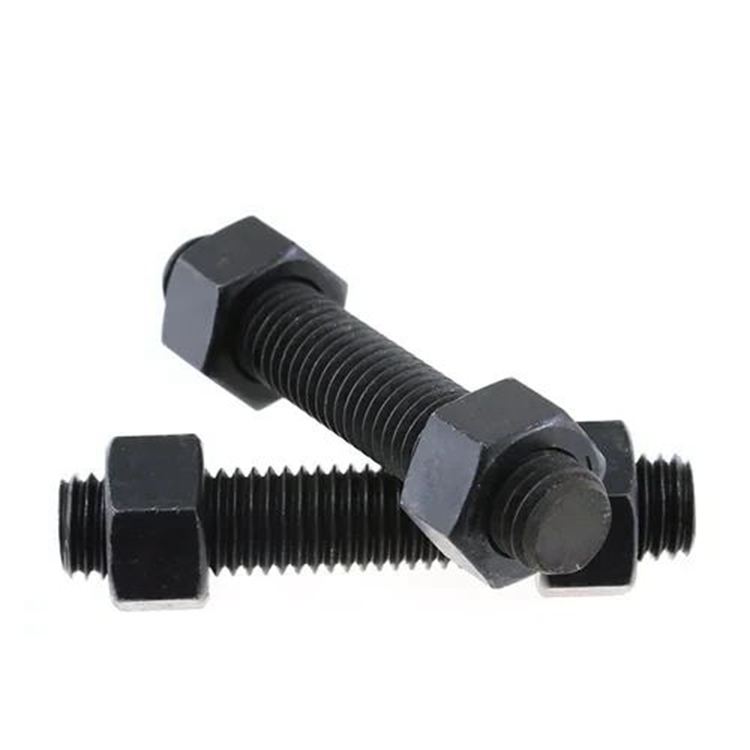
GB flange head bolts are high-strength fasteners crucial for joining flanged connections in a wide range of industrial applications, including pipelines, pressure vessels, and machinery. Defined by Chinese national standard GB/T 19001.6, these bolts feature an integrated flange under the head, providing increased bearing surface and enhanced stability within the assembly. Their primary function is to securely clamp flanges together, maintaining a pressure-tight seal, especially in high-pressure and high-temperature environments. The selection of appropriate GB flange head bolts is paramount to structural integrity and operational safety. This guide provides a comprehensive overview of their material science, manufacturing processes, performance characteristics, failure modes, and relevant industry standards.
Material Science & Manufacturing
GB flange head bolts are commonly manufactured from carbon steel (e.g., Q235, 45# steel), alloy steel (e.g., 35CrMo, 40Cr), and stainless steel (e.g., 304, 316). The material selection dictates the bolt’s strength, corrosion resistance, and operating temperature range. Carbon steels offer high tensile strength and are cost-effective for general applications. Alloy steels provide enhanced strength, toughness, and hardenability, making them suitable for high-stress and elevated temperature services. Stainless steels exhibit excellent corrosion resistance, essential for aggressive environments.
Manufacturing typically involves several stages: raw material procurement, forging or cold heading, heat treatment, machining, and surface treatment. Forging yields bolts with superior grain structure and strength compared to cold heading. Heat treatment – including quenching and tempering – is critical to achieving the desired mechanical properties. Machining precisely forms the bolt’s head, flange, and thread. Surface treatments like galvanizing, zinc-plating, or passivation enhance corrosion resistance. Thread rolling, a cold-forming process, is preferred for producing threads due to its increased fatigue strength compared to machining. Precise control of process parameters like temperature, pressure, and cooling rates during heat treatment is vital to prevent defects like martensite formation or insufficient hardness. Metallurgical analysis, including grain size determination and hardness testing, is performed throughout the process to ensure conformance to GB/T standards.
Performance & Engineering
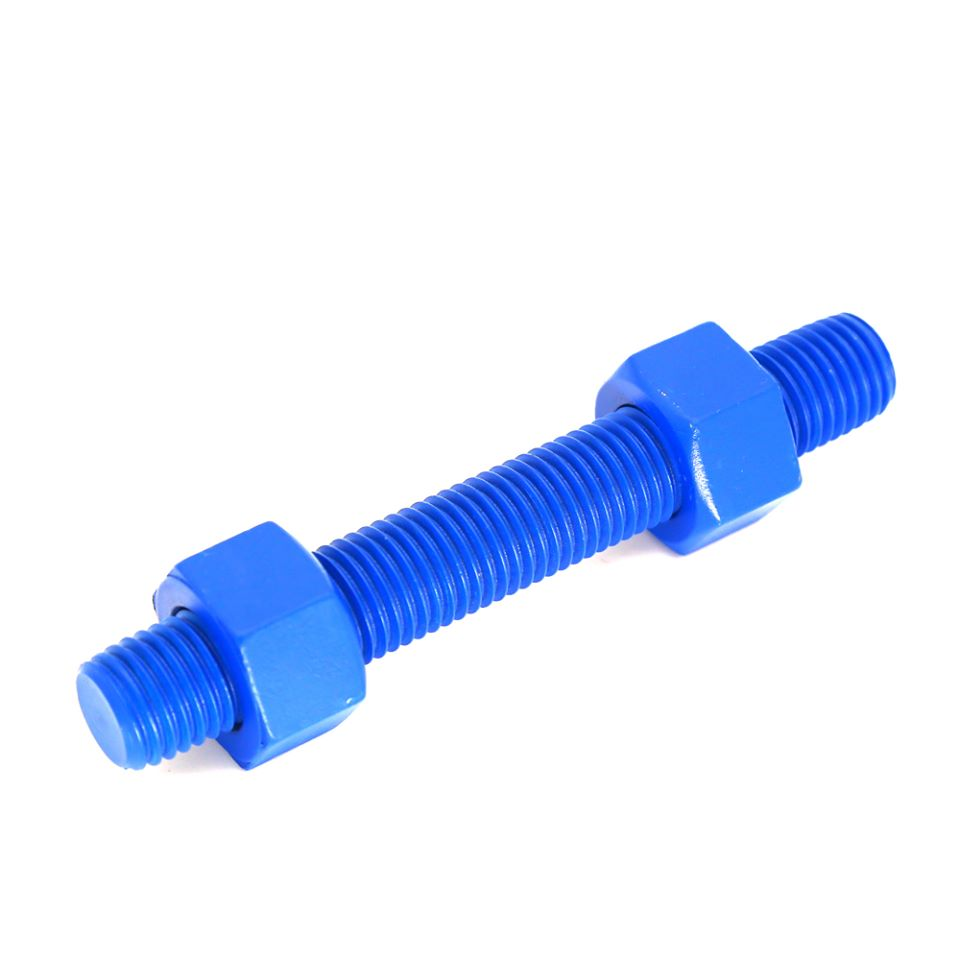
The performance of GB flange head bolts is governed by factors such as tensile strength, yield strength, proof load, and fatigue resistance. Tensile strength represents the maximum stress the bolt can withstand before fracture, while yield strength defines the stress at which permanent deformation occurs. Proof load, typically 75% of tensile strength, is the maximum tensile load the bolt can endure without permanent deformation. Fatigue resistance is crucial in applications involving cyclic loading, where repeated stress cycles can lead to premature failure. The flange component distributes the clamping load over a wider area of the joined materials, minimizing stress concentration and improving the joint’s overall stability.
Engineering design must consider the bolt’s preload, which is the initial tension applied to the bolt during tightening. Proper preload ensures adequate clamping force to maintain the joint’s integrity. Insufficient preload can lead to loosening and leakage, while excessive preload can cause bolt failure. Torque-controlled tightening methods are commonly employed to achieve the desired preload, but direct tension indication (DTI) washers are increasingly used for more accurate preload measurement. Environmental factors, such as temperature variations and corrosive media, must also be considered. Thermal expansion and contraction can affect preload, while corrosion can degrade the bolt’s material, reducing its strength. Finite Element Analysis (FEA) is often used to model the stress distribution within the bolted joint and optimize the design for specific operating conditions.
Technical Specifications
| Standard Designation | Material Grade | Tensile Strength (MPa) | Yield Strength (MPa) | Diameter (mm) | Flange Diameter (mm) |
|---|---|---|---|---|---|
| GB/T 19001.6-2015 | Q235 | 580-680 | 275 | M16, M20, M24 | 24, 30, 36 |
| GB/T 19001.6-2015 | 45# Steel | 600-700 | 315 | M16, M20, M24, M27 | 24, 30, 36, 42 |
| GB/T 19001.6-2015 | 35CrMo | 800-900 | 450 | M20, M24, M27, M30 | 30, 36, 42, 48 |
| GB/T 19001.6-2015 | 304 Stainless Steel | 490-790 | 205 | M16, M20, M24 | 24, 30, 36 |
| GB/T 19001.6-2015 | 316 Stainless Steel | 580-800 | 280 | M16, M20, M24 | 24, 30, 36 |
| GB/T 19001.6-2015 | 40Cr | 850-1000 | 500 | M24, M27, M30, M36 | 36, 42, 48, 54 |
Failure Mode & Maintenance
Common failure modes for GB flange head bolts include fatigue cracking, thread stripping, corrosion, and hydrogen embrittlement. Fatigue cracking occurs due to repeated stress cycles, often initiated at stress concentrators like thread roots. Thread stripping results from excessive tightening or mismatched thread engagement. Corrosion, particularly in chloride-rich environments, can lead to pitting corrosion and a reduction in bolt strength. Hydrogen embrittlement, prevalent in high-strength steels, occurs when atomic hydrogen diffuses into the metal lattice, causing embrittlement and premature failure.
Preventive maintenance is crucial for extending bolt service life. Regular inspection for signs of corrosion, cracking, or deformation is essential. Proper lubrication during installation and periodic retightening can prevent loosening and reduce fatigue stress. The use of corrosion inhibitors in the operating environment can mitigate corrosion risks. For critical applications, non-destructive testing methods like magnetic particle inspection (MPI) or ultrasonic testing (UT) can detect subsurface cracks. When replacing bolts, ensure the new bolts meet the original specifications and are properly installed with the correct torque. If hydrogen embrittlement is a concern, consider using bolts with a protective coating or a lower strength grade.
Industry FAQ
Q: What is the significance of the flange diameter on a GB flange head bolt?
A: The flange diameter directly impacts the distribution of clamping force across the flange face. A larger flange diameter distributes the load over a wider area, reducing stress concentration in the flange material and improving joint sealing. It also contributes to increased stability and resistance to loosening.
Q: How does material grade affect the operating temperature range of GB flange head bolts?
A: Higher strength materials, like alloy steels, generally maintain their mechanical properties at elevated temperatures better than carbon steels. However, excessive temperatures can still lead to creep and a reduction in preload. Stainless steels offer good corrosion resistance but their strength can decrease significantly at higher temperatures. The appropriate material grade must be selected based on the expected operating temperature.
Q: What is the recommended torque for tightening GB flange head bolts?
A: The recommended torque depends on the bolt diameter, material, and surface condition. Torque charts, based on the bolt’s proof load and friction coefficient, are typically used. Direct Tension Indication (DTI) washers provide a more accurate method for achieving the desired preload, regardless of friction variations.
Q: What are the primary concerns regarding corrosion in GB flange head bolts used in seawater applications?
A: Seawater is highly corrosive due to its high chloride content. Chloride ions can cause pitting corrosion and crevice corrosion, leading to rapid degradation of the bolt material. Stainless steel alloys like 316 are more resistant to chloride corrosion than 304, but even 316 can be susceptible over time. Protective coatings, cathodic protection, and regular inspection are crucial in seawater environments.
Q: How does GB/T 19001.6 compare to other international flange bolt standards?
A: GB/T 19001.6 is the Chinese national standard. Similar standards include ASME B16.5 (American), EN 1092-1 (European), and JIS B8K7 (Japanese). While these standards share common objectives, they differ in specific dimensions, material requirements, and testing procedures. Ensuring compatibility and interchangeability requires careful consideration of these differences.
Conclusion
GB flange head bolts are vital components in flanged joint assemblies, requiring careful selection and application based on their material properties, manufacturing processes, and operating conditions. Understanding the factors influencing their performance – including tensile strength, yield strength, fatigue resistance, and corrosion susceptibility – is paramount to ensuring structural integrity and preventing failures. The proper implementation of preventative maintenance and adherence to relevant industry standards are equally critical to maximizing the lifespan and reliability of these essential fasteners.
Future advancements in materials science will likely lead to the development of even more corrosion-resistant and high-strength alloys for GB flange head bolts. Furthermore, advancements in non-destructive testing and monitoring technologies will enable more accurate and proactive detection of potential failure modes. Continuous refinement of tightening procedures and preload control methods will contribute to improved joint performance and reduced maintenance costs.
