
Introduction
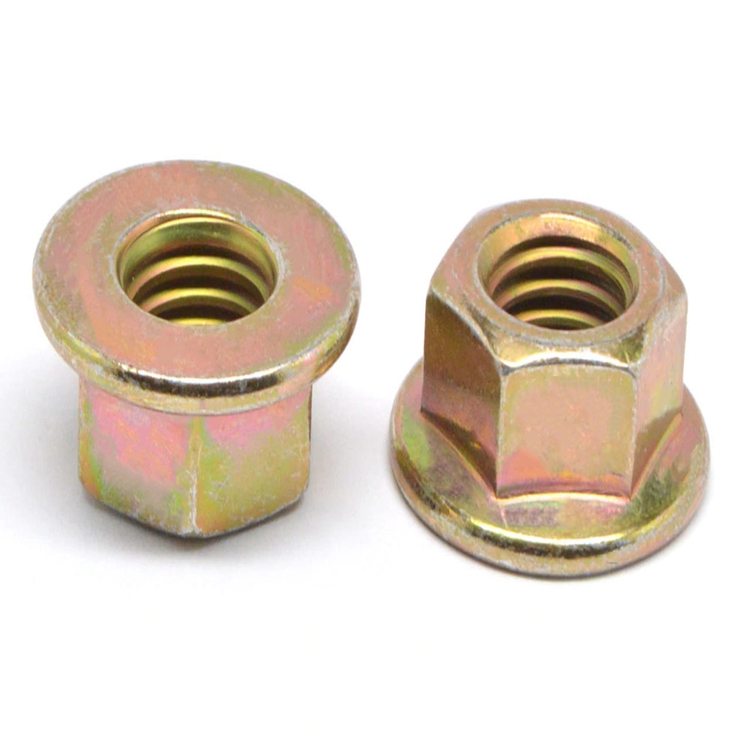
DIN 6921 flange nuts are standardized components used in high-strength bolted connections, primarily within industrial applications requiring a secure and vibration-resistant fastening solution. These nuts are specifically designed to be used with flange bolts (DIN 6921), forming a combined assembly that distributes clamping force over a larger area, enhancing joint integrity. They occupy a critical position within the mechanical fastening chain, bridging the requirements for load-bearing capacity, dimensional precision, and material compatibility. Their core performance characteristics center around achieving high clamping forces, resisting loosening under dynamic loads, and ensuring long-term reliability in demanding environments. Unlike standard hex nuts, the flange provides a larger bearing surface and inherent resistance to spalling of joined materials. The increasing demand for reliable bolted joints in sectors like automotive, machinery, and construction drives the continued importance of DIN 6921 flange nuts.
Material Science & Manufacturing
DIN 6921 flange nuts are commonly manufactured from carbon steels, alloy steels, and stainless steels, each chosen for its specific mechanical properties and corrosion resistance. Carbon steels (e.g., C45) are prevalent for general industrial applications due to their cost-effectiveness and strength, though they require protective coatings to prevent corrosion. Alloy steels, incorporating elements like chromium and molybdenum, offer enhanced strength, toughness, and hardenability, suitable for high-stress applications. Stainless steels (e.g., A2, A4) provide superior corrosion resistance, making them ideal for environments exposed to harsh chemicals or weather conditions.
The manufacturing process typically begins with hot forging of the raw material to achieve the desired shape. This forging process aligns the grain structure, enhancing the nut's strength. Following forging, the nuts undergo machining operations – including drilling the threaded hole and facing the flange – to meet dimensional tolerances specified in DIN 6921. Critical parameters during machining include cutting tool geometry, feed rate, and coolant application, all influencing surface finish and dimensional accuracy. Heat treatment, often involving hardening and tempering, is crucial for achieving the required mechanical properties, such as tensile strength and yield strength. Surface treatment, such as zinc plating (for carbon steels) or passivation (for stainless steels), provides corrosion protection. Quality control throughout the process involves dimensional checks using calipers and micrometers, hardness testing (Rockwell or Vickers), and non-destructive testing (NDT) methods like magnetic particle inspection to detect surface cracks or flaws.
Performance & Engineering
The performance of DIN 6921 flange nuts is fundamentally governed by their ability to withstand tensile loading, shear loading, and vibrational forces without failure. Force analysis in bolted joints reveals that the clamping force generated by the nut directly influences the friction between the joined surfaces, preventing slippage and maintaining joint integrity. The flange’s larger bearing surface reduces stress concentration on the joined material, minimizing the risk of deformation or damage.
Environmental resistance is a critical engineering consideration. Carbon steel nuts are susceptible to corrosion, particularly in humid or corrosive environments. Galvanizing, phosphate coating, or other protective treatments are employed to mitigate this. Stainless steel nuts exhibit superior corrosion resistance but can still be affected by certain chemicals (e.g., chlorides). Compliance requirements often dictate the use of specific material grades and surface treatments based on the application. For instance, applications in the food processing industry may require stainless steel nuts compliant with FDA regulations. Fatigue analysis is essential for applications subjected to cyclic loading. The nut's material and surface finish influence its fatigue life. Finite element analysis (FEA) is frequently used to simulate stress distribution within the nut and optimize its design to maximize fatigue resistance. The choice of appropriate tightening torque is crucial, as overtightening can lead to bolt or nut failure, while undertightening can compromise joint integrity.
Technical Specifications
| Diameter (d) - mm | Thread Pitch (P) - mm | Across Flats (SW) - mm | Material Grade |
|---|---|---|---|
| M8 | 1.25 | 15 | Property Class 8.8 |
| M10 | 1.5 | 19 | Property Class 10.9 |
| M12 | 1.75 | 24 | Property Class 12.9 |
| M16 | 2.0 | 30 | A2 Stainless Steel |
| M20 | 2.5 | 36 | A4 Stainless Steel |
| M24 | 3.0 | 41 | Property Class 8.8 Zinc Plated |
Failure Mode & Maintenance
DIN 6921 flange nuts can fail through several mechanisms. Fatigue cracking is a common failure mode in applications with cyclic loading, originating from stress concentrations at the thread root or flange edge. Corrosion, particularly in carbon steel nuts without adequate protection, leads to material degradation and reduced strength. Hydrogen embrittlement can occur in high-strength steel nuts exposed to certain environments, causing premature failure. Stripped threads are another frequent failure mode, resulting from excessive tightening torque or improper installation. Deformation of the flange can occur under high clamping loads, compromising joint integrity.
Preventative maintenance includes periodic inspection of the nuts for signs of corrosion, cracking, or deformation. Regularly verifying the tightening torque ensures that the clamping force remains within acceptable limits. Lubrication of the threads reduces friction and prevents galling during installation and removal. For carbon steel nuts, re-application of protective coatings may be necessary to maintain corrosion resistance. If a nut shows signs of significant wear or damage, it should be replaced. Proper storage in a dry environment protects against corrosion. In critical applications, vibration monitoring can detect potential loosening of the nuts, allowing for timely re-tightening.
Industry FAQ
Q: What is the primary advantage of using a DIN 6921 flange nut over a standard hex nut?
A: The primary advantage lies in the increased bearing surface provided by the flange. This distributes the clamping force over a larger area, reducing stress on the joined materials and improving resistance to loosening, especially under vibration. It also provides better support and prevents spalling of softer materials.
Q: What material grade is most suitable for a DIN 6921 flange nut used in a marine environment?
A: A2 or A4 stainless steel is generally recommended for marine environments due to their superior corrosion resistance. A4 stainless steel offers even greater resistance to chloride-induced pitting corrosion, making it preferable for highly corrosive marine applications.
Q: What torque should be applied to a DIN 6921 flange nut with a property class of 10.9?
A: The appropriate torque depends on the bolt size, thread pitch, and friction coefficient between the threads. Consult torque charts based on DIN EN ISO 6093-1 for precise values, but a general guideline for a Property Class 10.9 nut is to use approximately 85-95% of the recommended torque for a comparable hex nut.
Q: What is the significance of the property class marking on a DIN 6921 flange nut?
A: The property class marking (e.g., 8.8, 10.9, 12.9) indicates the tensile strength and yield strength of the nut's material. Higher property classes signify greater strength and load-bearing capacity. These markings are crucial for ensuring the nut meets the required performance specifications.
Q: What non-destructive testing (NDT) methods are commonly used to inspect DIN 6921 flange nuts?
A: Magnetic particle inspection (MPI) is commonly used to detect surface cracks or flaws. Dye penetrant inspection (DPI) is another option for detecting surface defects. Ultrasonic testing can be used to detect internal flaws, though it is less common for nuts due to their smaller size and complex geometry.
Conclusion
DIN 6921 flange nuts represent a robust and reliable fastening solution for a wide array of industrial applications. Their design, incorporating a larger bearing surface, distributes clamping forces effectively, enhancing joint integrity and resistance to loosening. The selection of appropriate material grades – ranging from carbon steel to stainless steel – is paramount, dictated by the specific environmental conditions and performance requirements.
Ultimately, the consistent application of manufacturing controls, stringent quality assurance procedures, and adherence to relevant international standards (detailed below) are vital for guaranteeing the long-term performance and reliability of these critical components. Proper installation, regular maintenance, and proactive failure analysis contribute significantly to maximizing the service life and minimizing the risk of costly downtime.
