
Introduction
M5 bolts represent a widely utilized fastener within mechanical engineering, construction, and automotive industries. Defined by a 5mm thread diameter, these bolts are critical components for joining materials, providing clamping force, and ensuring structural integrity. Their position within the supply chain extends from raw material suppliers (steel, stainless steel, alloys) through manufacturing processes like forging, cold forming, and machining, ultimately reaching end-users via distributors and OEMs. Core performance characteristics include tensile strength, yield strength, proof load, and resistance to corrosion, which dictate their suitability for specific application environments. A key industry pain point revolves around consistent material quality and traceability, particularly when sourcing from global suppliers, impacting long-term reliability and potentially leading to catastrophic failures. Ensuring adherence to standardized mechanical properties and surface treatments is paramount.
Material Science & Manufacturing
M5 bolts are commonly manufactured from carbon steel (e.g., Grade 8.8, 10.9, 12.9), alloy steel, and stainless steel (e.g., 304, 316). Carbon steel provides a balance of strength and cost-effectiveness. Alloy steel compositions, incorporating elements like manganese, chromium, and molybdenum, enhance strength, hardness, and toughness. Stainless steel offers superior corrosion resistance, critical for outdoor or corrosive environments. Raw material properties, including chemical composition, grain structure, and impurity levels, directly impact final bolt performance.
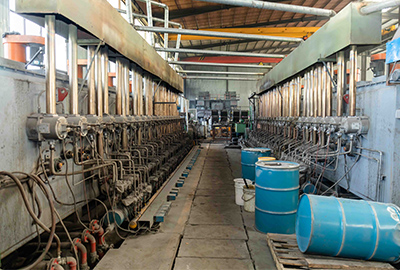
The manufacturing process typically begins with either cold heading or hot forging. Cold heading, suitable for lower-strength grades, involves forming the bolt head through plastic deformation at room temperature, resulting in good surface finish and dimensional accuracy. Hot forging, employed for higher-strength bolts, utilizes elevated temperatures to facilitate deformation, yielding improved mechanical properties due to grain refinement. Following forming, bolts undergo thread rolling, a cold-forming process that creates the threads with high precision. Heat treatment, including hardening, tempering, and case hardening, is crucial for achieving desired strength and ductility. Finally, surface treatments like zinc plating, black oxide, or passivation are applied to enhance corrosion resistance and improve appearance. Parameter control is vital throughout: maintaining precise forging temperatures, controlling rolling forces, and accurately calibrating heat treatment cycles are essential for consistent quality. Variations in cooling rates during heat treatment, for example, can induce residual stresses impacting fatigue life.
Performance & Engineering
The performance of M5 bolts is governed by several engineering principles. Tensile strength, typically ranging from 800 MPa to 1200 MPa depending on the grade, represents the maximum stress the bolt can withstand before fracturing under tension. Yield strength, usually around 70-90% of tensile strength, indicates the point at which permanent deformation begins. Proof load, a more conservative value, specifies the maximum tensile load that can be applied without causing permanent elongation. Shear strength, relevant for bolted joints subjected to shear forces, is also a critical parameter. Clamping force, achieved through tightening the bolt, is the primary mechanism for joining materials.
Environmental resistance is a key concern. Corrosion, particularly in marine or chemically aggressive environments, can significantly reduce bolt strength and lead to failure. Selecting appropriate materials (e.g., stainless steel) and applying protective coatings are essential. Fatigue resistance, the ability to withstand repeated loading cycles, is critical in applications involving vibration or fluctuating loads. Finite element analysis (FEA) is routinely used to model stress distribution within the bolt and predict fatigue life. Compliance requirements, dictated by industry standards (detailed in the footer), specify minimum mechanical properties and testing procedures. For example, aerospace applications demand stringent quality control and traceability to ensure bolt reliability under extreme conditions. Force analysis considers not only tensile and shear forces but also bending moments and torsional loads to ensure accurate bolt selection and preloading.
Technical Specifications
| Grade | Tensile Strength (MPa) | Yield Strength (MPa) | Proof Load (kN) |
|---|---|---|---|
| 4.8 | 400 | 240 | 16.8 |
| 8.8 | 800 | 640 | 33.9 |
| 10.9 | 1000 | 980 | 52.0 |
| 12.9 | 1200 | 1100 | 66.0 |
| A2 Stainless Steel (304) | 700 | 210 | 20.9 |
| A4 Stainless Steel (316) | 900 | 280 | 26.5 |
Failure Mode & Maintenance
M5 bolts are susceptible to several failure modes. Tensile failure, resulting from exceeding the bolt's tensile strength, is often catastrophic. Shear failure occurs when the shear stress exceeds the bolt's shear strength. Fatigue failure, driven by repeated loading, initiates at stress concentrations (e.g., thread roots) and propagates gradually until fracture. Corrosion-induced failure weakens the bolt material due to electrochemical reactions, reducing its load-bearing capacity. Hydrogen embrittlement, particularly in high-strength steels, can lead to brittle fracture in corrosive environments. Thread stripping, occurring when the threads are damaged, diminishes clamping force and can lead to joint failure.
Preventative maintenance includes regular inspection for corrosion, damage, or loosening. Torque checks, performed using calibrated torque wrenches, ensure proper clamping force. Lubrication of threads reduces friction and prevents galling during tightening and loosening. In critical applications, non-destructive testing methods (e.g., ultrasonic testing, magnetic particle inspection) can detect subsurface defects. If a bolt shows signs of fatigue, corrosion, or damage, it should be replaced immediately. Proper storage, protecting bolts from moisture and corrosive elements, is also crucial for maintaining their integrity. Retorquing bolts after initial use and periodically thereafter can compensate for settlement or creep in the joined materials.
Industry FAQ
Q: What is the impact of thread tolerance on the overall performance of an M5 bolt?
A: Thread tolerance dictates the permissible variation in thread dimensions. Looser tolerances can simplify manufacturing but may result in reduced clamping force and increased susceptibility to loosening due to vibrational loads. Tighter tolerances enhance precision and clamping force but increase manufacturing costs. Selecting the appropriate thread tolerance class (e.g., 6g for external threads, 6H for internal threads) depends on the application’s criticality and the required level of precision. Poor thread fit can also accelerate fatigue failure.
Q: How does the choice of coating affect the long-term reliability of M5 bolts in saltwater environments?
A: The coating significantly influences corrosion resistance. Zinc plating offers a sacrificial layer of protection, corroding before the bolt material. However, zinc coatings are susceptible to white rust. Hot-dip galvanizing provides a thicker zinc layer and enhanced corrosion protection. Stainless steel coatings (e.g., passivation) offer superior resistance but are more expensive. Polymer coatings, like PTFE, provide barrier protection but may be less durable. Proper coating thickness and application technique are critical. Salt spray testing (ASTM B117) is commonly used to evaluate coating performance.
Q: What considerations should be made when selecting an M5 bolt for a high-vibration application?
A: High-vibration applications require bolts with features that resist loosening. Options include using lock washers (e.g., split lock washers, tooth lock washers), nylon insert lock nuts (nylock nuts), or applying thread-locking compounds (e.g., Loctite). Increasing the proof load and employing tighter thread tolerances can also improve vibration resistance. Conducting a fatigue analysis to determine the bolt’s expected lifespan under the specified vibration conditions is highly recommended.
Q: What is the difference between a Class 8.8 and a Class 12.9 M5 bolt, and when would you choose one over the other?
A: Class 12.9 bolts have significantly higher tensile strength and yield strength than Class 8.8 bolts. This makes them suitable for applications requiring maximum load-bearing capacity and resistance to deformation. However, they are also more brittle and expensive. Class 8.8 bolts are preferred for applications where a balance of strength, ductility, and cost is desired. Choose Class 12.9 for critical structural components and Class 8.8 for less demanding applications.
Q: How important is material traceability for M5 bolts used in aerospace applications?
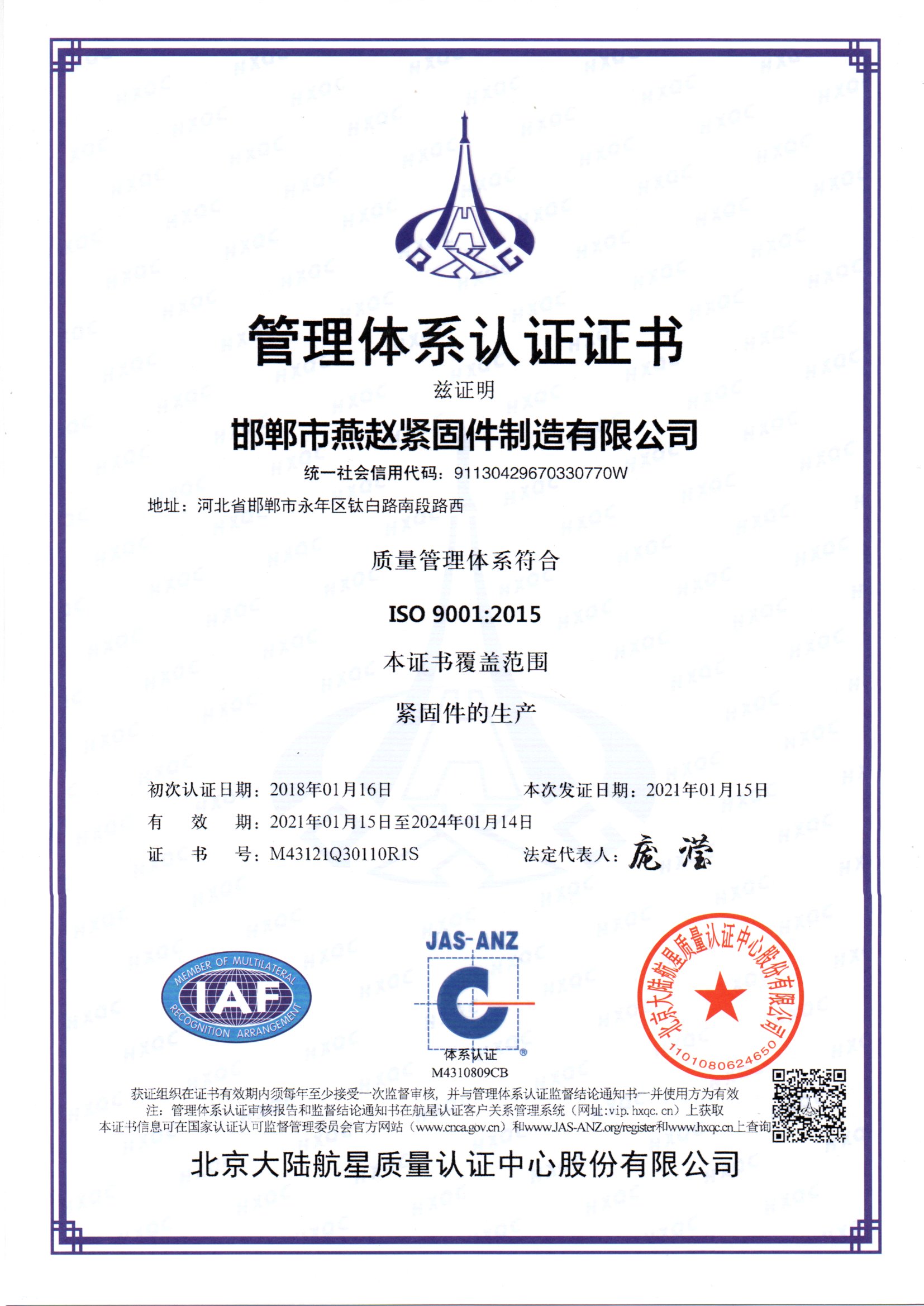
A: Material traceability is paramount in aerospace applications. Full traceability, from the raw material source to the finished bolt, is essential for verifying material composition, heat treatment records, and mechanical properties. This ensures that the bolts meet stringent safety and performance requirements. Non-compliance with traceability standards can lead to significant delays and potential safety risks.
Conclusion
M5 bolts, despite their relatively small size, are essential fasteners demanding careful consideration of material selection, manufacturing processes, and performance characteristics. Understanding the interplay between tensile strength, yield strength, corrosion resistance, and fatigue life is crucial for ensuring long-term reliability and preventing catastrophic failures. The industry faces ongoing challenges related to consistent material quality, traceability, and the need for robust solutions in demanding environments.
Future advancements will likely focus on developing new alloy compositions with enhanced strength and corrosion resistance, as well as implementing advanced manufacturing techniques like additive manufacturing to create customized bolt designs. Predictive maintenance strategies, leveraging sensor data and machine learning, will become increasingly important for monitoring bolt health and preventing failures before they occur. Adherence to international standards and rigorous testing protocols remain fundamental for maintaining the integrity and safety of bolted joints.
