
Introduction
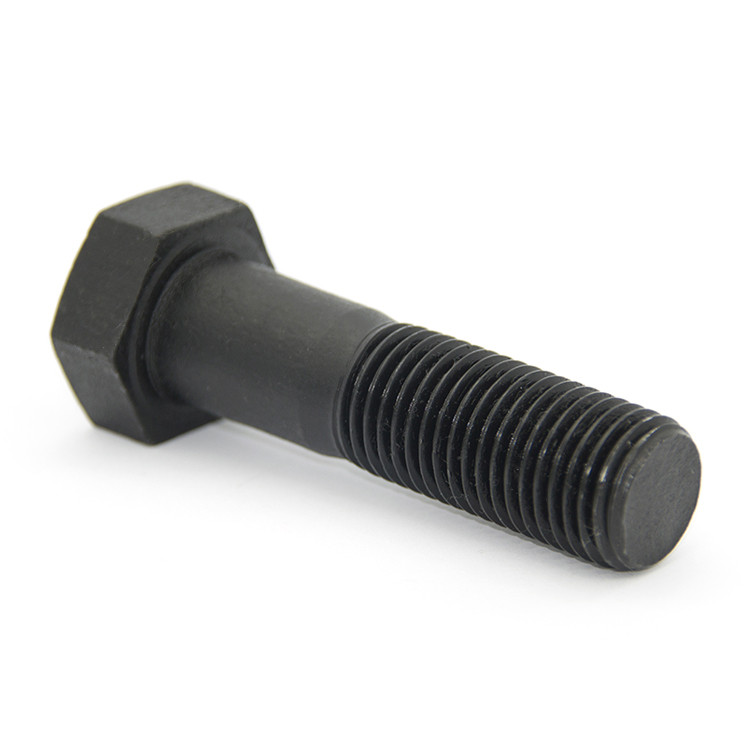
Lag bolts for TV mounts represent a critical fastening solution in the consumer electronics and structural mounting industries. These heavy-duty fasteners are specifically employed to securely attach television mounting brackets to wall studs, providing the necessary shear and tensile strength to support the weight and dynamic loads imposed by modern television sets. Unlike conventional wood screws, lag bolts possess a hex head requiring a wrench for installation, allowing for significantly higher torque application. Their primary function is to transfer load from the TV mount directly into the structural members of a building, bypassing drywall and ensuring long-term stability. The selection of appropriate lag bolts is paramount, considering factors such as TV weight, wall stud material, bolt diameter, length, and coating. Failure to properly specify and install these fasteners can result in catastrophic failure, leading to property damage, injury, and potential liability.
Material Science & Manufacturing
Lag bolts for TV mounts are commonly manufactured from medium carbon steel (typically SAE 1045 or equivalent), chosen for its balance of strength, ductility, and cost-effectiveness. The steel undergoes a series of manufacturing processes beginning with hot forging, shaping the bolt blank. Following forging, the bolts are typically heat-treated – hardened and tempered – to achieve the desired mechanical properties. Hardening increases the steel's strength and wear resistance, while tempering reduces brittleness and improves toughness. The hex head is cold-formed to precise dimensions, ensuring compatibility with standard wrench sizes. Threads are rolled, not cut, to enhance fatigue resistance; rolled threads compress the metal fibers, creating residual compressive stresses that inhibit crack initiation.
Surface treatments are essential for corrosion protection. Common coatings include zinc plating (electrogalvanizing), hot-dip galvanizing, and black oxide. Zinc plating offers moderate corrosion resistance, while hot-dip galvanizing provides superior protection, particularly in humid environments. Black oxide provides a cosmetic finish and limited corrosion protection. Material compatibility is also crucial; when mounting to pressure-treated lumber, the use of stainless steel lag bolts is strongly recommended to prevent galvanic corrosion caused by the chemicals present in the wood treatment. The selection of appropriate washers is also vital. Hardened steel washers distribute the load and prevent the bolt head from embedding into the mounting surface. The shear strength of the steel, typically exceeding 830 MPa, dictates the load-bearing capacity, while the tensile strength, around 620 MPa, determines the resistance to pull-out forces.
Performance & Engineering
The performance of lag bolts in TV mounting applications is fundamentally governed by principles of structural mechanics and load transfer. Shear stress, resulting from the weight of the TV and any applied forces, acts perpendicular to the bolt's axis. Tensile stress arises from the pull-out force, attempting to extract the bolt from the wood. The engineering design must account for both static and dynamic loads, including wind gusts, seismic activity (in relevant regions), and accidental impacts. A critical parameter is the embedment depth – the portion of the bolt threaded into the wood. Greater embedment depth increases pull-out resistance but also increases the likelihood of wood splitting. Minimum embedment depth recommendations are typically dictated by building codes and manufacturers' specifications.
The type of wood framing plays a significant role. Softwoods like pine and fir offer lower holding power than hardwoods like oak and maple. The grain orientation of the wood also matters; installing lag bolts parallel to the grain minimizes splitting. Finite element analysis (FEA) is often employed in the design and validation of TV mounting systems to accurately predict stress distributions and identify potential failure points. Compliance with relevant safety standards, such as UL EA-1882 (TV Mounting Safety) is essential. The bolt’s yield strength, defined as the point at which permanent deformation begins, is a key factor in determining the safety factor of the installation. Ensuring a sufficient safety factor (typically 3:1 or higher) is crucial to prevent catastrophic failure.
Technical Specifications
| Diameter (in.) | Length (in.) | Minimum Tensile Strength (psi) | Minimum Shear Strength (psi) | Head Type | Coating |
|---|---|---|---|---|---|
| 1/4 | 2 | 85,000 | 45,000 | Hex | Zinc Plated |
| 1/4 | 3 | 85,000 | 45,000 | Hex | Hot-Dip Galvanized |
| 5/16 | 2.5 | 100,000 | 55,000 | Hex | Zinc Plated |
| 5/16 | 3.5 | 100,000 | 55,000 | Hex | Hot-Dip Galvanized |
| 3/8 | 3 | 120,000 | 65,000 | Hex | Zinc Plated |
| 3/8 | 4 | 120,000 | 65,000 | Hex | Stainless Steel |
Failure Mode & Maintenance
Lag bolt failure in TV mounting applications typically manifests in several modes. Shear failure occurs when the stress exceeds the bolt’s shear strength, leading to the bolt head shearing off or the bolt body fracturing. Tensile failure involves the bolt pulling out of the wood, often accompanied by wood splitting. Fatigue cracking can develop under cyclic loading (e.g., from vibrations or minor impacts) leading to gradual weakening and eventual fracture. Corrosion, particularly in outdoor or high-humidity environments, can significantly reduce the bolt’s cross-sectional area and strength. Galvanic corrosion, as mentioned earlier, is a specific concern when using incompatible materials.
Preventive maintenance is critical. Regular inspections (at least annually) should be conducted to check for signs of corrosion, loosening, or wood damage. If corrosion is detected, the bolt should be replaced. If the bolt is loose, it should be tightened – but caution must be exercised to avoid over-tightening, which can strip the threads or split the wood. For heavily loaded installations or in areas prone to seismic activity, periodic torque checks are recommended to ensure the bolts remain within their specified tightening range. The use of thread-locking compounds can help prevent loosening due to vibration. In cases of suspected fatigue cracking, the entire mounting system should be disassembled and inspected for damage.
Industry FAQ
Q: What is the minimum lag bolt diameter recommended for a 65-inch television weighing 50 lbs?
A: For a 65-inch television weighing 50 lbs, a minimum lag bolt diameter of 5/16 inch is generally recommended, assuming proper installation into solid wood studs. However, it’s crucial to consult the TV mount manufacturer’s specifications, as they often provide specific recommendations based on the mount’s design and the TV’s weight. Always err on the side of caution and consider using a larger diameter bolt if there’s any doubt.
Q: Can I use lag bolts to mount a TV directly to drywall without hitting a stud?
A: Absolutely not. Drywall alone does not provide sufficient holding power to support the weight of a television. Lag bolts must be securely anchored into solid wood studs or other structural members. Using drywall anchors with lag bolts is not a viable solution for TV mounting; the risk of failure and potential injury is far too high.
Q: What is the difference between zinc-plated and hot-dip galvanized lag bolts, and which is better for outdoor use?
A: Both zinc plating and hot-dip galvanizing provide corrosion protection, but hot-dip galvanizing offers significantly superior protection, especially in harsh outdoor environments. Zinc plating is a thinner coating that can be easily scratched or damaged, exposing the underlying steel to corrosion. Hot-dip galvanizing involves immersing the bolts in molten zinc, creating a thicker, more durable coating that provides long-lasting corrosion resistance.
Q: How deep should a lag bolt be embedded into the wood stud for optimal holding power?
A: As a general rule, the embedment depth should be at least half the length of the lag bolt. For example, a 3-inch lag bolt should be embedded at least 1.5 inches into the wood stud. However, it’s important to avoid embedding the bolt too deeply, as this can increase the risk of wood splitting. Consult the TV mount manufacturer’s instructions for specific embedment depth recommendations.
Q: What torque value should be used when tightening lag bolts for a TV mount?
A: The appropriate torque value depends on the bolt diameter and the type of wood. Over-tightening can strip the threads or split the wood, while under-tightening can lead to loosening and instability. A torque wrench is highly recommended. Consult the TV mount manufacturer’s specifications for the recommended torque value. As a general guideline, a torque range of 20-30 ft-lbs is often appropriate for 3/8-inch lag bolts in softwood studs.
Conclusion
Lag bolts constitute a fundamental fastening element in the safe and secure mounting of televisions. Their selection and installation demand a thorough understanding of material science, structural engineering principles, and relevant industry standards. Proper bolt sizing, embedment depth, and torque application are critical to ensure long-term stability and prevent catastrophic failure. The choice of coating material is paramount, with hot-dip galvanizing being the preferred option for outdoor applications or environments with high humidity.
Ultimately, a comprehensive approach—including diligent inspection, preventative maintenance, and adherence to manufacturer specifications—is essential for maximizing the performance and longevity of TV mounting systems. Ignoring these critical details can have serious consequences, ranging from property damage to personal injury. Continuous improvement in fastener design and installation techniques will be crucial to meeting the evolving demands of increasingly larger and heavier television sets.
