
Introduction
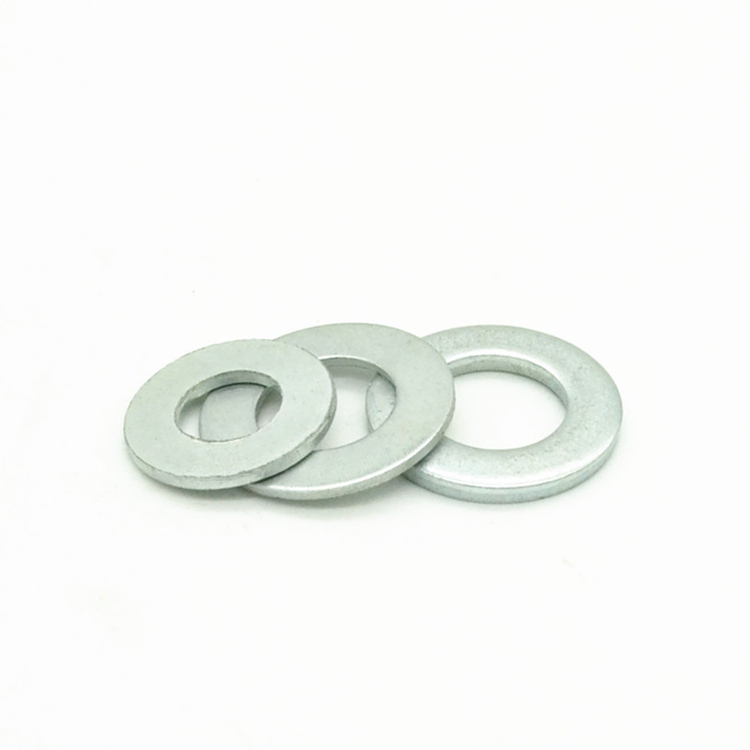
Spring washers, also known as belleville washers or conical spring washers, are specialized fasteners designed to provide a resilient cushioning effect and maintain bolt tension in dynamic applications. Unlike flat washers which distribute load, spring washers actively apply a pre-load, compensating for vibration, thermal expansion, and component creep. They occupy a critical position within the broader fastening industry, particularly in sectors requiring reliable joint integrity under fluctuating conditions. Core performance characteristics include load capacity, spring rate, fatigue life, and material compatibility. The primary function is to prevent loosening of bolted joints without relying solely on friction, a limitation of standard washers and nuts. They are often utilized in conjunction with other fasteners, improving overall system reliability.
Material Science & Manufacturing
Spring washers are predominantly manufactured from spring steel, most commonly carbon steel (e.g., SAE 1074, 1095) and alloy steels (e.g., SAE 6150, 5160). The selection of material is dictated by the desired spring rate, load capacity, and operating environment. High-carbon steels provide greater strength and resilience, but may be more susceptible to corrosion. Alloy steels offer improved corrosion resistance and fatigue strength at the expense of cost. Stainless steel (e.g., 301, 304, 316) is employed in corrosive environments, sacrificing some spring rate compared to carbon or alloy steels. Manufacturing typically involves a stamping process from coiled spring steel strip. The strip is fed into a progressive die, where it is successively shaped and formed into the characteristic conical or wave form. Critical parameters include die geometry, stamping pressure, and material thickness. Precise control of these parameters is essential to achieve consistent spring rates and prevent material defects such as cracking or work hardening. Post-stamping operations may include surface treatment (e.g., phosphate coating, zinc plating) to enhance corrosion resistance and improve lubricity. Heat treatment, specifically hardening and tempering, is crucial for developing the desired mechanical properties. Incorrect heat treatment can lead to either insufficient springiness or premature failure due to brittleness. Quality control involves dimensional inspection, hardness testing, and spring rate measurement, utilizing specialized testing equipment to verify conformance to specifications.
Performance & Engineering
The performance of a spring washer is fundamentally governed by its deflection characteristics and resulting force-displacement relationship. This is described by the spring rate (k), defined as the force required to deflect the washer a unit distance. Engineers analyze spring washers using Hooke’s Law (F = kx) and consider factors like stack-up length (total deflection allowed in the joint), bolt preload, and external dynamic loads. Fatigue life is a critical engineering consideration. Cyclic loading can induce fatigue cracks, leading to failure. The S-N curve (stress vs. number of cycles to failure) is used to predict fatigue life under specific loading conditions. Finite Element Analysis (FEA) is often employed to model the stress distribution within the washer and optimize its geometry for maximum fatigue resistance. Environmental resistance is also paramount. Corrosion, particularly in harsh environments, can significantly reduce fatigue life and load capacity. Material selection and surface treatments play a crucial role in mitigating corrosion. Compliance requirements, such as RoHS and REACH, necessitate the use of environmentally friendly materials and manufacturing processes. Proper installation is critical. Over-compression can permanently set the washer, reducing its effectiveness. Insufficient compression may not provide adequate pre-load. Specific application standards, like those defined by automotive or aerospace industries, often dictate specific washer designs and performance criteria.
Technical Specifications
| Material | Spring Rate (N/mm) | Maximum Load (N) | Outer Diameter (mm) |
|---|---|---|---|
| Carbon Steel (SAE 1074) | 150-250 | 500-1500 | 10-30 |
| Alloy Steel (SAE 6150) | 200-300 | 700-2000 | 12-40 |
| Stainless Steel (304) | 120-200 | 400-1200 | 8-25 |
| Stainless Steel (316) | 110-190 | 350-1100 | 9-28 |
| Beryllium Copper | 300-450 | 1000-2500 | 10-35 |
| Phosphor Bronze | 180-280 | 600-1800 | 11-32 |
Failure Mode & Maintenance
Spring washers are susceptible to several failure modes. Fatigue cracking is a common issue, originating at stress concentration points (e.g., edges, corners) due to cyclic loading. Corrosion can accelerate fatigue cracking and reduce load capacity, particularly in aggressive environments. Plastic deformation (set) occurs when the washer is over-compressed, permanently reducing its spring rate and effectiveness. Loss of preload can result from creep relaxation of the material, particularly at elevated temperatures, or from loosening of adjacent fasteners. Brittle fracture can occur in hardened steel washers if subjected to impact loads or excessive stress. Maintenance primarily focuses on periodic inspection of bolted joints to ensure proper pre-load and detect signs of corrosion or deformation. Lubrication of the threads can help prevent corrosion and reduce friction. If washers are found to be deformed or cracked, they should be replaced immediately. Regular torque checks are recommended, especially in dynamic applications. In corrosive environments, consider using corrosion-resistant materials or applying protective coatings. Proper storage is important to prevent corrosion; washers should be kept clean and dry.
Industry FAQ
Q: What is the difference between a belleville washer and a wave washer?
A: Belleville washers are conical in shape and designed for high load capacity and pre-load. They deflect primarily in the direction perpendicular to the washer’s plane. Wave washers are flat, with a wave-like profile, and provide lower load capacity and are better suited for applications requiring slight axial compliance and reduced friction.
Q: How do I determine the correct spring washer size for my application?
A: Selection depends on several factors: bolt diameter, required pre-load, operating temperature, and environment. The washer's outer diameter should be appropriate for the joint’s surface area. Spring rate must be sufficient to maintain preload under dynamic loads. Consult engineering guidelines and consider conducting FEA simulations.
Q: Can spring washers be reused?
A: Reuse is generally discouraged. Once a spring washer has been significantly deflected, it may lose some of its spring rate and preload capability. Reusable washers are available, but they are often designed for lower-stress applications and must be inspected for damage before reuse.
Q: What is the effect of temperature on spring washer performance?
A: Temperature affects both the material properties and the pre-load of the washer. High temperatures can reduce material strength and cause creep relaxation, leading to loss of preload. Low temperatures can increase material brittleness. Selection of appropriate materials and consideration of thermal expansion coefficients are essential.
Q: How do I prevent corrosion of spring washers in a marine environment?
A: Use stainless steel (316 is preferred) or apply a corrosion-resistant coating (e.g., zinc, phosphate). Ensure proper sealing of the joint to prevent ingress of saltwater. Regular inspection and maintenance are crucial.
Conclusion
Spring washers represent a vital component in maintaining reliable bolted joints, particularly in dynamic and challenging environments. Their ability to compensate for variations in preload, caused by thermal expansion, vibration, or material creep, distinguishes them from simpler washer designs. A thorough understanding of material science, manufacturing processes, performance characteristics, and potential failure modes is essential for selecting and implementing these fasteners effectively.
Future development in spring washer technology will likely focus on advanced materials (e.g., shape memory alloys), improved coatings for enhanced corrosion resistance, and optimized geometries for maximizing fatigue life and minimizing stress concentrations. Furthermore, integration with smart fastening systems, incorporating sensors for real-time preload monitoring, will offer enhanced reliability and predictive maintenance capabilities.