
Introduction
Grade 8.8 hexagon socket bolts represent a widely utilized fastening solution in numerous industrial applications. Positioned within the high-tensile steel fastener category, these bolts occupy a critical role in structural assemblies requiring substantial shear and tensile strength. Characterized by their internal hexagonal drive, they facilitate efficient and secure fastening with dedicated Allen wrenches or sockets. The '8.8' designation denotes the material's tensile strength (800 MPa) and yield strength (640 MPa), classifying them as a robust, cost-effective alternative to higher-grade alloys where extreme performance isn't paramount. These bolts find extensive use in automotive manufacturing, machinery construction, and general industrial assembly where reliable clamping force and fatigue resistance are essential. Understanding their material properties, manufacturing processes, and potential failure modes is crucial for ensuring long-term structural integrity and operational safety.
Material Science & Manufacturing
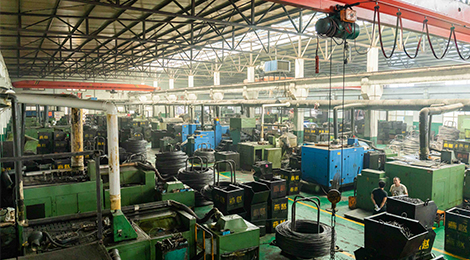
Grade 8.8 hexagon socket bolts are predominantly manufactured from medium-carbon alloy steel, typically conforming to standards like DIN EN ISO 898-1 or equivalent. The core material is often a steel alloy containing manganese, chromium, and silicon, contributing to enhanced strength, hardness, and ductility. The manufacturing process begins with steel billet production, followed by cold forging to create the bolt blank. Cold forging improves the grain structure, increasing tensile strength. Subsequently, a thread-rolling process forms the helical threads, introducing compressive residual stresses which further enhance fatigue life. The hexagonal socket is machined using CNC milling or specialized socket-forming tools, demanding precise dimensional control. Heat treatment, specifically quenching and tempering, is a critical step. Quenching hardens the steel, while tempering reduces brittleness and improves toughness. A final surface treatment, commonly zinc plating or black oxide coating, provides corrosion resistance. Parameter control during heat treatment (temperature, time, cooling rate) directly influences the final mechanical properties. Improper heat treatment can lead to insufficient hardness, reduced yield strength, or increased susceptibility to cracking. Chemical composition verification through spectrographic analysis is standard practice to ensure material compliance.
Performance & Engineering
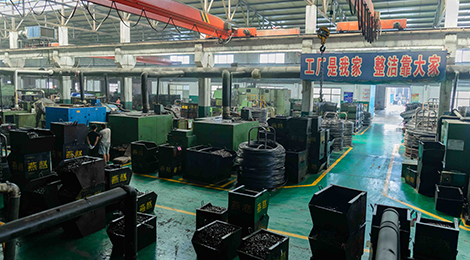
The performance of grade 8.8 hexagon socket bolts is fundamentally governed by stress distribution under applied loads. Axial tensile loading requires evaluating the bolt's tensile strength and proof load, ensuring it can withstand the intended force without fracture or plastic deformation. Shear loading, commonly encountered in bolted connections, demands consideration of the shear strength of the bolt material and the shear area. The design of the bolted joint must account for factors like preload (clamping force), friction coefficients between mating surfaces, and potential bending moments. Finite element analysis (FEA) is frequently employed to model stress concentrations around the bolt head and within the threads, optimizing joint geometry to minimize stress and prevent failure. Environmental resistance is another crucial performance aspect. Exposure to corrosive environments (e.g., saltwater, acidic atmospheres) can initiate pitting corrosion, reducing the effective cross-sectional area of the bolt and compromising its strength. The choice of surface coating (zinc plating, PTFE coating, etc.) is dictated by the severity of the corrosive environment. Compliance with industry standards such as ISO 898-1, ASTM A193, and DIN 6912 dictates specific testing requirements for mechanical properties, material composition, and dimensional accuracy, ensuring consistent and reliable performance.
Technical Specifications
| Property | Unit | Value (Typical) | Testing Standard |
|---|---|---|---|
| Tensile Strength | MPa | 800 | ISO 898-1 |
| Yield Strength | MPa | 640 | ISO 898-1 |
| Hardness (HRC) | - | 33-39 | ASTM A108 |
| Elongation | % | 16 | ISO 898-1 |
| Shear Strength | MPa | 550 | ISO 898-1 |
| Proof Load (0.2% Offset) | kN | Varies by Diameter | ISO 898-1 |
Failure Mode & Maintenance
Grade 8.8 hexagon socket bolts are susceptible to several failure modes in service. Fatigue cracking, initiated by cyclic loading, is a common occurrence, particularly in applications involving vibration or fluctuating loads. Stress corrosion cracking (SCC) can occur in corrosive environments, even at stress levels below the yield strength. Hydrogen embrittlement, caused by the diffusion of hydrogen into the steel, reduces ductility and promotes brittle fracture. Thread stripping, resulting from excessive torque or improper assembly, leads to loss of clamping force. Corrosion, as previously discussed, weakens the bolt material and accelerates failure. Preventive maintenance involves regular inspection for signs of corrosion, cracks, or thread damage. Torque wrenches should be used during assembly to ensure proper preload without exceeding the bolt's tensile capacity. Lubrication of threads reduces friction and prevents galling. For applications in highly corrosive environments, periodic re-tightening and replacement of bolts are recommended. In cases of suspected fatigue cracking, non-destructive testing methods like ultrasonic inspection or dye penetrant testing can be employed to detect subsurface flaws. Upon identifying a failed bolt, a thorough investigation should be conducted to determine the root cause and implement corrective actions to prevent recurrence.
Industry FAQ
Q: What is the impact of thread engagement length on the performance of a grade 8.8 bolt?
A: Thread engagement length is critically important. Insufficient thread engagement reduces the effective load-bearing area, increasing stress concentration and the risk of thread stripping. A minimum engagement length of at least one and a half times the bolt diameter is generally recommended, as stipulated in many engineering design codes.
Q: How does the surface finish (e.g., zinc plating) affect the corrosion resistance of the bolt?
A: Surface finishes like zinc plating provide a sacrificial barrier, protecting the underlying steel from corrosion. The thickness and quality of the zinc coating directly influence its effectiveness. However, zinc plating can be damaged, exposing the steel. For more aggressive environments, alternative coatings like PTFE or hot-dip galvanizing offer superior protection.
Q: What are the critical considerations when selecting a grade 8.8 bolt for a dynamic application with high vibration?
A: In dynamic applications, factors such as fatigue resistance, locking mechanisms, and preload become paramount. Consider using lock washers, thread-locking compounds (e.g., Loctite), or self-locking nuts to maintain preload under vibration. The bolt material's fatigue strength should be carefully evaluated.
Q: What is the significance of the bolt's proof load, and how is it determined?
A: The proof load is the maximum tensile stress that a bolt can withstand without experiencing permanent deformation. It's determined through tensile testing, as per standards like ISO 898-1. The proof load is a crucial parameter for ensuring that the bolt maintains clamping force over its service life.
Q: Can grade 8.8 bolts be used in high-temperature applications? What limitations should be considered?
A: While Grade 8.8 bolts can withstand moderately elevated temperatures, their mechanical properties (yield strength, tensile strength) degrade at temperatures exceeding approximately 300°C (572°F). Creep and oxidation become significant concerns at higher temperatures. For high-temperature applications, specialized alloy steels designed for elevated temperature service are recommended.
Conclusion
Grade 8.8 hexagon socket bolts offer a reliable and cost-effective fastening solution across a broad range of industrial applications. Their performance is intrinsically linked to material composition, manufacturing processes, and proper engineering design. A comprehensive understanding of their mechanical properties, potential failure modes, and the influence of environmental factors is essential for ensuring long-term structural integrity.
Prioritizing proper installation techniques, including appropriate torque application and the use of locking mechanisms where necessary, further enhances reliability. Ongoing inspection and preventative maintenance programs are crucial for identifying potential issues before they escalate into critical failures, ultimately maximizing the lifespan and performance of bolted joints.