
Introduction
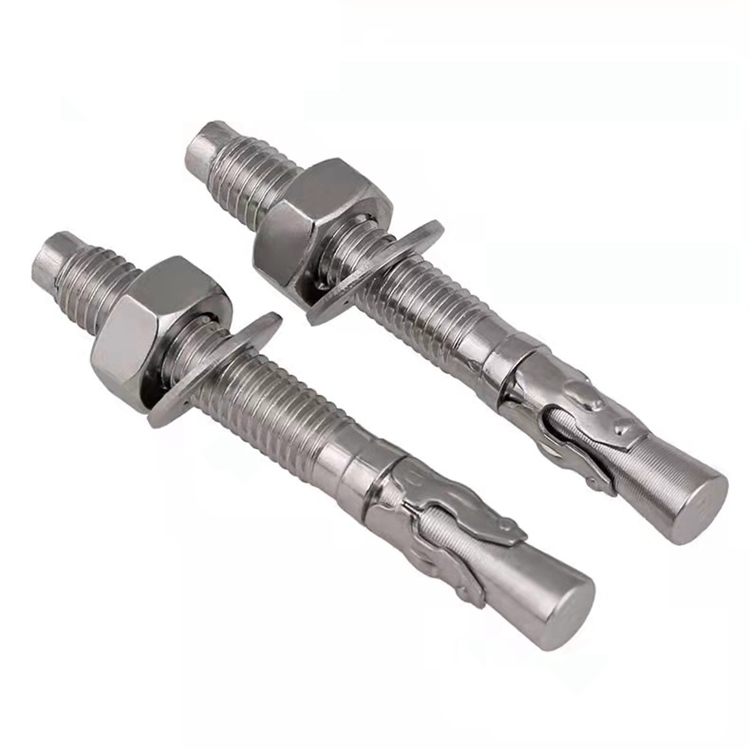
Grade 4.8 hexagon socket bolts represent a widely utilized fastening solution across numerous industrial applications. Positioned within the broader family of steel fasteners, these bolts are characterized by their defined mechanical properties, specifically a tensile strength of approximately 400 MPa and a yield strength of 330 MPa. Their popularity stems from a balance between strength, cost-effectiveness, and ease of installation using Allen wrenches. This guide provides a comprehensive technical overview of Grade 4.8 hexagon socket bolts, encompassing material science, manufacturing processes, performance characteristics, failure modes, and relevant industry standards. Understanding these facets is crucial for ensuring optimal performance and longevity within critical engineering systems, minimizing downtime and maximizing operational safety. A core industry pain point centers around inconsistent material quality and inadequate heat treatment, leading to premature failure and costly replacements. This guide aims to address these concerns through detailed analysis and specification guidance.
Material Science & Manufacturing
Grade 4.8 hexagon socket bolts are predominantly manufactured from medium carbon steel, typically conforming to standards like ISO 898-1 or DIN 912. The steel composition usually contains carbon (0.25-0.33%), manganese (0.60-0.90%), silicon (0.20-0.40%), and trace amounts of phosphorus and sulfur. The material’s initial state is hot-rolled steel stock. Manufacturing begins with cold forming or machining to create the hexagon socket head and thread. Cold forming enhances the material's strength through work hardening. Thread rolling, a specialized cold forming process, is commonly employed to achieve precise thread geometry and improve fatigue resistance. Crucially, heat treatment is a vital step. The bolts undergo quenching and tempering to achieve the desired mechanical properties. Quenching hardens the steel, while tempering reduces brittleness and enhances toughness. Precise control of temperature and cooling rates during these processes is paramount. Improper heat treatment leads to variations in hardness, tensile strength, and susceptibility to hydrogen embrittlement. Surface treatments, such as zinc plating or passivation, are often applied to enhance corrosion resistance. The quality of the steel, precise control of forming parameters, and meticulous heat treatment are key factors in achieving consistent and reliable performance.
Performance & Engineering
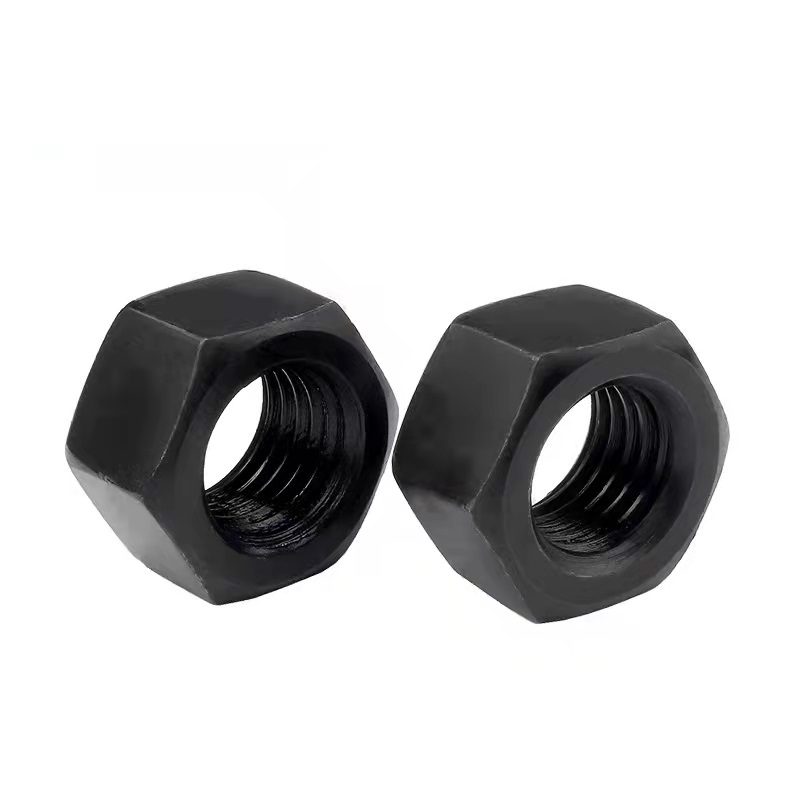
The performance of Grade 4.8 hexagon socket bolts is governed by several engineering principles. Tensile strength, yield strength, and shear strength are the primary mechanical properties considered in design. Tensile strength dictates the bolt's resistance to stretching before fracture, while yield strength represents the stress at which permanent deformation begins. Shear strength is relevant in applications where the bolt is subjected to transverse forces. Hexagon socket bolts are subject to both static and dynamic loading. Static loads are constant over time, whereas dynamic loads involve fluctuating forces, leading to fatigue. Fatigue is a significant concern in applications involving vibration or cyclical loading. The design must account for the potential for fatigue failure by selecting appropriate safety factors and considering the stress concentration at the thread root and under the bolt head. Environmental factors, such as temperature and humidity, also influence performance. Corrosion can significantly reduce the bolt's load-carrying capacity over time. Proper selection of surface treatments and compatible materials is crucial for mitigating corrosion risks. Furthermore, proper torque application is essential. Over-tightening can lead to thread stripping or bolt fracture, while under-tightening can result in joint loosening and failure. Compliance with relevant standards, such as ISO 898-1, ensures that the bolts meet specified performance requirements and safety criteria.
Technical Specifications
| Parameter | Value (Typical) | Tolerance | Testing Standard |
|---|---|---|---|
| Tensile Strength (MPa) | 400 | ±30 | ISO 898-1 |
| Yield Strength (MPa) | 330 | ±20 | ISO 898-1 |
| Hardness (HRC) | 24-32 | ±2 | ASTM A574 |
| Elongation (%) | 16 | Minimum | ISO 898-1 |
| Thread Type | Metric Coarse | ISO 6224 | ISO 6224 |
| Surface Treatment | Zinc Plated (8µm) | ±1µm | ASTM B633 |
Failure Mode & Maintenance
Grade 4.8 hexagon socket bolts are susceptible to several failure modes. Fatigue cracking, initiated at stress concentrations (e.g., thread root, under head), is a common failure mechanism in dynamic loading applications. Hydrogen embrittlement, caused by the ingress of hydrogen into the steel, can lead to brittle fracture, particularly in high-strength bolts. Corrosion, especially in harsh environments, weakens the bolt material and accelerates fatigue cracking. Thread stripping occurs when the threads are overloaded or improperly tightened. Shear failure can occur when the bolt is subjected to excessive transverse forces. To mitigate these failure modes, regular inspection and maintenance are essential. Visual inspection for signs of corrosion, cracking, or deformation should be performed periodically. Torque checks should be conducted to ensure proper clamping force. Lubrication can reduce friction and prevent galling. In corrosive environments, the use of corrosion-resistant materials or protective coatings is recommended. If a bolt shows signs of damage or degradation, it should be replaced immediately. Preventive maintenance, including periodic retightening and lubrication, can significantly extend the service life of these fasteners. Detailed failure analysis, including metallurgical examination, can help identify the root cause of failures and prevent recurrence.
Industry FAQ
Q: What is the impact of using a lower grade bolt than specified in a design?
A: Using a lower grade bolt significantly compromises the structural integrity of the assembly. A lower grade bolt possesses reduced tensile and yield strength, meaning it can deform or fracture under the same load that a Grade 4.8 bolt would withstand. This can lead to catastrophic failure, especially in critical applications. It introduces unacceptable risks and violates engineering safety standards.
Q: How does surface treatment affect the corrosion resistance of Grade 4.8 bolts?
A: Surface treatments like zinc plating, phosphate coating, or passivation create a barrier between the steel and the corrosive environment. Zinc plating is a common and cost-effective method, providing sacrificial protection, where the zinc corrodes preferentially to the steel. The effectiveness depends on the coating thickness, uniformity, and the presence of any defects. Without adequate surface treatment, corrosion can rapidly degrade the bolt material.
Q: What is the correct torque specification for a Grade 4.8 hexagon socket bolt, and how is it determined?
A: Correct torque specification is critical and dependent on several factors including bolt diameter, thread pitch, lubrication, and clamping material. It is not a fixed value. Consulting torque charts based on the bolt size and material is recommended. A general rule of thumb is to calculate torque using the formula T = K D P, where T is torque, K is the torque coefficient, D is bolt diameter, and P is the preload. Using a calibrated torque wrench is essential.
Q: What are the signs of hydrogen embrittlement, and how can it be prevented?
A: Hydrogen embrittlement is insidious and often presents as brittle fracture with little to no visible deformation. Early signs can be difficult to detect. Prevention involves minimizing exposure to hydrogen-generating environments (e.g., acid cleaning, electroplating). Using coatings that act as hydrogen barriers and avoiding excessive tensile stress can also help. Baking (heat treatment) can sometimes be used to drive out absorbed hydrogen.
Q: What are the implications of using improper lubrication when installing Grade 4.8 bolts?
A: Improper lubrication can lead to several issues. Insufficient lubrication increases friction during tightening, resulting in inaccurate torque readings and potentially under-tightened or over-tightened bolts. It can also cause galling (adhesive wear) of the threads, damaging the bolt and the mating material. Using the appropriate lubricant, compatible with the materials and environment, is crucial for ensuring proper installation and long-term performance.
Conclusion
Grade 4.8 hexagon socket bolts are essential fasteners relying on a careful balance of material science, manufacturing precision, and engineering design. Their performance is critically dependent on the quality of the steel, the accuracy of heat treatment, and adherence to established standards. Understanding the potential failure modes – fatigue, corrosion, and hydrogen embrittlement – is paramount for ensuring long-term reliability and safety in demanding industrial applications. Regular inspection, proper torque application, and appropriate lubrication are key components of a robust maintenance strategy.
Continued advancements in material science and surface treatment technologies promise to further enhance the performance and durability of these fasteners. Focus on non-destructive testing methods for early detection of defects and the development of more corrosion-resistant coatings will be critical for addressing evolving industry challenges. Implementing rigorous quality control measures throughout the manufacturing process remains the most effective approach to mitigating risks and ensuring consistent product performance.