
Introduction
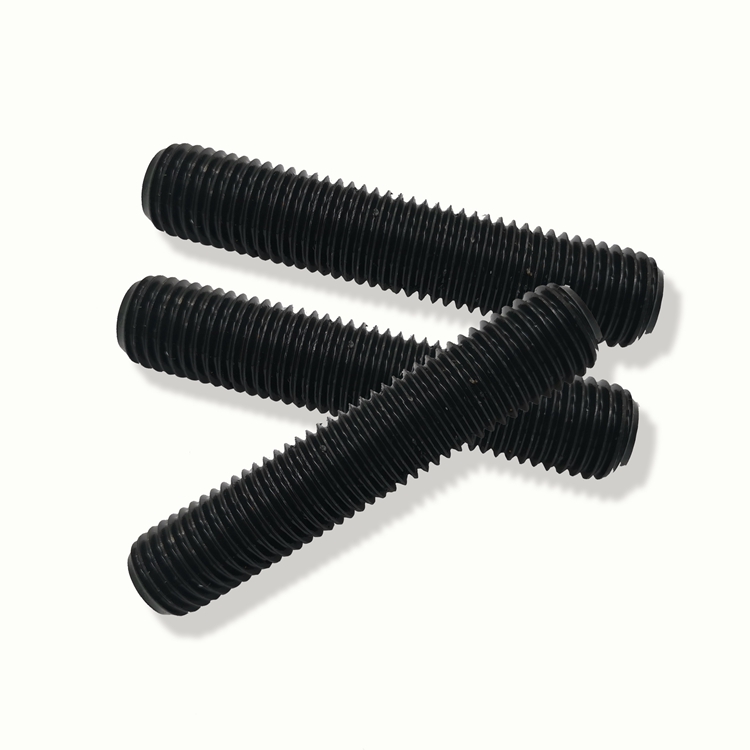
Grade 4.8 stud bolts are externally threaded fasteners, characterized by their unheaded design and threaded ends on both sides. They are a crucial component in numerous industrial applications, acting as a secure joining element in pipe flanges, pressure vessel closures, and machinery assemblies. Their designation, '4.8', indicates the material's tensile strength (400 MPa) and yield strength (240 MPa) respectively, defining their load-bearing capacity. Within the industrial supply chain, stud bolts function as a critical C-class component, often overlooked yet essential for the structural integrity and operational safety of larger systems. Core performance characteristics include resistance to shear and tensile stress, fatigue endurance, and predictable load-transfer behavior, vital for ensuring long-term reliability in critical applications. The primary pain point in the industry revolves around ensuring consistent material quality, accurate thread manufacturing, and effective corrosion protection to prevent premature failure in harsh operational environments.
Material Science & Manufacturing
Grade 4.8 stud bolts are predominantly manufactured from medium carbon steel, typically conforming to standards such as ASTM A193 Grade B7 or equivalent EN 10283 standards. The raw material possesses a chemical composition consisting primarily of carbon (0.25-0.32%), manganese (0.60-0.90%), silicon (0.15-0.35%), phosphorus (≤0.035%), sulfur (≤0.035%), and iron. Crucially, the steel undergoes a heat treatment process, including quenching and tempering, to achieve the desired mechanical properties. Quenching rapidly cools the steel, forming martensite, a very hard but brittle crystalline structure. Tempering then reduces brittleness while retaining significant strength. Manufacturing typically begins with hot forging or cold heading to form the basic stud bolt shape. Threading is then achieved through rolling or cutting processes. Thread rolling, preferred for its superior fatigue resistance, involves plastically deforming the material to create the threads. Precise control of thread pitch, major diameter, and minor diameter is paramount, often utilizing CNC machines for consistent accuracy. Surface treatments such as zinc plating, hot-dip galvanizing, or PTFE coating are frequently applied to enhance corrosion resistance. The metallurgical structure is carefully monitored for grain size and inclusion content to predict performance under stress and prevent premature cracking. Careful control of cooling rates during heat treatment is critical to avoid distortion or the formation of unwanted microstructures.
Performance & Engineering
The performance of grade 4.8 stud bolts is heavily governed by principles of mechanical engineering, particularly stress analysis and fatigue behavior. Under tensile loading, the bolt experiences uniform stress distribution across its cross-sectional area, determined by the applied force and the bolt’s area. Shear stress is induced when forces are applied perpendicular to the bolt’s axis, typically in bolted connections. The design of bolted joints incorporating stud bolts must consider factors like preload (initial tightening force), friction coefficients between mating surfaces, and potential for stress concentrations at thread roots. Environmental resistance is another critical engineering consideration. Exposure to corrosive environments (e.g., saltwater, chemicals) can lead to pitting corrosion, hydrogen embrittlement, or stress corrosion cracking, significantly reducing the bolt’s load-bearing capacity. Therefore, appropriate material selection and protective coatings are vital. Compliance requirements are dictated by industry-specific standards and regulations. For example, pressure vessel applications often require adherence to ASME Boiler and Pressure Vessel Code Section VIII Division 1. Fatigue endurance is paramount in applications subject to cyclical loading. The S-N curve (stress vs. number of cycles to failure) is used to predict the bolt's fatigue life, factoring in surface finish, stress concentrations, and the presence of corrosion. The bolt’s length and diameter also influence performance; longer bolts are more susceptible to bending moments, while smaller diameters exhibit lower tensile strength.
Technical Specifications
| Parameter | Unit | Grade 4.8 (Typical) | Tolerance |
|---|---|---|---|
| Tensile Strength | MPa | 400 | ±30 |
| Yield Strength | MPa | 240 | ±20 |
| Hardness (Brinell) | HB | 150-200 | ±10 |
| Elongation at Break | % | 16 | Minimum |
| Chemical Composition (Carbon) | % | 0.25-0.32 | ±0.02 |
| Chemical Composition (Manganese) | % | 0.60-0.90 | ±0.05 |
Failure Mode & Maintenance
Grade 4.8 stud bolts are susceptible to several failure modes. Fatigue cracking, initiated by stress concentrations at thread roots or surface defects, is a common occurrence in cyclically loaded applications. Corrosion, particularly pitting corrosion in chloride-rich environments, weakens the bolt material and promotes crack initiation. Hydrogen embrittlement, a phenomenon where hydrogen atoms diffuse into the steel lattice, reduces ductility and leads to brittle fracture. Shear failure can occur if the applied shear stress exceeds the material’s shear strength. Thread stripping, a result of insufficient preload or improper tightening, compromises the bolt’s clamping force. Galling, caused by friction between mating threads, can seize the bolt and prevent removal. Maintenance procedures involve regular visual inspections for signs of corrosion, cracks, or deformation. Torque checks are crucial to ensure proper preload. Lubrication of threads during installation and periodic re-tightening can prevent galling and maintain clamping force. If corrosion is detected, the bolt should be replaced. In critical applications, non-destructive testing methods, such as ultrasonic testing or magnetic particle inspection, can detect internal flaws before they lead to catastrophic failure. Proper storage in a dry environment with corrosion inhibitors is also essential for preserving bolt integrity.
Industry FAQ
Q: What is the impact of thread form on the fatigue life of a Grade 4.8 stud bolt?
A: The thread form significantly impacts fatigue life. A rolled thread, compared to a cut thread, introduces compressive residual stresses at the thread root, delaying crack initiation and improving fatigue endurance. Furthermore, the thread profile (e.g., metric, UNC, UNF) influences stress concentration factors. A smoothly transitioned thread form minimizes stress concentrations and enhances fatigue performance. The accuracy of the thread pitch and form are also crucial; deviations from specifications create localized stress risers.
Q: How does temperature affect the load-carrying capacity of a Grade 4.8 stud bolt?
A: Elevated temperatures reduce the yield strength and tensile strength of Grade 4.8 steel. This reduction in mechanical properties diminishes the bolt’s load-carrying capacity. Creep, the time-dependent deformation under sustained load at high temperatures, can also be a concern. Conversely, low temperatures can increase the material’s brittleness, making it more susceptible to fracture. Therefore, the operating temperature range must be considered when selecting stud bolts for specific applications.
Q: What is the recommended procedure for preventing galling during stud bolt installation?
A: Preventing galling requires proper lubrication of the threads with an appropriate anti-seize compound. The chosen lubricant should be compatible with the bolt material and the mating surface. Applying a uniform coating of lubricant to both the bolt and nut threads is essential. Controlled tightening torque and avoiding excessive tightening force also minimize friction and the risk of galling. Using properly cleaned and undamaged threads is critical.
Q: What are the implications of using a stud bolt with an incorrect surface finish?
A: An incorrect surface finish can significantly reduce fatigue life. Rough surfaces introduce stress concentrations, accelerating crack initiation. Surface defects, such as scratches or pits, act as nucleation sites for corrosion and fatigue cracks. The recommended surface finish depends on the application; however, a smooth, consistent surface is generally preferred for high-stress applications. Surface treatments like phosphate coating can improve corrosion resistance and provide a suitable base for lubrication.
Q: How does the material’s traceability affect the reliability of Grade 4.8 stud bolts?
A: Material traceability is paramount for ensuring reliability. Complete traceability—from the steel mill to the finished bolt—allows for verification of the material’s chemical composition, mechanical properties, and heat treatment processes. This documentation is crucial for identifying and mitigating potential risks associated with material defects or non-conformance. Without traceability, it's difficult to assess the bolt’s true performance characteristics and determine the root cause of failures.
Conclusion
Grade 4.8 stud bolts represent a foundational element in numerous engineering structures and processes, demanding a comprehensive understanding of their material properties, manufacturing nuances, and performance characteristics. Their reliable function is predicated on stringent adherence to industry standards, precise manufacturing control, and appropriate selection based on application-specific demands, particularly regarding load conditions, environmental exposure, and fatigue requirements. Neglecting these aspects can lead to premature failure and potentially catastrophic consequences.
Future developments in stud bolt technology will likely focus on advanced materials with enhanced corrosion resistance and higher strength-to-weight ratios, alongside improved surface treatments and non-destructive testing methods. The increasing adoption of digital twins and predictive maintenance strategies will also play a crucial role in optimizing stud bolt performance and extending service life, ultimately contributing to improved safety and operational efficiency across various industrial sectors.