
Introduction
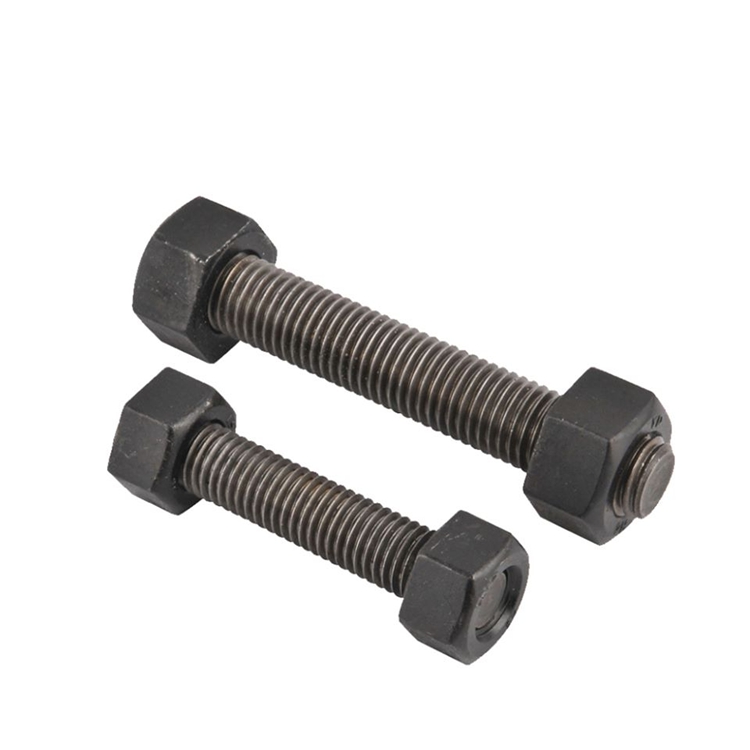
B7 stud bolts are high-strength fasteners extensively utilized in critical applications within the petrochemical, power generation, and general industrial sectors. Positioned as a fundamental component in bolted joint assemblies, they are primarily employed in high-temperature and high-pressure environments. These bolts are manufactured from ASTM A193 Grade B7 alloy steel, a quenched and tempered carbon steel known for its superior tensile strength, yield strength, and resistance to brittle fracture. Their primary function is to securely fasten flanged connections, valve bonnets, cylinder heads, and other critical components, ensuring structural integrity and preventing leakage. The selection of B7 stud bolts hinges on their ability to withstand extreme operational stresses, including those induced by thermal cycling, pressure fluctuations, and external loads. Understanding their material properties, manufacturing processes, and potential failure modes is paramount for ensuring long-term reliability and safety in demanding industrial applications. A key pain point in the industry is ensuring consistent material quality and adherence to stringent manufacturing standards to prevent catastrophic failures.
Material Science & Manufacturing
B7 stud bolts derive their properties from the base material: ASTM A193 Grade B7 alloy steel, consisting primarily of carbon, manganese, chromium, and molybdenum. The chemical composition typically ranges from 0.18-0.24% Carbon, 0.80-1.10% Manganese, 0.80-1.10% Chromium, and 0.15-0.25% Molybdenum, with remaining iron content. This composition facilitates deep hardening during the quenching process. Manufacturing begins with hot rolling or forging of the steel billet to near the final shape. Critical parameters at this stage include controlled heating and cooling rates to prevent grain growth and ensure a homogenous microstructure. The material then undergoes a precise heat treatment process, consisting of austenitizing, quenching in oil, and tempering. Austenitizing involves heating the steel to a temperature above its critical transformation range, followed by rapid quenching to transform the austenite into martensite. Tempering is then performed to reduce the brittleness of the martensite and enhance ductility, typically to a hardness of 30-35 HRC. Threads are formed via cold forming or machining, followed by phosphate coating for corrosion resistance. Dimensional accuracy is maintained through rigorous quality control checks using calibrated measuring instruments. A crucial aspect is the prevention of hydrogen embrittlement during quenching, which can lead to delayed cracking. This is mitigated through careful control of quenching medium composition and temperature, as well as post-quench tempering.
Performance & Engineering
The performance of B7 stud bolts is governed by their mechanical properties, primarily tensile strength, yield strength, and elongation. Typical values are a tensile strength of 150 ksi (1034 MPa) minimum, a yield strength of 100 ksi (690 MPa) minimum, and an elongation of 18% minimum in a 2-inch gauge length. Force analysis in bolted joint applications involves calculating the bolt preload, which is the tensile force applied to the bolt during tightening. Proper preload is critical to prevent joint separation under load and to maintain fatigue resistance. Environmental resistance is a significant consideration, particularly in corrosive environments. The phosphate coating provides a degree of corrosion protection, but supplementary coatings such as PTFE or zinc are often applied for enhanced resistance. Compliance requirements are dictated by industry standards such as ASME Section VIII Division 1 for pressure vessel applications, and API 6A for wellhead and Christmas tree equipment. Finite element analysis (FEA) is frequently employed to optimize bolt geometry and preload to minimize stress concentrations and maximize joint reliability. Detailed calculations considering thermal expansion and contraction are necessary in high-temperature applications to prevent bolt loosening or failure. A common engineering challenge lies in accurately determining the required bolt preload to achieve optimal joint performance without exceeding the bolt’s yield strength.
Technical Specifications
| Specification | Metric (SI) | Imperial | Standard Reference |
|---|---|---|---|
| Tensile Strength | 1034 MPa min | 150 ksi min | ASTM A193 Grade B7 |
| Yield Strength | 690 MPa min | 100 ksi min | ASTM A193 Grade B7 |
| Elongation | 18% min (50mm gauge length) | 18% min (2 inch gauge length) | ASTM A193 Grade B7 |
| Hardness | 30-35 HRC | 30-35 HRC | ASTM A193 Grade B7 |
| Coating | Phosphate (Zinc Phosphate) | Phosphate (Zinc Phosphate) | ASTM A193 Grade B7, ISO 12944 |
| Operating Temperature Range | -20°C to 370°C | -4°F to 700°F | ASME Section VIII Division 1 |
Failure Mode & Maintenance
B7 stud bolts are susceptible to several failure modes. Fatigue cracking is common in dynamically loaded applications, initiated by stress concentrations at the thread root or under the bolt head. Hydrogen embrittlement can lead to delayed cracking, particularly in high-strength steels exposed to corrosive environments. Corrosion, specifically pitting corrosion and crevice corrosion, can weaken the bolt material and reduce its load-carrying capacity. Thread stripping can occur if the bolt is overstressed or if the nut material is incompatible. The most common failure mode in high-temperature applications is creep, a time-dependent deformation under sustained load. Maintenance involves regular inspection for signs of corrosion, cracking, or deformation. Torque checks should be performed periodically to ensure proper preload is maintained. Lubrication with anti-seize compounds can prevent galling and facilitate disassembly. In corrosive environments, periodic replacement of bolts is recommended based on exposure severity. Non-destructive testing (NDT) methods, such as magnetic particle inspection (MPI) or ultrasonic testing (UT), can be employed to detect subsurface cracks. Proper storage is also crucial; bolts should be protected from moisture and contaminants to prevent corrosion before use. Detailed records of inspection and maintenance activities should be maintained for traceability.
Industry FAQ
Q: What is the impact of thread form on the fatigue life of B7 stud bolts?
A: The thread form significantly impacts fatigue life. Finer threads generally exhibit higher fatigue strength due to a smaller stress concentration factor at the thread root. However, finer threads also increase the risk of galling. Unified National Fine (UNF) threads are frequently employed in critical applications where fatigue resistance is paramount. Proper thread lubrication during assembly is also crucial to reduce friction and minimize stress concentrations.
Q: Can B7 stud bolts be used in sour service applications (containing H2S)?
A: While B7 material itself isn’t inherently resistant to sulfide stress cracking (SSC), supplemental treatments and coatings are necessary for sour service. NACE MR0175/ISO 15156 specify materials and practices for sour service, and B7 bolts intended for such applications must meet these requirements, typically involving a special alloy composition and a protective coating like cadmium or zinc-nickel.
Q: What is the correct procedure for applying torque to B7 stud bolts?
A: Torque application should follow a calibrated torque wrench procedure using the manufacturer's recommended torque values, which are based on bolt size, material, and lubrication. The turn-of-nut method is often preferred, involving tightening the bolt to a snug-tight condition followed by a specified rotation angle. This method provides more accurate preload control than relying solely on torque. Lubrication of the threads with an approved lubricant is essential for accurate torque readings.
Q: What are the implications of using dissimilar metals in a bolted joint with B7 stud bolts?
A: Dissimilar metal combinations can lead to galvanic corrosion, where one metal corrodes preferentially to the other. To mitigate this, select compatible materials or use insulating washers and sleeves to prevent direct contact. The nobility of the metals involved dictates the extent of corrosion; a more noble metal will typically corrode the less noble metal. Careful consideration of the operating environment is also crucial.
Q: How does heat treatment affect the mechanical properties of B7 stud bolts?
A: Heat treatment is the most critical factor influencing the mechanical properties of B7 stud bolts. Proper austenitizing, quenching, and tempering are essential to achieve the specified tensile strength, yield strength, and ductility. Improper heat treatment can result in insufficient hardening, retained austenite, or excessive brittleness, all of which compromise the bolt’s performance and reliability.
Conclusion
B7 stud bolts represent a critical fastening solution for high-pressure, high-temperature applications across diverse industries. Their robust performance stems from a carefully controlled manufacturing process centered on the ASTM A193 Grade B7 alloy steel, utilizing precise heat treatment and quality control measures. Understanding the material science, potential failure modes, and adherence to relevant industry standards is paramount for ensuring the long-term integrity and safety of bolted joint assemblies.
Effective utilization of B7 stud bolts necessitates a holistic approach encompassing proper selection, installation, maintenance, and inspection protocols. Future advancements in fastener technology may focus on developing enhanced corrosion-resistant coatings, optimized thread designs for improved fatigue life, and advanced non-destructive testing methods for early detection of defects. Continued research and development efforts are vital to further enhance the reliability and performance of these critical components in increasingly demanding industrial environments.