
Introduction
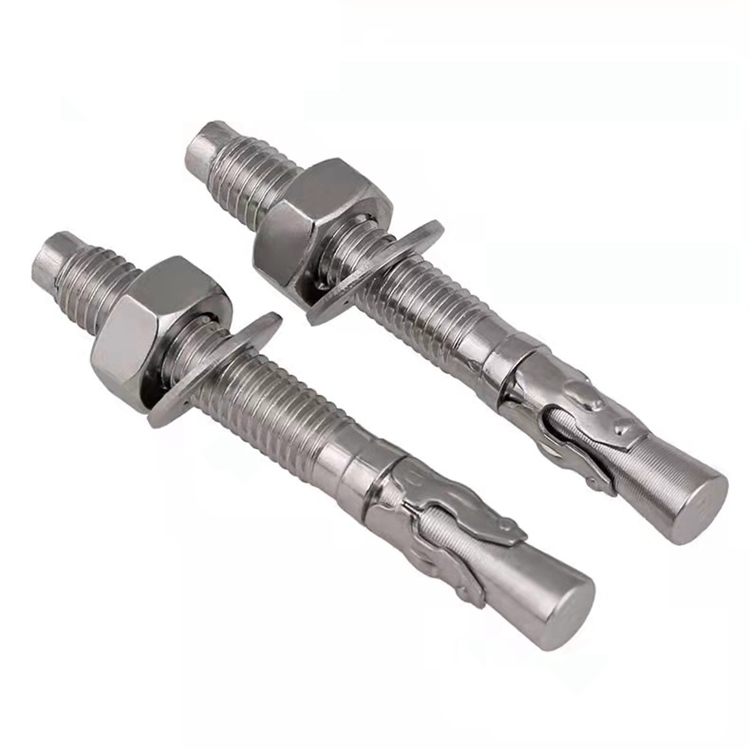
Double end stud bolts are fully threaded fasteners used extensively in critical applications across industries including petrochemical, power generation, and heavy equipment manufacturing. Positioned within the fastening supply chain as a core component for flanged joints and pressure vessel closures, their primary function is to provide robust clamping force under high stress and temperature conditions. Unlike bolts intended for use with nuts on one end, stud bolts are threaded along their entire length, enabling them to be tightened from both ends, offering superior control and even stress distribution. Key performance characteristics include tensile strength, yield strength, creep resistance at elevated temperatures, and resistance to corrosion. The industry continually grapples with challenges surrounding material selection for specific service environments, precise thread tolerances, and ensuring consistent mechanical properties throughout the fastener's lifecycle.
Material Science & Manufacturing
Double end stud bolts are typically manufactured from high-strength alloy steels, with common grades including ASTM A193 Grade B7, A193 Grade B8 (Class 1 & 2), A320 Grade L7, and A572 Grade 60. A193 Grade B7, a carbon-manganese alloy, is frequently used for moderate temperature applications, relying on heat treatment (quenching and tempering) to achieve its mechanical properties. Higher temperature applications demand materials like A193 Grade B8, an austenitic stainless steel alloy containing chromium and nickel, offering enhanced oxidation resistance. The manufacturing process begins with hot rolling or forging of the steel billet to the approximate stud bolt diameter. Critical parameters during forging include die temperature, forging pressure, and cooling rate, all influencing grain structure and potential defects. Following forging, the studs undergo a series of machining operations including cold drawing to achieve the final dimensions and thread formation via rolling or cutting. Thread rolling is preferred as it imparts compressive residual stresses, improving fatigue life. Heat treatment is a pivotal step; improper quenching can lead to cracking, while inadequate tempering reduces toughness. Non-destructive testing (NDT) methods, such as magnetic particle inspection (MPI) and ultrasonic testing (UT), are employed to detect surface and subsurface flaws. Finally, studs receive a protective coating – often zinc plating, phosphate coating, or specialized coatings like PTFE – to enhance corrosion resistance. Chemical composition verification through methods like Optical Emission Spectroscopy (OES) is crucial for ensuring material compliance.
Performance & Engineering
The performance of double end stud bolts is dictated by several engineering principles. Axial tensile load capacity is calculated based on the stud’s cross-sectional area, tensile strength, and a suitable safety factor, adhering to ASME Section VIII Division 1 guidelines. Stress concentration around the thread roots is a critical consideration, necessitating precise thread geometry and surface finish to maximize fatigue life. When subjected to fluctuating loads, fatigue analysis, typically using S-N curves, is performed to predict the number of cycles to failure. Creep, the time-dependent deformation under sustained load at elevated temperatures, is a major concern in high-temperature applications. Material selection, specifically the use of creep-resistant alloys, is paramount. Gasket seating stress is a crucial parameter in flanged joints; sufficient clamping force must be applied to achieve a leak-tight seal without exceeding the stud’s yield strength. Thermal expansion and contraction of the connected materials must also be accounted for during design, as differential expansion can induce significant stress on the studs. Furthermore, the prevailing torque during tightening must be carefully controlled to achieve the desired clamping force and prevent over-tightening or under-tightening. Finite Element Analysis (FEA) is frequently used to model the stress distribution within the bolted joint and optimize the stud bolt configuration. Corrosion resistance is essential; in aggressive environments, duplex stainless steels or high-nickel alloys are employed to mitigate pitting and crevice corrosion.
Technical Specifications
| Material Grade | Tensile Strength (MPa) | Yield Strength (MPa) | Hardness (HRC) |
|---|---|---|---|
| ASTM A193 Grade B7 | 690-827 | 483-620 | 30-34 |
| ASTM A193 Grade B8 (Class 1) | 860-1034 | 620-760 | 32-38 |
| ASTM A193 Grade B8 (Class 2) | 930-1103 | 690-862 | 34-40 |
| ASTM A320 Grade L7 | 790-965 | 550-690 | 30-36 |
| ASTM A572 Grade 60 | 586 | 345 | 26-30 |
| Duplex Stainless Steel (e.g., UNS S31803) | 930-1100 | 550-700 | 28-32 |
Failure Mode & Maintenance
Double end stud bolts are susceptible to several failure modes. Fatigue failure, resulting from cyclic loading, is common, initiated by cracks at thread roots or stress concentrators. Hydrogen embrittlement, particularly in high-strength steels exposed to sour gas environments, can lead to rapid crack propagation. Corrosion, including pitting, crevice corrosion, and stress corrosion cracking, weakens the material and reduces load-carrying capacity. Creep rupture occurs at elevated temperatures due to time-dependent deformation. Thread galling, caused by friction between mating threads during tightening, can seize the stud. Loose connections, resulting from relaxation of the joint or improper tightening torque, reduce clamping force. Maintenance involves regular visual inspection for signs of corrosion, cracks, or deformation. Torque checks should be performed periodically to verify clamping force, following a prescribed torque-tension relationship. Lubrication of threads with approved anti-seize compounds prevents galling. In corrosive environments, protective coatings should be inspected and repaired as needed. For critical applications, Non-Destructive Testing (NDT), such as dye penetrant inspection (DPI) or ultrasonic testing (UT), can detect hidden flaws. Replacement of studs is necessary if significant corrosion, cracking, or deformation is detected, or if the stud has exceeded its design life.
Industry FAQ
Q: What is the impact of thread form on the fatigue life of a double end stud bolt?
A: The thread form significantly influences fatigue life. A sharper thread form induces higher stress concentrations, reducing fatigue resistance. A more rounded thread form, like a unified thread, distributes stress more evenly, improving fatigue performance. Additionally, thread surface finish is critical; a smoother finish minimizes stress raisers and enhances fatigue life. Proper thread rolling processes are essential for creating favorable compressive residual stresses.
Q: How does material selection mitigate the risk of stress corrosion cracking in chloride-containing environments?
A: Stress corrosion cracking (SCC) is a serious concern in chloride-rich environments. Austenitic stainless steels, while generally corrosion-resistant, are susceptible to chloride-induced SCC. Duplex stainless steels, with their higher chromium, nickel, and molybdenum content, offer significantly improved resistance to SCC. Super-austenitic stainless steels and high-nickel alloys provide even greater protection. Proper cathodic protection and avoidance of stagnant conditions can also minimize SCC risk.
Q: What are the key considerations when selecting a stud bolt for high-temperature, high-pressure applications?
A: For high-temperature, high-pressure applications, creep resistance is paramount. Materials like A320 Grade L7 or high-chromium-molybdenum alloys are preferred. The stud bolt must maintain sufficient strength and stiffness at operating temperature without undergoing excessive creep deformation. Oxidation resistance is also crucial. Precise control of tightening torque and gasket seating stress are vital to prevent joint failure. Finite Element Analysis (FEA) is highly recommended to optimize the design and ensure structural integrity.
Q: What is the role of protective coatings in extending the service life of stud bolts?
A: Protective coatings provide a barrier against corrosive environments. Zinc plating offers sacrificial protection, corroding preferentially to the stud bolt material. Phosphate coatings provide a base for paint or other coatings, enhancing adhesion and corrosion resistance. Specialized coatings like PTFE (Teflon) reduce friction and prevent galling. Ceramic coatings offer high-temperature oxidation resistance. Coating thickness and uniformity are critical for effective protection.
Q: What are the implications of using improper tightening torque on the performance of a flanged joint with double end stud bolts?
A: Improper tightening torque can lead to several problems. Under-tightening results in insufficient clamping force, leading to leakage and potential joint failure. Over-tightening can exceed the stud bolt’s yield strength, causing permanent deformation and reducing clamping force over time. It can also damage the gasket and threads. Proper torque control, using calibrated torque wrenches and adhering to established torque-tension relationships, is essential for ensuring a reliable and leak-tight joint.
Conclusion
Double end stud bolts represent a critical fastening solution for demanding industrial applications. Their performance is intricately linked to material science, manufacturing precision, and engineering principles. Selecting the appropriate material grade, employing rigorous quality control measures during manufacturing, and adhering to proper installation and maintenance procedures are all vital for ensuring long-term reliability and safety. Understanding the potential failure modes and implementing preventative measures can significantly extend the service life of these critical components.
The future of double end stud bolt technology will likely focus on developing advanced materials with enhanced creep resistance, corrosion resistance, and fatigue life. The integration of smart fastening technologies, such as embedded sensors for real-time torque monitoring and corrosion detection, will further improve joint integrity and predictive maintenance capabilities. Continued advancements in Finite Element Analysis (FEA) and Non-Destructive Testing (NDT) will refine design optimization and quality assurance processes.