
Introduction
BS hexagon socket bolts, conforming to British Standard EN ISO 1213-3:2000, represent a critical fastening element within a wide spectrum of engineering applications. These bolts, characterized by their cylindrical heads with internal hexagonal drives, offer substantial advantages in torque transmission and installation efficiency, particularly in confined spaces. Their position within the industrial chain extends from raw material sourcing and manufacturing to integral component status in complex assemblies, spanning automotive, aerospace, construction, and general machinery sectors. Core performance characteristics revolve around tensile strength, yield strength, proof load, and resistance to loosening under vibration – qualities essential for ensuring structural integrity and operational reliability. The industry consistently faces challenges relating to material traceability, fastener fatigue, corrosion susceptibility, and adherence to increasingly stringent quality control protocols. Proper specification and selection of BS hexagon socket bolts are paramount to mitigating these risks and achieving long-term performance.
Material Science & Manufacturing
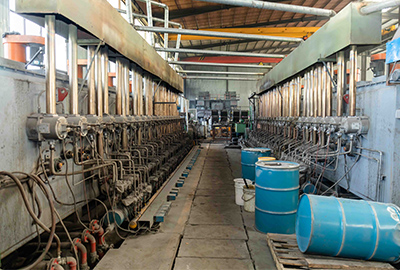
BS hexagon socket bolts are primarily manufactured from carbon steels, alloy steels, and stainless steels. Common carbon steel grades include C45, offering a balance of strength and cost-effectiveness. Alloy steels, such as 42CrMo4 (BS EN 10083-3), are employed for applications demanding higher tensile strength and toughness. Stainless steel grades, notably A2 (304) and A4 (316), provide superior corrosion resistance in harsh environments. The manufacturing process typically involves cold forging, followed by heat treatment and surface finishing. Cold forging enhances the material's grain structure, increasing strength and fatigue resistance. Heat treatment, including hardening and tempering, precisely controls mechanical properties. Surface treatments, such as zinc plating, galvanizing, or passivization, further enhance corrosion protection. Critical process parameters include forging pressure, die lubrication, quenching medium, and tempering temperature. Chemical composition verification via spectroscopic analysis, mechanical testing (tensile, yield, hardness), and microstructural examination are essential for quality control. Hydrogen embrittlement is a significant concern during electroplating; baking processes are implemented to mitigate this risk. Material traceability, adhering to EN 10204 standards, is also crucial to ensure material authenticity and consistency throughout the manufacturing lifecycle. The internal hexagon drive is typically formed using a broaching operation, demanding precision tooling to achieve the specified dimensions and tolerances.
Performance & Engineering
The performance of BS hexagon socket bolts is governed by several key engineering principles. Force analysis considers tensile loading, shear loading, and bending moments encountered in service. Tensile strength, measured in MPa, indicates the maximum stress the bolt can withstand before fracturing. Yield strength determines the point at which permanent deformation occurs. Proof load, defined by the standard, represents the maximum tensile load that can be applied without causing permanent elongation. Environmental resistance is critical, particularly in corrosive atmospheres. Galvanic corrosion, accelerated by dissimilar metal contact, must be considered. Finite element analysis (FEA) is frequently employed to model stress distributions and optimize bolt geometry for specific applications. Compliance with relevant standards, such as EN ISO 898-1, ensures dimensional accuracy, mechanical properties, and material traceability. The torque-tension relationship is vital for achieving proper clamping force. The torque applied during installation directly influences the preload in the bolt, impacting joint stability and fatigue life. Preload calculations must account for friction coefficients, bolt geometry, and material properties. Fastener fatigue is a primary failure mechanism under cyclic loading; understanding S-N curves (stress-amplitude vs. number of cycles to failure) is essential for predicting bolt life. Thread form (metric, unified) and thread engagement length are also significant parameters influencing performance.
Technical Specifications
| Property | Grade 4.6 | Grade 8.8 | Grade 10.9 | Stainless Steel A2-70 |
|---|---|---|---|---|
| Tensile Strength (MPa) | 400 | 800 | 1000 | 700 |
| Yield Strength (MPa) | 240 | 600 | 900 | 500 |
| Proof Load (MPa) | 240 | 600 | 900 | 500 |
| Hardness (HV) | 170-210 | 310-370 | 340-400 | 200-250 |
| Typical Material | C45 | 42CrMo4 | 42CrMo4 | 304 |
| Corrosion Resistance | Low (Requires Coating) | Low (Requires Coating) | Low (Requires Coating) | Good |
Failure Mode & Maintenance
BS hexagon socket bolts are susceptible to several failure modes. Fatigue cracking, initiated by cyclic loading, often occurs at the thread root or under the bolt head. Corrosion, particularly in aggressive environments, can lead to pitting corrosion, crevice corrosion, and stress corrosion cracking. Hydrogen embrittlement, induced by electroplating processes, reduces ductility and increases susceptibility to cracking. Stripping of the internal hexagonal drive can occur due to excessive torque or improper tool engagement. Loosening under vibration, caused by insufficient preload or joint settlement, is a common issue. Shear failure can occur under excessive shear loads, particularly in applications with poor joint design. Maintenance strategies include regular visual inspection for signs of corrosion, cracking, or loosening. Torque checks should be performed periodically to ensure adequate preload. Lubrication with appropriate thread compounds can reduce friction and prevent galling. Damaged bolts should be replaced immediately with bolts of the correct grade and specification. Preventative maintenance programs, incorporating corrosion protection measures and vibration monitoring, can significantly extend bolt life. Proper installation procedures, utilizing calibrated torque wrenches and correct tool engagement, are crucial to preventing premature failure. Regular cleaning and application of protective coatings can mitigate corrosion risks.
Industry FAQ
Q: What is the difference between Grade 8.8 and Grade 10.9 bolts, and when would I choose one over the other?
A: Grade 10.9 bolts exhibit significantly higher tensile and yield strengths compared to Grade 8.8. This translates to a greater load-carrying capacity and improved resistance to deformation. Grade 8.8 bolts are typically sufficient for general-purpose applications where cost is a primary concern. However, Grade 10.9 bolts are essential for critical applications involving high stresses, dynamic loading, or stringent safety requirements, such as automotive engine components or aerospace structures. The increased strength justifies the higher cost in these scenarios.
Q: How does the thread form (metric vs. unified) impact bolt performance and interchangeability?
A: Metric threads, defined by ISO standards, utilize a 60-degree thread angle and are widely used globally. Unified threads, prevalent in North America, also feature a 60-degree angle but have different dimensions. Interchangeability between metric and unified bolts is not possible without adapters. The thread form influences the load distribution and engagement area. Metric threads generally offer a slightly higher shear strength due to their more gradual thread profile. Selecting the appropriate thread form is crucial for ensuring compatibility with mating components and avoiding assembly issues.
Q: What surface treatments are recommended for BS hexagon socket bolts used in marine environments?
A: Marine environments pose a severe corrosion challenge. Stainless steel (A4-80 or A4-70) is the preferred material for maximum corrosion resistance. If carbon or alloy steel bolts are used, a multi-layer coating system is essential. This typically includes hot-dip galvanizing followed by a zinc-rich epoxy primer and a polyurethane topcoat. Passivation treatments are also crucial for stainless steel to enhance its protective oxide layer. Regular inspection and maintenance of the coating system are vital to prevent corrosion initiation.
Q: What are the risks associated with using improper torque values during bolt installation?
A: Under-torquing results in insufficient preload, leading to joint loosening, fatigue failure, and potential structural collapse. Over-torquing can exceed the bolt's yield strength, causing permanent deformation, thread stripping, or even fracture. Using a calibrated torque wrench and adhering to the manufacturer's recommended torque specifications are paramount. Torque-angle tightening methods, which combine torque control with a specific rotational angle, are often employed for critical joints to achieve more precise preload.
Q: How can I verify the traceability of a BS hexagon socket bolt to ensure it meets required specifications?
A: Traceability is typically achieved through batch markings or individual bolt identification. The manufacturer should provide a material certificate (EN 10204 3.1 or 3.2) detailing the chemical composition, mechanical properties, and heat treatment details. Verify that the markings on the bolt correspond to the certificate. Conducting independent material testing and dimensional verification can further validate compliance with specifications. A robust quality management system (ISO 9001) at the manufacturing facility is a strong indicator of traceability and quality control.
Conclusion
BS hexagon socket bolts are indispensable fastening elements, their performance fundamentally linked to material selection, manufacturing precision, and adherence to rigorous engineering principles. The diverse range of grades and materials allows for tailored solutions to meet specific application requirements, ranging from general-purpose assembly to critical structural joints. Understanding potential failure modes – including fatigue, corrosion, and improper installation – is crucial for ensuring long-term reliability and safety.
Moving forward, advancements in bolt materials, coating technologies, and non-destructive testing methods will continue to enhance performance and extend service life. The increasing adoption of digital tools, such as FEA and torque monitoring systems, will further optimize bolt design and installation processes. Maintaining a focus on quality control, traceability, and preventative maintenance remains essential for mitigating risks and maximizing the value of these critical components.