
Introduction
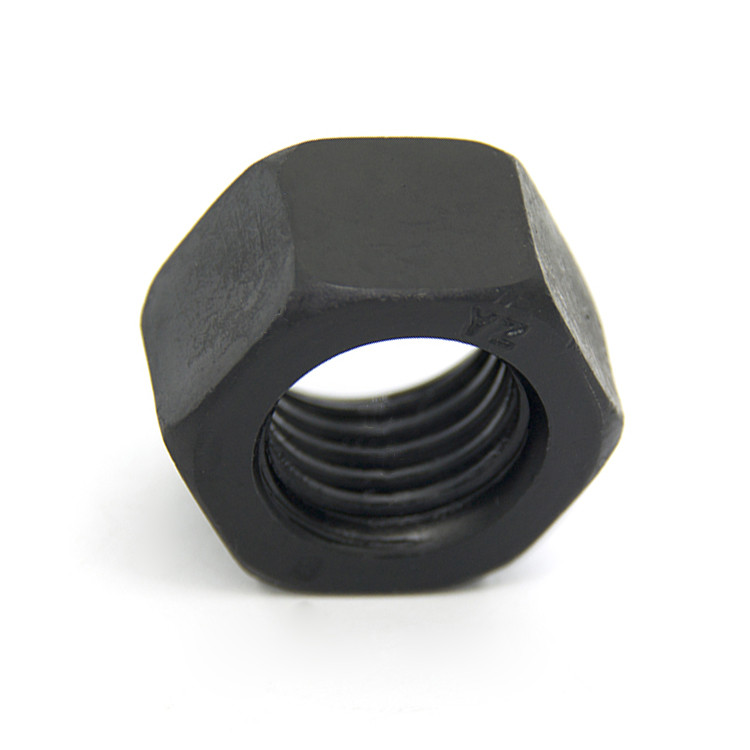
ASTM hexagon socket bolts, also known as Allen head cap screws, are externally threaded fasteners characterized by a hexagonal recess in their head. Their position within the industrial chain is fundamental: they are critical components in mechanical assemblies across diverse sectors including automotive, aerospace, machinery, and construction. These bolts are specified according to various ASTM standards (e.g., ASTM A574, ASTM A193, ASTM A307) depending on the material grade and intended application. Core performance characteristics include tensile strength, yield strength, proof load, and resistance to loosening under vibration. A key industry pain point revolves around ensuring consistent material quality and dimensional accuracy, as deviations can lead to assembly failures, increased maintenance costs, and potential safety hazards. Another critical concern is corrosion resistance, particularly in harsh environments, demanding careful material selection and coating applications. Finally, proper torque application is paramount to achieve secure clamping force without damaging the bolt or the joined materials.
Material Science & Manufacturing
ASTM hexagon socket bolts are predominantly manufactured from carbon steels (e.g., AISI 1045, 4140) and alloy steels, although stainless steels (e.g., 304, 316) and even titanium alloys are utilized for specialized applications. The physical properties of the raw material—tensile strength, yield strength, elongation, and hardness—are critical. Carbon steel bolts typically undergo heat treatment processes like quenching and tempering to achieve desired mechanical characteristics. Alloy steels may also involve processes like carburizing or nitriding to enhance surface hardness and wear resistance. Manufacturing generally involves cold heading or hot forging to form the bolt head and shank, followed by thread rolling. Cold heading provides superior strength and surface finish but is limited by material ductility. Hot forging can produce larger bolt sizes and more complex geometries. Crucially, the head is then machined to create the hexagonal socket. Parameter control during thread rolling is vital to achieve accurate thread dimensions and avoid stress concentrations. Surface treatments like zinc plating, black oxide, or hot-dip galvanizing are applied for corrosion protection. Chemical compatibility is a major consideration; for instance, using stainless steel bolts with aluminum components requires careful selection to prevent galvanic corrosion. Material certificates verifying chemical composition and mechanical properties are essential for traceability and quality assurance.
Performance & Engineering
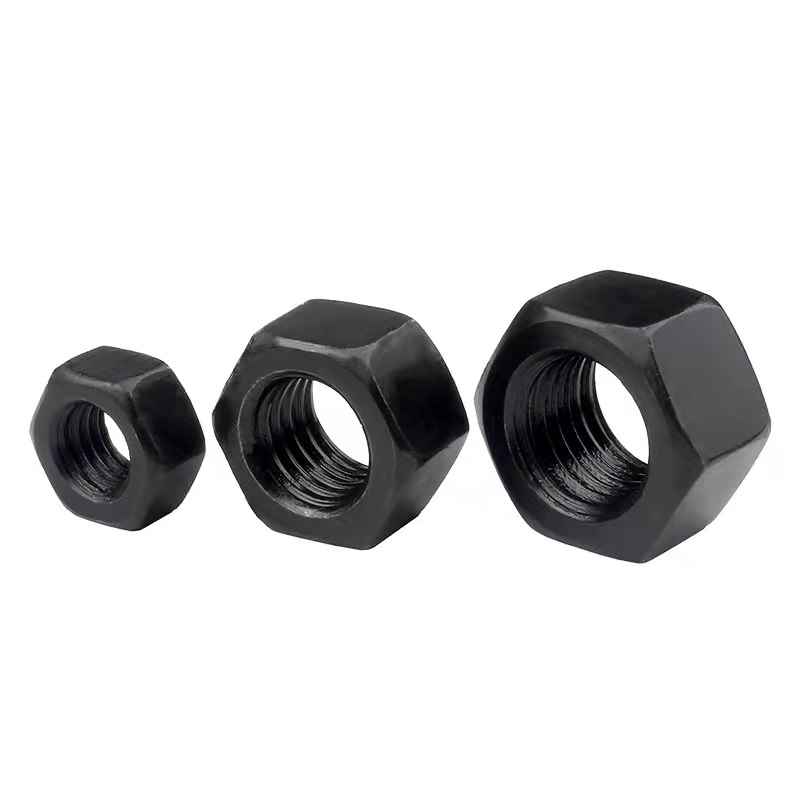
The performance of ASTM hexagon socket bolts is fundamentally governed by force analysis principles. Tensile stress is the primary load experienced during clamping, calculated as force divided by cross-sectional area. Shear stress becomes important in applications subjected to lateral loads or vibrations. The bolt's preload (clamping force) is critical for maintaining joint integrity. Insufficient preload leads to loosening, while excessive preload can cause yielding or stripping of threads. Environmental resistance is another key performance parameter. Exposure to corrosive environments (e.g., saltwater, chemicals) can lead to pitting corrosion, hydrogen embrittlement, and reduced fatigue life. Material selection and protective coatings play a significant role in mitigating these effects. Compliance requirements vary depending on the industry. Aerospace applications, for example, often demand adherence to stringent specifications like AMS (Aerospace Material Specifications). Automotive applications must meet standards like IATF 16949. Functional implementation relies heavily on proper torque control. Torque-angle tightening methods are preferred to ensure accurate preload and prevent over-tightening. Finite Element Analysis (FEA) is frequently employed to optimize bolt design and predict stress distribution under various loading conditions, ensuring structural integrity and preventing premature failure.
Technical Specifications
| Grade | Tensile Strength (MPa) | Yield Strength (MPa) | Hardness (Rockwell C) |
|---|---|---|---|
| ASTM A574 Grade 5 | 830 | 690 | 30-35 |
| ASTM A193 Grade B7 | 1034 | 965 | 30-34 |
| ASTM A307 Grade A | 690 | 517 | 20-25 |
| SS304 | 500-700 | 205-275 | 20-30 |
| SS316 | 620-790 | 240-310 | 25-35 |
| AISI 4140 | 860-1034 | 655-827 | 28-34 |
Failure Mode & Maintenance
Failure modes in ASTM hexagon socket bolts are diverse. Fatigue cracking, initiated by cyclic loading, is a common issue, particularly in vibratory environments. Stress corrosion cracking can occur in corrosive environments, even at relatively low stress levels. Thread stripping can result from over-tightening or improper thread engagement. Hydrogen embrittlement, prevalent in high-strength steels exposed to hydrogen-containing environments, leads to brittle fracture. Corrosion, as previously mentioned, weakens the material and accelerates failure. Shear failure occurs when the bolt is subjected to excessive shear loads. Prevention necessitates proper material selection, adequate surface treatments, accurate torque control, and regular inspection. Maintenance involves periodic visual inspections for signs of corrosion, cracking, or deformation. Torque checks should be performed to ensure preload is maintained. Lubrication of threads can prevent galling and facilitate removal. In critical applications, non-destructive testing methods like ultrasonic inspection or magnetic particle inspection can detect hidden flaws. If a bolt shows signs of damage, it must be replaced with a bolt of the same grade and specification. Proper documentation of inspection and maintenance activities is essential for maintaining a reliable fastening system.
Industry FAQ
Q: What is the difference between Grade 5 and Grade 8 bolts, and when would I choose one over the other?
A: Grade 5 and Grade 8 refer to the material's tensile strength. Grade 8 bolts (typically ASTM A193 Grade B7) are significantly stronger than Grade 5 bolts (typically ASTM A574 Grade 5). Grade 8 bolts are used in applications requiring high strength and resistance to failure under heavy loads, such as engine components or structural connections. Grade 5 bolts are suitable for less demanding applications where lower strength is acceptable, offering a more cost-effective solution.
Q: How does corrosion affect the performance of hexagon socket bolts, and what can be done to mitigate it?
A: Corrosion weakens the bolt material, reduces its load-carrying capacity, and can lead to premature failure. Mitigation strategies include selecting corrosion-resistant materials like stainless steel, applying protective coatings (zinc plating, galvanizing), using corrosion inhibitors, and avoiding galvanic corrosion by pairing compatible metals.
Q: What is the correct way to torque a hexagon socket bolt, and why is it important?
A: The correct torque depends on the bolt size, material, and lubrication. Using a calibrated torque wrench is crucial. Over-tightening can strip threads or yield the bolt, while under-tightening can lead to loosening and joint failure. Torque-angle tightening, where the bolt is tightened to a specific torque and then rotated a specified angle, is often preferred for achieving accurate preload.
Q: What are the advantages of using hexagon socket bolts versus other types of fasteners, like hex head bolts?
A: Hexagon socket bolts offer several advantages. They allow for flush or recessed mounting, providing a cleaner appearance and reduced obstruction. The recessed head also minimizes the risk of damage during assembly. They provide a greater torque transfer capability and are less likely to cam out than other fastener types.
Q: How important is material certification when purchasing ASTM hexagon socket bolts?
A: Material certification is critically important. It provides documented evidence that the bolts meet specified chemical composition and mechanical property requirements. This ensures traceability and quality assurance, reducing the risk of using substandard materials that could lead to failures and safety concerns. Always request and verify material test reports (MTRs) from reputable suppliers.
Conclusion
ASTM hexagon socket bolts are foundational elements in countless mechanical systems. Their reliable performance relies on a confluence of factors encompassing material science, precise manufacturing processes, accurate engineering calculations, and diligent maintenance protocols. A comprehensive understanding of their material properties, potential failure modes, and adherence to relevant industry standards is paramount for ensuring structural integrity and operational safety.
Future advancements in bolt technology will likely focus on developing lighter-weight materials, improved corrosion resistance coatings, and more sophisticated fastening systems that incorporate sensors for real-time monitoring of preload and joint condition. Continued investment in research and development, coupled with rigorous quality control measures, will be essential for meeting the evolving demands of increasingly complex industrial applications.