
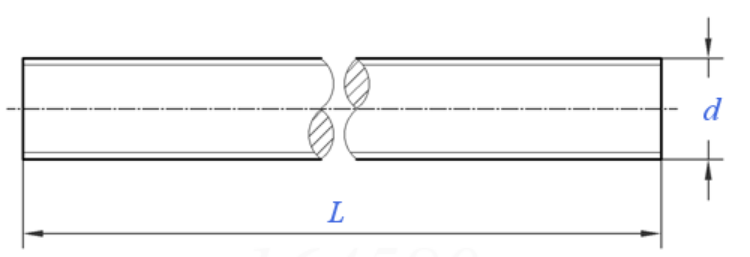
Introduction
Allen key bolts, also known as socket head cap screws, represent a critical fastening component across a diverse range of industrial applications. Their defining feature – a hexagonal socket drive – allows for high torque transmission and efficient installation using an Allen wrench (hex key). Positioned within the fastening industry chain between raw material suppliers and end-product manufacturers, these bolts facilitate the assembly of machinery, automotive components, aerospace structures, and numerous other engineered systems. Core performance characteristics center around tensile strength, shear strength, fatigue resistance, and corrosion protection, directly influencing the reliability and longevity of assembled products. A primary industry pain point revolves around consistent quality control of heat treatment processes and material composition to prevent premature failure under stress, alongside maintaining dimensional accuracy of the hex socket to prevent tool stripping.
Material Science & Manufacturing
The predominant material for Allen key bolts is carbon steel, specifically medium carbon steels like AISI 1045, 10.9 grade steel (EN 1993-1-8), and alloy steels such as AISI 4140. The choice depends heavily on the required strength and corrosion resistance. Stainless steels (304, 316) are employed in corrosive environments. Raw material properties dictate final performance: yield strength, ultimate tensile strength, elongation, and hardness. Manufacturing typically involves cold heading, a process where a wire is fed into a die and formed into the bolt shape under high pressure. This improves the grain structure, increasing strength. Following heading, bolts undergo heat treatment – typically quenching and tempering – to achieve desired hardness and ductility. Critical parameters during heat treatment include austenitizing temperature, quenching medium (oil or water), and tempering temperature. Improper control of these parameters leads to inconsistent mechanical properties. Thread rolling, rather than machining, is preferred for forming threads, as it maintains the grain flow of the material, enhancing strength. Surface treatments, such as zinc plating, black oxide, or passivations, provide corrosion protection. Precise control of coating thickness and uniformity is crucial for durability. The chemical composition must adhere to strict standards (e.g., ASTM A193, Grade B8) and undergo rigorous verification via methods like optical emission spectrometry.
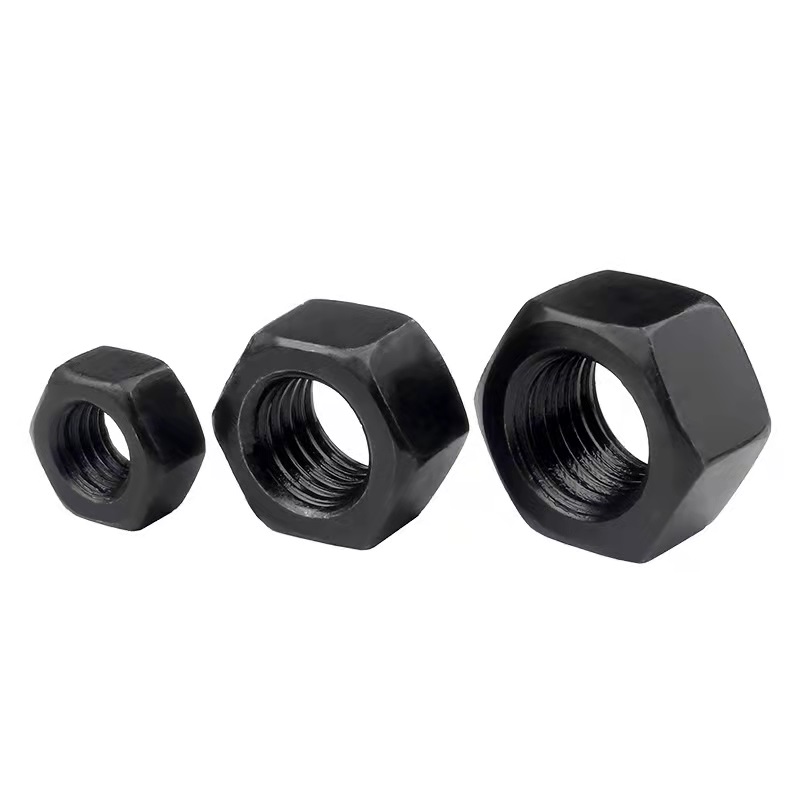
Performance & Engineering
The performance of Allen key bolts is fundamentally governed by applied load (tensile, shear, torsional) and environmental conditions. Force analysis involves calculating stresses based on bolt diameter, thread pitch, and applied force. Tensile stress concentration occurs at the root of the threads, making this a critical failure point. Shear stress is particularly important in bolted joints subjected to lateral loads. Fatigue resistance is a key consideration in dynamic applications (e.g., engines, rotating machinery). The S-N curve (stress vs. number of cycles to failure) dictates the bolt's lifespan under cyclic loading. Environmental resistance is assessed through corrosion testing (salt spray testing per ASTM B117) and exposure to various chemicals and temperatures. Compliance requirements vary by industry. For example, aerospace applications (e.g., AMS 7815) have stringent material and manufacturing specifications. Functional implementation relies on accurate torque application. Over-tightening can lead to bolt stretching and potential failure, while under-tightening can result in joint loosening. Torque-angle tightening methods are often employed to achieve consistent clamp load. Finite Element Analysis (FEA) is frequently used to optimize bolt geometry and predict stress distribution under complex loading scenarios. Consideration must be given to thermal expansion coefficients of the bolt and joined materials to prevent loosening or stress build-up due to temperature fluctuations.
Technical Specifications
| Material Grade | Tensile Strength (MPa) | Yield Strength (MPa) | Hardness (HRC) |
|---|---|---|---|
| AISI 1045 | 620-860 | 310-540 | 25-35 |
| Grade 8.8 | 800 | 600 | 33-39 |
| Grade 10.9 | 1000 | 900 | 37-45 |
| AISI 304 Stainless Steel | 517-724 | 205-290 | 20-30 |
| AISI 316 Stainless Steel | 620-860 | 240-310 | 22-32 |
| AISI 4140 | 745-965 | 483-690 | 30-45 |
Failure Mode & Maintenance
Allen key bolts are susceptible to several failure modes. Fatigue cracking, initiated at stress concentration points (thread root, hex socket corner), is common in cyclic loading applications. Hydrogen embrittlement can occur in high-strength bolts exposed to corrosive environments, leading to brittle fracture. Stripped threads result from excessive torque or improper installation. Corrosion, particularly galvanic corrosion when dissimilar metals are in contact, weakens the bolt and joint. Shear failure occurs when the shear stress exceeds the material's shear strength. Maintenance involves regular visual inspections for signs of corrosion, cracks, or thread damage. Torque checks should be performed periodically to ensure proper clamp load. Lubrication with appropriate anti-seize compounds can prevent galling and facilitate removal. If a bolt shows signs of fatigue, it must be replaced immediately. When replacing bolts, ensure the correct material grade and size are used. Preventative measures include proper surface treatment, controlled tightening procedures, and selecting materials compatible with the operating environment. Failure analysis, including metallurgical examination of fractured bolts, is crucial for identifying root causes and preventing recurrence.
Industry FAQ
Q: What is the impact of heat treatment on the fatigue life of an Allen key bolt?
A: The heat treatment process—specifically quenching and tempering—significantly impacts fatigue life. Proper heat treatment induces compressive residual stresses at the surface, which resist crack initiation and propagation. Insufficient hardening or improper tempering can leave the bolt susceptible to early fatigue failure. Precise control of temperature and time during these processes is essential. Austenitizing temperature affects grain size, while tempering temperature dictates the level of ductility and toughness.
Q: How does the choice of coating affect corrosion resistance, and what are the common options?
A: Coating selection is critical for corrosion resistance. Zinc plating provides sacrificial protection, corroding preferentially to the bolt material. Black oxide offers mild corrosion resistance and improved aesthetics. Passivation, commonly used with stainless steel, forms a protective oxide layer. Hot-dip galvanizing provides superior corrosion protection, especially in harsh environments. The effectiveness of a coating depends on its thickness, uniformity, and adherence to the bolt surface. Salt spray testing (ASTM B117) is used to evaluate coating performance.
Q: What torque specifications should be followed to prevent thread stripping or bolt failure?
A: Torque specifications are determined by bolt size, material grade, and thread engagement length. Manufacturers typically provide torque tables based on clamp load requirements. Using a calibrated torque wrench is crucial. Consider using torque-angle tightening, where the bolt is initially tightened to a snug fit and then rotated a specific angle to achieve the desired clamp load. Avoid over-tightening, which can stretch the bolt beyond its elastic limit and lead to failure.
Q: What are the implications of using mismatched materials in a bolted joint (e.g., steel bolt in an aluminum structure)?
A: Mismatched materials can lead to galvanic corrosion. When two dissimilar metals are in contact in the presence of an electrolyte (e.g., moisture), a corrosion cell forms, with the more active metal corroding preferentially. To mitigate this, use compatible materials, apply a protective coating, or insulate the dissimilar metals with a non-conductive barrier.
Q: How does the quality of the hex socket impact the longevity and usability of the bolt?
A: The hex socket's quality is paramount. Dimensional inaccuracies (e.g., undersized or out-of-round sockets) and poor surface finish increase the risk of Allen wrench slippage and rounding of the socket corners. This can lead to tool stripping and difficulty in removal. Manufacturing processes that maintain socket precision are vital. Regular inspection of sockets for damage is also recommended.
Conclusion
Allen key bolts, while seemingly simple components, are critical elements in a vast array of engineered systems. Their performance is inextricably linked to material science, manufacturing precision, and adherence to stringent engineering principles. Understanding the nuances of material selection, heat treatment, torque application, and failure modes is essential for ensuring the reliability and longevity of bolted joints. The selection process requires a thorough consideration of the operating environment, applied loads, and relevant industry standards.
Looking ahead, advancements in coating technologies (e.g., diamond-like carbon coatings) and the increasing use of finite element analysis will further enhance the performance and durability of Allen key bolts. The trend towards lightweighting in industries like automotive and aerospace will necessitate the development of high-strength, low-weight bolt materials. Continuous improvement in quality control processes and a focus on preventative maintenance will remain paramount for minimizing failures and optimizing the overall lifecycle cost of bolted assemblies.