
Introduction
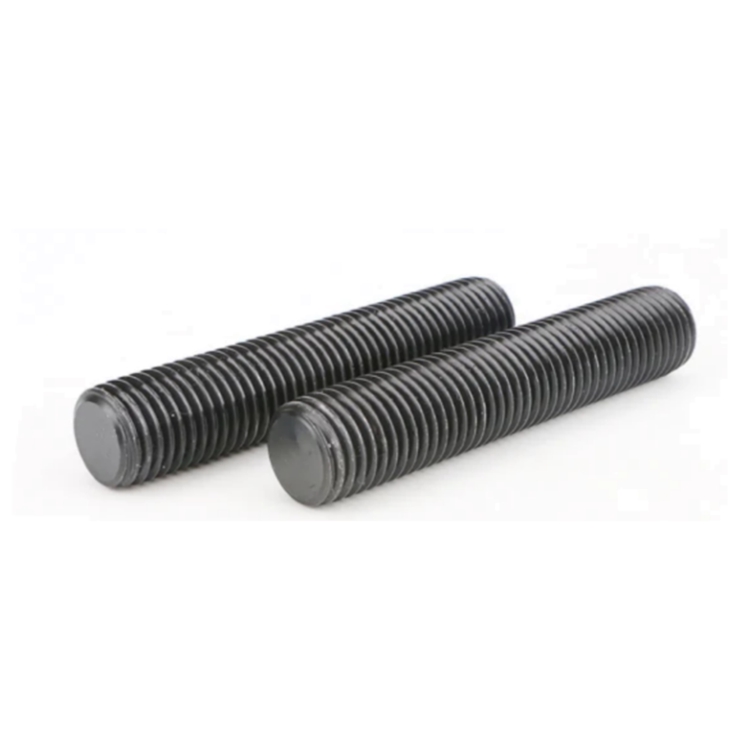
M8 bolts are fasteners characterized by an 8mm diameter thread. They represent a crucial component in mechanical assemblies across diverse industries, including automotive, aerospace, construction, and machinery. Functioning as essential elements in joining materials, M8 bolts transmit tensile and shear forces, providing structural integrity. Their widespread adoption stems from their standardized dimensions, relative cost-effectiveness, and ability to be readily incorporated into various fastening systems. Within the broader fastening industry chain, M8 bolts sit downstream of raw material production (steel, alloy steel, stainless steel), followed by forming processes like forging, cold heading, or machining, and ultimately surface treatment (coating, plating) before reaching end-users. Core performance characteristics include tensile strength, yield strength, proof load, and resistance to corrosion, directly impacting the reliability and longevity of assembled structures. The increasing demands for lightweighting, high-strength materials, and corrosion resistance are driving advancements in M8 bolt manufacturing and material selection.
Material Science & Manufacturing
M8 bolts are predominantly manufactured from carbon steel (e.g., SAE 1045), alloy steel (e.g., 4140, 8.8 grade), and stainless steel (e.g., 304, 316). Carbon steel offers good strength and affordability, while alloy steels provide enhanced mechanical properties like increased tensile and yield strength, along with improved hardenability. Stainless steel is selected for applications requiring superior corrosion resistance. The raw material’s chemical composition significantly affects the final bolt’s performance. For example, increased carbon content in steel generally boosts strength but reduces ductility. Manufacturing processes typically involve cold heading for high-volume production of standard bolts, where a wire rod is fed into a die and formed under high pressure. For larger diameters or specialized geometries, forging may be employed, providing better grain structure and strength. Thread rolling, a cold-forming process, creates threads with excellent surface finish and work hardening, increasing fatigue resistance. Key parameter control during manufacturing includes die lubrication, forming speed, and material temperature. Heat treatment (quenching and tempering) is critical for achieving desired mechanical properties. Surface treatments such as zinc plating, black oxide coating, or galvanization are applied to enhance corrosion resistance. Hydrogen embrittlement can occur during electroplating, necessitating baking procedures to diffuse hydrogen and prevent delayed cracking.
Performance & Engineering
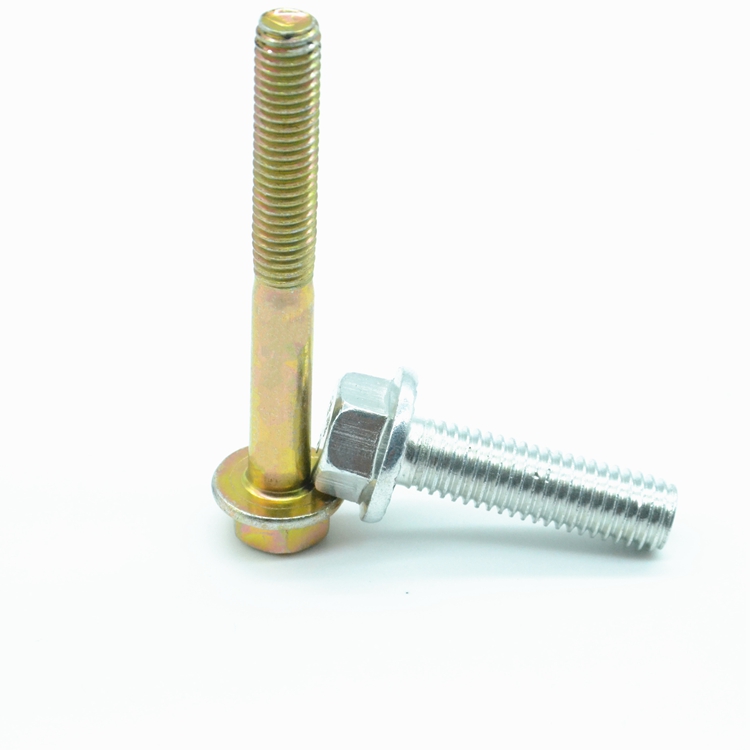
The performance of an M8 bolt is governed by several engineering principles. Tensile strength, the maximum stress the bolt can withstand before breaking, is paramount. Yield strength defines the point at which permanent deformation begins. Proof load represents the maximum tensile force that can be applied without causing permanent deformation. Preload, the tightening force applied to the bolt, is crucial for clamping force and preventing joint separation. Force analysis, utilizing equations from mechanics of materials, determines the required preload to achieve a desired clamping force. Environmental resistance is a critical consideration, particularly in corrosive environments. Factors like chloride concentration, temperature, and humidity influence corrosion rates. Finite element analysis (FEA) is often employed to simulate stress distributions under various loading conditions, optimizing bolt geometry and material selection. Compliance requirements, dictated by standards like ISO 898-1, specify mechanical properties, dimensions, and testing procedures. Fatigue performance is assessed through S-N curves, illustrating the relationship between stress amplitude and the number of cycles to failure. Bolt selection must consider shear stress, bending moments, and potential for vibration loosening, which can be mitigated through locking mechanisms like nylon inserts or prevailing torque nuts.
Technical Specifications
| Property | Grade 8.8 | Grade 10.9 | A2 Stainless Steel (304) | A4 Stainless Steel (316) |
|---|---|---|---|---|
| Tensile Strength (MPa) | 800 | 1000 | 700 | 930 |
| Yield Strength (MPa) | 640 | 900 | 210 | 620 |
| Proof Load (MPa) | 640 | 900 | 140 | 450 |
| Hardness (HV) | 321 | 341 | 180 | 285 |
| Material | Medium Carbon Alloy Steel | High Carbon Alloy Steel | Austenitic Stainless Steel | Austenitic Stainless Steel (Molybdenum added) |
| Corrosion Resistance | Limited (Requires Coating) | Limited (Requires Coating) | Good | Excellent (Superior to 304) |
Failure Mode & Maintenance
M8 bolts are susceptible to several failure modes. Fatigue cracking, initiated by cyclic loading, occurs due to stress concentrations at thread roots or under bolt heads. Corrosion, particularly in chloride-rich environments, leads to pitting corrosion and reduction in cross-sectional area, weakening the bolt. Hydrogen embrittlement, as previously mentioned, can cause delayed cracking. Shear failure occurs when the applied shear force exceeds the bolt’s shear strength. Thread stripping can happen if the nut is overtightened or if the threads are damaged. Creep, the slow deformation under constant load at elevated temperatures, can lead to joint loosening. Maintenance involves regular inspection for signs of corrosion, cracks, or deformation. Proper torque application using calibrated torque wrenches is critical to achieving correct preload and preventing loosening or stripping. Lubrication of threads reduces friction and ensures accurate preload. Periodic retightening, especially in dynamic applications, is recommended. Damaged bolts should be replaced immediately. Non-destructive testing (NDT) methods like dye penetrant inspection or ultrasonic testing can detect surface and subsurface cracks. Implementing a preventative maintenance program based on operating conditions and failure history extends bolt service life.
Industry FAQ
Q: What is the difference between Grade 8.8 and Grade 10.9 M8 bolts and when should each be used?
A: Grade 10.9 bolts offer higher tensile and yield strength compared to Grade 8.8. Grade 8.8 bolts are suitable for general applications where strength requirements are moderate. Grade 10.9 bolts should be used in applications demanding higher strength, such as those experiencing high dynamic loads or requiring greater clamping force. The higher strength comes with a higher cost, so the application dictates the appropriate choice.
Q: How does surface treatment affect the performance of M8 bolts?
A: Surface treatments, like zinc plating or black oxide coating, primarily enhance corrosion resistance. Zinc plating provides sacrificial protection, corroding before the steel substrate. Black oxide creates a protective layer, but offers less corrosion resistance than zinc. Galvanization provides a thicker, more durable coating for severe environments. However, certain plating processes can induce hydrogen embrittlement, requiring post-treatment baking.
Q: What is the proper torque for an M8 bolt?
A: Proper torque depends on the bolt grade, friction coefficient of the threads, and lubrication. Generally, for Grade 8.8 bolts with standard lubrication, the torque range is approximately 22-29 Nm. For Grade 10.9, it’s around 32-43 Nm. Always consult torque charts specific to the bolt grade and application. Overtightening can lead to thread stripping or bolt failure, while undertightening can result in joint loosening.
Q: What is the impact of using stainless steel M8 bolts in a marine environment?
A: Stainless steel (A4/316) is highly recommended for marine environments due to its superior corrosion resistance compared to carbon steel or lower grade stainless steel. However, crevice corrosion can still occur in stagnant seawater. Proper design to avoid crevices and regular inspection are crucial. Galvanic corrosion can also be a concern if stainless steel is coupled with dissimilar metals; using isolating washers can mitigate this.
Q: How can I prevent fatigue failure in M8 bolts subjected to cyclic loading?
A: Preventing fatigue failure involves several strategies: select a bolt material with high fatigue strength, minimize stress concentrations through proper design (e.g., radius fillets at thread roots), apply proper preload to maximize clamping force, and consider surface treatments like shot peening to induce compressive stresses. Regular inspection for crack initiation is also crucial.
Conclusion
M8 bolts are fundamental fasteners critically influencing the integrity and performance of countless mechanical systems. Understanding their material science, manufacturing processes, and engineering principles is essential for selecting the appropriate bolt grade and ensuring reliable operation. The choice between carbon steel, alloy steel, and stainless steel depends heavily on the application environment and required mechanical properties.
Future advancements will likely focus on developing higher-strength alloys, optimizing surface treatments for enhanced corrosion resistance, and employing advanced manufacturing techniques like additive manufacturing to create customized bolt geometries. Continued research into fatigue behavior and failure analysis will further enhance the reliability and longevity of M8 bolt assemblies.