
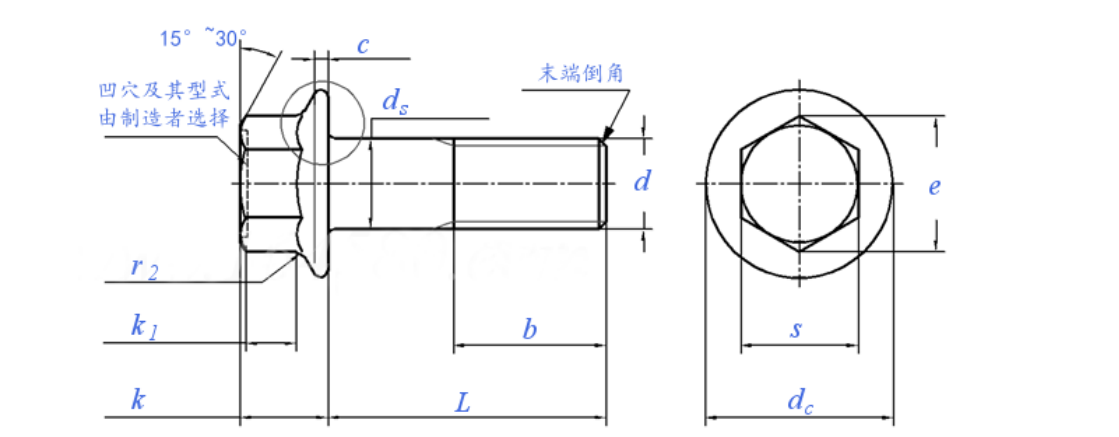
Introduction
Exhaust manifold bolts are critical fasteners employed in internal combustion engines to secure the exhaust manifold to the engine cylinder head. These components are subjected to extreme thermal cycling, mechanical stress, and corrosive environments. Their primary function is to maintain a gas-tight seal, preventing exhaust gas leakage which impacts engine efficiency and emissions. The industry chain positions these bolts as a final-stage component, heavily reliant on steel metallurgy, precision manufacturing, and surface treatment technologies. Core performance metrics center around tensile strength at elevated temperatures, resistance to corrosion from exhaust gases, and the ability to withstand repeated expansion and contraction cycles without failure. Failure of these bolts can lead to reduced engine performance, increased emissions, and potentially catastrophic engine damage, making selection and maintenance paramount.
Material Science & Manufacturing
Exhaust manifold bolts are predominantly manufactured from high-strength alloy steels. Common material choices include Grade 8.8, 10.9, and 12.9 steel, with variations incorporating chromium, molybdenum, and nickel to enhance high-temperature performance and corrosion resistance. The base material undergoes a rigorous heat treatment process, typically involving austenitizing, quenching, and tempering, to achieve the desired mechanical properties. The chemical composition is critical; higher carbon content generally improves tensile strength but reduces ductility, necessitating careful balancing. Manufacturing processes generally begin with cold forging or hot forging of the bolt blank, followed by machining operations (threading, head forming) to achieve precise dimensions. Thread rolling is preferred over thread cutting as it improves fatigue strength by cold-working the surface. Surface treatments such as zinc plating, phosphate coating, or specialized ceramic coatings are applied to provide corrosion protection. Key parameter control during manufacturing focuses on maintaining consistent material composition, precise heat treatment cycles (temperature, time, cooling rate), and accurate thread geometry. Quality control involves non-destructive testing (NDT) methods like magnetic particle inspection (MPI) and ultrasonic testing to detect internal flaws.
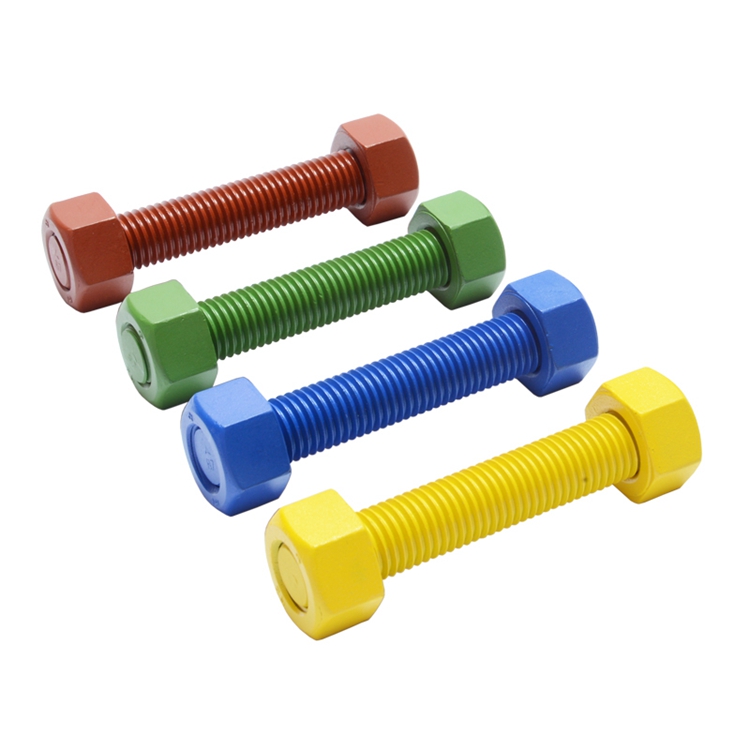
Performance & Engineering
The performance of exhaust manifold bolts is heavily dictated by the cyclic stresses induced by thermal expansion and contraction. Force analysis involves considering the clamping force required to maintain the seal, the tensile stress induced by exhaust gas pressure, and the shear stress generated by engine vibrations. Finite element analysis (FEA) is commonly used to model stress distributions and optimize bolt geometry to minimize stress concentrations. Environmental resistance is critical; exhaust gases contain corrosive components like sulfur oxides and water vapor, leading to oxidation and corrosion. High-temperature oxidation can cause surface scaling and reduce cross-sectional area, weakening the bolt. Compliance requirements, dictated by automotive industry standards (SAE J1199, for example), specify minimum tensile strength, yield strength, and fatigue life. The functional implementation relies on proper bolt preload, achieved through controlled tightening procedures using torque wrenches or angle-torque methods. Insufficient preload can lead to joint loosening and exhaust leakage, while excessive preload can cause bolt stretching or failure. Consideration must also be given to the gasket material and its compatibility with the bolt and manifold materials to prevent galvanic corrosion.
Technical Specifications
| Material Grade | Tensile Strength (MPa) | Yield Strength (MPa) | Corrosion Resistance (Salt Spray Test, hours) |
|---|---|---|---|
| 8.8 Steel | 800 | 640 | 48 |
| 10.9 Steel | 1000 | 900 | 72 |
| 12.9 Steel | 1200 | 1100 | 96 |
| 304 Stainless Steel | 585 | 275 | 1000+ |
| Inconel 718 | 1030 | 690 | 2000+ |
| A4-80 (316 Stainless Steel) | 800 | 560 | 1500+ |
Failure Mode & Maintenance
Exhaust manifold bolts are susceptible to several failure modes. Fatigue cracking is a common issue, initiated by cyclic stresses at the thread root or under the bolt head. Corrosion fatigue accelerates crack propagation in corrosive environments. Hydrogen embrittlement can occur due to the presence of hydrogen in the exhaust gases, reducing the bolt's ductility and promoting brittle fracture. Thermal fatigue cracking results from repeated thermal cycling, inducing tensile stresses that exceed the material's strength. Another failure mode is creep deformation at high temperatures, leading to loss of clamping force and exhaust leakage. Thread stripping can occur due to excessive tightening or corrosion. Maintenance involves periodic inspection for signs of corrosion, cracking, or loosening. Torque checks should be performed regularly, using a calibrated torque wrench. If bolts are corroded or damaged, they should be replaced with equivalent or upgraded fasteners. Applying an anti-seize compound during installation can prevent galling and facilitate future removal. Proper gasket installation is also crucial to ensure a reliable seal and minimize stress on the bolts. When replacing bolts, ensure the correct grade and material are used, and follow the manufacturer's recommended tightening procedures.
Industry FAQ
Q: What is the primary reason for exhaust manifold bolt failure in high-performance engines?
A: The primary reason is often a combination of high thermal stress and corrosive attack. High-performance engines generate significantly higher exhaust gas temperatures and pressures, increasing the thermal cycling and stress on the bolts. Simultaneously, the exhaust gases are more aggressive, leading to accelerated corrosion and weakening of the bolt material. Fatigue cracking is a frequent consequence.
Q: Are stainless steel bolts a viable long-term solution for exhaust manifold applications?
A: Stainless steel bolts, particularly grades 304 and 316, offer significantly improved corrosion resistance. However, they generally have lower tensile strength and yield strength compared to alloy steel bolts like 10.9 or 12.9. For standard applications, stainless steel is a good option. For high-performance engines with extreme thermal and mechanical loads, higher-strength alloys or materials like Inconel may be necessary.
Q: What is the effect of using an incorrect torque specification during installation?
A: Incorrect torque can lead to significant problems. Under-torquing results in insufficient clamping force, causing exhaust leakage and potential gasket failure. Over-torquing can stretch the bolt beyond its elastic limit, reducing its preload and increasing the risk of fatigue failure. It can also strip the threads in the manifold or cylinder head.
Q: How does galvanic corrosion affect exhaust manifold bolts?
A: Galvanic corrosion occurs when dissimilar metals are in contact in the presence of an electrolyte (e.g., moisture, exhaust condensate). If the exhaust manifold and bolts are made of different metals (e.g., cast iron manifold and steel bolts), a galvanic cell can form, leading to accelerated corrosion of the more anodic metal. Using compatible materials or applying a protective coating can mitigate this issue.
Q: What is the role of surface coatings in extending the life of exhaust manifold bolts?
A: Surface coatings, such as zinc plating, phosphate coating, and ceramic coatings, provide a barrier against corrosion and oxidation. Zinc plating offers sacrificial protection, corroding preferentially to the bolt material. Phosphate coatings enhance paint adhesion and improve corrosion resistance. Ceramic coatings provide excellent high-temperature oxidation resistance and thermal insulation.
Conclusion
Exhaust manifold bolts represent a crucial, often overlooked, component within the internal combustion engine system. Their reliable performance is directly linked to material selection, precise manufacturing processes, and meticulous installation procedures. The susceptibility to failure, driven by thermal stress, corrosion, and mechanical fatigue, necessitates a thorough understanding of the underlying failure modes and proactive maintenance strategies. The choice of material grade must be carefully considered based on the engine's operating conditions and performance demands.
Future developments in this area will likely focus on advanced materials, such as high-strength titanium alloys and ceramic matrix composites, offering superior temperature resistance and corrosion protection. Furthermore, the integration of smart fasteners with embedded sensors to monitor preload and detect early signs of failure could revolutionize maintenance practices and improve engine reliability. Adherence to stringent industry standards and continuous improvement in manufacturing techniques will remain paramount in ensuring the long-term performance and safety of exhaust manifold fastening systems.