
Introduction
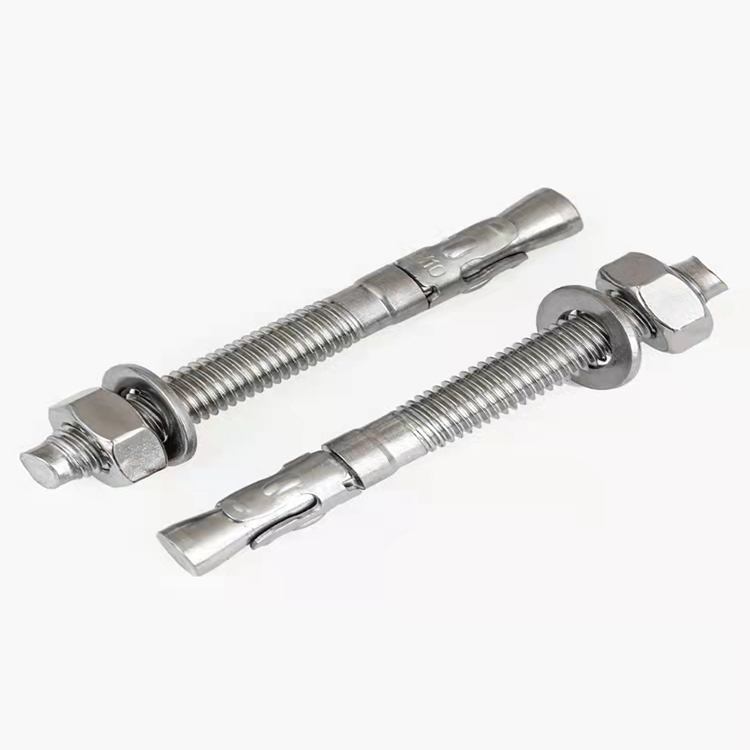
Club bolts are high-strength fasteners specifically designed for use in heavy machinery, construction equipment, and infrastructure projects. Distinguished by their enlarged head configuration – resembling a club – they provide enhanced wrenching options and superior resistance to loosening under dynamic loads. Positioned within the industrial fastener supply chain, club bolts represent a critical component ensuring structural integrity in demanding applications. Core performance characteristics encompass tensile strength, yield strength, fatigue resistance, and corrosion protection, all directly influencing the longevity and safety of assembled structures. A key industry pain point centers around consistent quality control, given the catastrophic consequences of fastener failure. Selecting the appropriate grade and coating is crucial to mitigate these risks.
Material Science & Manufacturing
Club bolts are predominantly manufactured from medium carbon alloy steels (4140, 4340) and high-strength alloy steels (8740). The choice of steel dictates the achievable mechanical properties. 4140, containing chromium and molybdenum, offers a balance of strength and toughness, whereas 4340 provides increased hardenability. Manufacturing begins with hot forging of the bolt blank to approximate the final shape, optimizing grain flow for improved fatigue resistance. Heat treatment is a critical stage, typically involving hardening, tempering, and quenching processes. Hardening, achieved through austenitizing and rapid cooling, increases the steel’s hardness. Tempering reduces brittleness and enhances toughness. Surface treatments like carburizing or nitriding can further enhance wear resistance and surface hardness. Thread rolling, rather than machining, is the preferred method for forming threads, as it work-hardens the surface, improving fatigue strength. Tight control of quenching medium temperature, agitation, and hold time are paramount to prevent cracking or distortion. The club head is formed through secondary forging operations, requiring precise die design to ensure dimensional accuracy and consistent club head geometry. Chemical composition must adhere to stringent standards (SAE, ASTM) and be verified through spectroscopic analysis. Hydrogen embrittlement is a potential risk during electroplating; bake-out procedures are therefore essential.
Performance & Engineering
The performance of club bolts is fundamentally governed by their ability to withstand tensile, shear, and fatigue loads. Tensile strength, measured in MPa or psi, represents the maximum stress the bolt can endure before fracturing. Yield strength defines the stress at which permanent deformation occurs. Shear strength is critical in applications involving angular loads. Fatigue resistance, however, is arguably the most important performance characteristic, as most failures occur due to cyclical loading. Finite Element Analysis (FEA) is routinely employed to model stress distributions under various loading conditions, identifying potential stress concentrators and optimizing bolt geometry. Corrosion resistance is a significant concern, especially in harsh environments. Coatings such as zinc plating, phosphate coating, or specialized epoxy coatings provide protection against corrosion. The selection of coating depends on the specific environmental exposure. Preload, the initial tension applied to the bolt during tightening, significantly affects joint performance. Proper preload ensures adequate clamping force, preventing loosening and enhancing fatigue life. Torque-angle tightening methods are preferred for achieving consistent preload. Compliance with industry standards (e.g., AISC, ASTM A325, ASTM A490) is non-negotiable to ensure structural integrity and safety. Galvanic corrosion can occur when dissimilar metals are in contact; this must be addressed through proper material selection and isolation techniques.
Technical Specifications
| Grade | Tensile Strength (MPa) | Yield Strength (MPa) | Hardness (HRC) |
|---|---|---|---|
| SAE Grade 5 | 830 | 690 | 30-35 |
| SAE Grade 8 | 1040 | 950 | 33-39 |
| ASTM A325 | 850 | 720 | 30-35 |
| ASTM A490 | 1100 | 980 | 36-44 |
| 8.8 (Metric) | 800 | 640 | 30-36 |
| 10.9 (Metric) | 1000 | 900 | 33-39 |
Failure Mode & Maintenance
Club bolts are susceptible to several failure modes, including tensile fracture, shear failure, fatigue cracking, thread stripping, and corrosion-induced failure. Tensile fracture occurs when the applied tensile load exceeds the material’s ultimate tensile strength. Shear failure results from excessive shear stress. Fatigue cracking initiates at stress concentrators (e.g., thread roots, under the club head) and propagates gradually under cyclical loading. Thread stripping occurs when the threads are overloaded, leading to loss of clamping force. Corrosion, particularly galvanic corrosion, weakens the bolt and promotes premature failure. Regular inspection is crucial for identifying potential problems. Visual inspection can reveal signs of corrosion, cracking, or deformation. Non-destructive testing (NDT) methods, such as magnetic particle inspection (MPI) and ultrasonic testing (UT), can detect subsurface cracks. Proper maintenance involves cleaning the bolts, applying protective coatings (if necessary), and periodically checking preload. If a bolt shows signs of significant corrosion or cracking, it must be replaced immediately. Avoid over-tightening, as this can induce excessive stress and reduce fatigue life. Lubrication during installation reduces friction and ensures accurate preload. Implementing a preventative maintenance schedule based on operating conditions and load cycles is paramount.
Industry FAQ
Q: What is the primary benefit of the club head design over a standard hex head bolt?
A: The club head design provides a larger striking surface for wrenches, reducing the risk of rounding off the bolt head during tightening or loosening. This is especially advantageous in applications where high torque is required or access is limited. The increased surface area also offers improved grip and reduces the likelihood of slippage.
Q: How does the choice of coating impact the long-term performance of a club bolt in a marine environment?
A: In marine environments, chloride-induced corrosion is a major concern. Zinc plating offers limited protection and is not recommended for prolonged seawater exposure. Hot-dip galvanizing provides significantly better corrosion resistance. Epoxy coatings, often applied over galvanizing, offer an even higher level of protection, forming a barrier against moisture and corrosive agents. Regular inspection and maintenance of the coating are still necessary.
Q: What are the critical considerations when specifying a preload torque for a club bolt?
A: Preload torque is influenced by several factors, including bolt diameter, material, friction coefficient of the threads and bearing surfaces, and the desired clamping force. Using a torque-angle tightening method is recommended to achieve consistent preload. Over-tightening can yield the bolt, while under-tightening can lead to loosening and joint failure. Consulting torque charts specific to the bolt grade and coating is essential.
Q: How can fatigue cracking be mitigated in high-cycle fatigue applications?
A: Mitigating fatigue cracking requires a multi-faceted approach. Proper bolt preload, surface finish (to minimize stress concentrators), and material selection (high fatigue strength alloy steel) are crucial. Avoiding sharp corners or notches in the surrounding structure also helps reduce stress concentrations. Implementing regular inspection programs using NDT methods can detect cracks before they propagate to critical sizes.
Q: What is the role of non-destructive testing (NDT) in ensuring the quality of club bolts?
A: NDT methods, such as magnetic particle inspection (MPI), ultrasonic testing (UT), and dye penetrant inspection (DPI), are used to detect internal flaws (cracks, voids, inclusions) that are not visible to the naked eye. MPI is effective for detecting surface and near-surface cracks in ferromagnetic materials. UT can detect subsurface defects. DPI reveals surface cracks. NDT is typically performed as part of quality control during manufacturing and for in-service inspections.
Conclusion
Club bolts represent a specialized fastening solution engineered for demanding industrial applications where high strength, fatigue resistance, and secure clamping force are paramount. Their unique club head design, combined with robust material science and meticulous manufacturing processes, ensures reliable performance in critical infrastructure and heavy machinery. Understanding the nuances of material selection, preload control, and potential failure modes is essential for maximizing the lifespan and safety of bolted joints.
Moving forward, advancements in coating technologies, predictive maintenance strategies (leveraging sensor data and machine learning), and the development of higher-strength alloy steels will continue to enhance the performance and reliability of club bolts. Implementing rigorous quality control procedures throughout the supply chain and investing in comprehensive training for technicians are vital for maintaining the integrity of these critical components and preventing catastrophic failures.