
Introduction
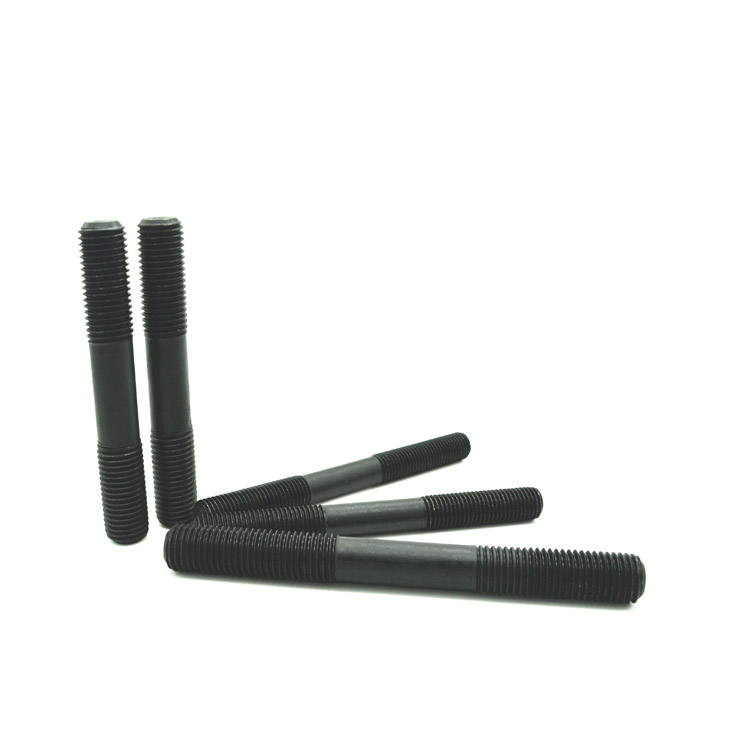
Trailer hitch bolts are critical fastening components responsible for securely connecting a trailer to a towing vehicle. These bolts are subject to significant tensile, shear, and fatigue stresses during operation, necessitating robust material selection, precise manufacturing, and adherence to stringent industry standards. Unlike general-purpose bolts, trailer hitch bolts are specifically engineered to withstand the dynamic loads imposed by towing, including acceleration, braking, and maneuvering. The performance of these bolts directly impacts towing safety and structural integrity. The primary function is to transmit towing forces – both vertical load (tongue weight) and horizontal forces (sway) – from the trailer to the vehicle's chassis. This guide provides a comprehensive technical overview of trailer hitch bolts, encompassing material science, manufacturing processes, performance characteristics, failure modes, and relevant industry standards.
Material Science & Manufacturing
Trailer hitch bolts are predominantly manufactured from medium carbon alloy steels, specifically AISI/SAE 1045, 1050, and 4140. The selection hinges on a balance between strength, ductility, and cost. 1045 steel provides a good combination of properties for lower-duty applications, while 4140, containing chromium and molybdenum, offers superior strength and toughness for heavier-duty towing. The steel undergoes heat treatment processes – hardening and tempering – to achieve the desired mechanical properties. Case hardening is frequently employed to create a hard, wear-resistant outer layer while maintaining a tougher, more ductile core. Manufacturing begins with hot forging or cold heading of steel wire, followed by threading via rolling or cutting. Rolling is preferred for higher strength and fatigue resistance due to the favorable grain flow induced by the process. Surface treatments are essential for corrosion protection. Zinc plating (electrogalvanizing) is a common and cost-effective method. More demanding applications may employ hot-dip galvanizing or phosphate coating followed by paint or powder coating. Precise control of thread pitch and bolt diameter is paramount. Deviation from specified tolerances can lead to stress concentrations and premature failure. Quality control procedures include dimensional checks, hardness testing (Rockwell C scale), and non-destructive testing (NDT) methods like magnetic particle inspection (MPI) to detect surface cracks.
Performance & Engineering
The performance of trailer hitch bolts is dictated by their ability to withstand tensile, shear, and fatigue loading. Tensile strength, typically ranging from 80,000 to 120,000 PSI (550-830 MPa) depending on steel grade and heat treatment, represents the maximum stress the bolt can endure before fracture. Shear strength, generally 60-80% of tensile strength, is critical for resisting forces acting perpendicular to the bolt axis. Fatigue strength is particularly important, as trailer hitch bolts are subjected to cyclical loading during towing. Factors influencing fatigue life include stress concentration at thread roots, surface finish, and corrosion. Finite Element Analysis (FEA) is often used in the design process to optimize bolt geometry and predict stress distribution under various loading conditions. Bolt preload, the initial tension applied during tightening, is a crucial parameter. Proper preload ensures adequate clamping force between the hitch components and prevents loosening due to vibration. Torque-tension relationships are established through testing and documented in installation guides. Environmental resistance is also a key consideration. Exposure to road salt, moisture, and temperature fluctuations can accelerate corrosion and reduce bolt strength. Compliance requirements vary by region. In the United States, SAE J499 and DOT FMVSS 571-500 define performance requirements for trailer hitch components, including bolts. Proper lubrication during installation reduces friction and ensures accurate preload application.
Technical Specifications
| Bolt Grade | Material Specification | Tensile Strength (PSI) | Yield Strength (PSI) |
|---|---|---|---|
| Grade 5 | SAE 1045 | 85,000 | 60,000 |
| Grade 8 | SAE 1050 / 4140 | 120,000 | 90,000 |
| Class 10.9 | 4140 (Metric Equivalent) | 116,000 | 98,000 |
| Diameter (Common) | - | - | - |
| 1/2" | - | - | - |
| 5/8" | - | - | - |
Failure Mode & Maintenance
Trailer hitch bolts are susceptible to several failure modes. Fatigue cracking is a common occurrence, initiated at stress concentrations such as thread roots or damaged surfaces. Corrosion, particularly galvanic corrosion between dissimilar metals, can significantly accelerate fatigue crack propagation. Shear failure can occur if the applied shear stress exceeds the bolt’s shear strength. Tensile overload, resulting from exceeding the bolt’s tensile capacity, leads to brittle fracture. Loosening due to vibration is a frequent issue, compromising the clamping force and increasing stress levels. Proper maintenance is crucial for preventing failures. Regular inspection for signs of corrosion, cracks, or loosening is essential. Torque checks should be performed periodically, especially after initial installation and after extended towing. Lubrication of bolt threads prevents galling and ensures accurate torque readings. If corrosion is detected, the bolt should be replaced. Using a torque wrench calibrated to the manufacturer's specifications is paramount. Avoid using impact wrenches for final tightening, as they can easily over-torque the bolt and damage the threads. In cases of severe corrosion or repeated failures, upgrading to higher-grade bolts or implementing corrosion-resistant coatings may be necessary.
Industry FAQ
Q: What is the difference between Grade 5 and Grade 8 bolts for trailer hitches?
A: Grade 8 bolts have a significantly higher tensile and yield strength than Grade 5 bolts. This translates to greater load-carrying capacity and improved fatigue resistance. Grade 8 bolts are recommended for heavier-duty towing applications, while Grade 5 bolts may suffice for lighter trailers. The material composition also differs; Grade 8 bolts are typically made from alloy steels like 4140, offering superior toughness.
Q: How often should I re-torque my trailer hitch bolts?
A: It's recommended to re-torque trailer hitch bolts after the first 50-100 miles of towing, and then periodically (every 3-6 months) thereafter, especially if you frequently tow. Vibration and thermal cycling can cause bolts to loosen over time. Following the manufacturer's recommended torque specifications is essential.
Q: What causes corrosion in trailer hitch bolts and how can it be prevented?
A: Corrosion is caused by exposure to moisture, road salt, and dissimilar metals creating a galvanic cell. Prevention methods include using corrosion-resistant coatings (zinc plating, galvanizing), applying anti-seize lubricant to threads, and regularly cleaning the bolts and hitch components.
Q: What is the role of bolt preload in trailer hitch performance?
A: Bolt preload, or initial tension, creates clamping force between the hitch components, preventing slippage and distributing the load evenly. Insufficient preload can lead to loosening and increased stress on the bolts, while excessive preload can cause stretching or failure. Proper torque application ensures the correct preload is achieved.
Q: What should I do if I find a cracked trailer hitch bolt?
A: A cracked bolt should be replaced immediately. Do not continue towing with a damaged bolt. Investigate the cause of the crack (e.g., overload, corrosion, fatigue) and address it before installing a replacement. Consider upgrading to a higher-grade bolt or implementing preventative maintenance measures.
Conclusion
Trailer hitch bolts represent a critical safety component within the towing ecosystem. Their reliable performance relies on careful material selection – predominantly medium carbon alloy steels heat-treated for optimal strength and ductility – coupled with precise manufacturing techniques such as cold heading and thread rolling. Understanding the interplay between tensile, shear, and fatigue loading, alongside the impact of environmental factors like corrosion, is paramount for ensuring long-term durability and preventing catastrophic failure.
Proper installation, including accurate torque application and periodic maintenance, are non-negotiable aspects of safe towing operation. Adherence to established industry standards like SAE J499 and DOT FMVSS 571-500 provides a framework for ensuring consistent quality and performance. Continued advancements in materials science and manufacturing processes will likely lead to even more robust and reliable trailer hitch bolts in the future, further enhancing towing safety and efficiency.