
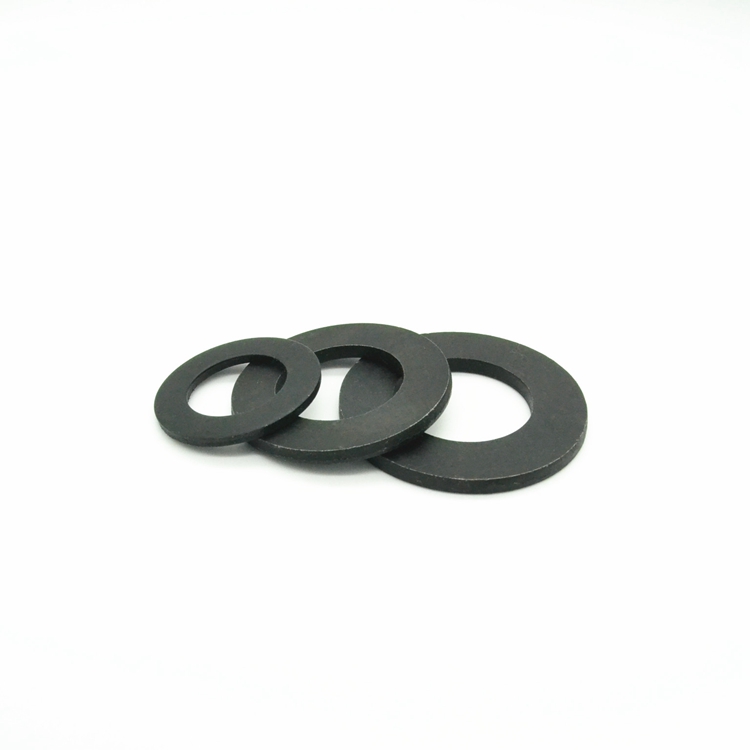
Introduction
Blue bolts, generally categorized as high-strength fasteners, represent a critical component in numerous industrial applications, ranging from automotive assembly and aerospace engineering to construction and heavy machinery. The “blue” designation typically indicates a specific coating – often zinc plating with a blue chromate conversion coating – applied to enhance corrosion resistance. Their primary function is to securely join components, resisting shear, tensile, and torsional forces. Within the broader fastener industry, blue bolts occupy a niche requiring precise material selection, manufacturing processes, and quality control to meet stringent performance and safety standards. Understanding their material properties, manufacturing intricacies, and potential failure modes is paramount for engineers and procurement professionals aiming for optimal structural integrity and longevity in demanding applications. This guide provides an in-depth examination of blue bolts, covering their material science, manufacturing, performance characteristics, failure analysis, and relevant industry standards.
Material Science & Manufacturing
The core material for blue bolts is typically medium carbon alloy steel, conforming to standards like ASTM A307 or A574. Common alloy compositions include 4140, 8.8, and 10.9 grades, chosen based on required tensile strength and ductility. The steel undergoes a heat treatment process involving austenitizing, quenching, and tempering to achieve desired mechanical properties. Hydrogen embrittlement is a critical concern during quenching, requiring careful control of cooling rates and post-treatment baking. The ‘blue’ coating is primarily a zinc plating applied via electrodeposition. This provides sacrificial corrosion protection, preventing the underlying steel from oxidizing. The subsequent blue chromate conversion coating further enhances corrosion resistance, albeit with environmental concerns leading to alternative coatings like clear chromate or other non-hexavalent chromium treatments. Manufacturing processes include cold heading or hot forging to form the bolt shape, followed by threading via rolling or cutting. Cold heading offers increased strength due to grain flow alignment, while hot forging is suitable for larger bolt sizes. Thread quality is rigorously controlled, conforming to standards like UNC (Unified National Coarse) or UNF (Unified National Fine). Critical parameters monitored during manufacturing include zinc coating thickness (typically 5-25 μm), coating uniformity, hydrogen content, and thread pitch accuracy. Surface finish, controlled through polishing or shot peening, impacts fatigue life and stress corrosion cracking resistance.
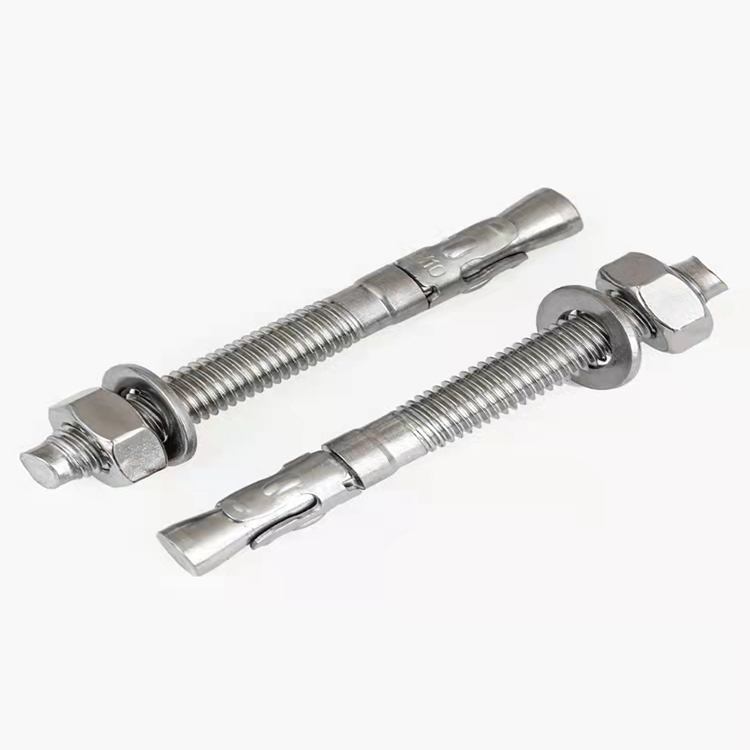
Performance & Engineering
Blue bolts are subjected to a range of forces in application, including tensile loading (pulling force), shear loading (sliding force), and torsional loading (twisting force). Accurate determination of preload torque is crucial; insufficient preload can lead to joint loosening due to vibrational fatigue, while excessive preload can cause bolt yielding or thread stripping. Finite element analysis (FEA) is frequently employed to model stress distributions within the bolt and connected components, optimizing joint design and identifying potential failure points. Environmental resistance is a major performance consideration. Exposure to corrosive environments (e.g., saltwater, acidic atmospheres) can degrade the zinc coating, reducing its protective capacity. Temperature fluctuations induce thermal expansion and contraction, creating stress within the joint. Material selection impacts performance under varying temperatures; higher-strength alloy steels generally exhibit better high-temperature creep resistance. Compliance requirements often dictate fastener selection. For example, in aerospace applications, bolts must meet stringent standards related to fatigue life, fracture toughness, and traceability. Standard torque-tension relationships are utilized for accurate tightening procedures, ensuring consistent clamping force. The selection of compatible washers is also vital to distribute load evenly and prevent surface damage.
Technical Specifications
| Grade | Tensile Strength (MPa) | Yield Strength (MPa) | Hardness (HRC) | Coating Thickness (μm) | Typical Applications |
|---|---|---|---|---|---|
| 4.8 | 400-570 | 240-330 | 24-32 | 5-15 | General purpose fastening |
| 8.8 | 800-1000 | 600-700 | 33-39 | 10-20 | Automotive, machinery |
| 10.9 | 1000-1200 | 900-1100 | 37-45 | 15-25 | High-stress applications, construction |
| A307 | 580 | 360 | - | 12-25 | Structural steel connections |
| A574 | 690 | 485 | - | 12-25 | Heavy duty structural applications |
| ASTM A490 | 1100 | 830 | - | 15-25 | Preloaded connections, bridges |
Failure Mode & Maintenance
Common failure modes for blue bolts include fatigue cracking, thread stripping, hydrogen embrittlement, corrosion-induced failure, and preload loss. Fatigue cracking initiates at stress concentrators (e.g., thread roots, bolt head) due to cyclic loading. Thread stripping occurs when the applied torque exceeds the thread’s shear strength. Hydrogen embrittlement, particularly prevalent in high-strength steels, reduces ductility and promotes brittle fracture. Corrosion weakens the bolt material and accelerates fatigue crack propagation. Preload loss results from creep, vibration, or gasket relaxation, leading to joint loosening. Maintenance strategies involve regular visual inspection for signs of corrosion, damage, or loosening. Torque checks should be performed periodically to verify preload. Lubrication with appropriate thread compounds reduces friction and prevents galling during tightening and loosening. For applications exposed to severe corrosive environments, periodic coating replacement or upgrading to more corrosion-resistant materials (e.g., stainless steel) may be necessary. Non-destructive testing methods, such as ultrasonic inspection, can detect internal cracks or flaws. Proper storage conditions, protecting bolts from moisture and contamination, are essential to prevent premature degradation.
Industry FAQ
Q: What is the impact of different zinc coating types (e.g., clear chromate vs. blue chromate) on corrosion resistance and environmental compliance?
A: While both clear and blue chromate coatings provide corrosion protection, blue chromate traditionally offered superior resistance due to the addition of polyvalent chromium. However, hexavalent chromium used in both is under increasing regulatory scrutiny due to environmental concerns. Clear chromate generally has lower corrosion resistance than blue but is often preferred now to reduce hexavalent chromium content. Zinc-nickel alloys and other non-hexavalent chromium coatings are emerging as environmentally friendlier alternatives, offering comparable or even superior corrosion performance. Compliance with RoHS and REACH regulations dictates the allowable levels of hazardous substances, influencing coating selection.
Q: How does the bolt material’s chemical composition influence its susceptibility to hydrogen embrittlement during zinc plating?
A: Higher strength steel grades, particularly those with significant alloying elements like manganese, chromium, and molybdenum, are more susceptible to hydrogen embrittlement. During electroplating, atomic hydrogen is generated and can diffuse into the steel lattice. This hydrogen reduces ductility and promotes brittle fracture. Careful control of plating parameters, including pH, current density, and the use of hydrogen embrittlement inhibitors in the plating bath, is crucial. Post-plating baking can also drive out absorbed hydrogen, mitigating the risk of embrittlement.
Q: What are the key differences between UNC and UNF threads, and when should each be used?
A: UNC (Unified National Coarse) threads have fewer threads per inch and are more tolerant of damage and cross-threading, making them suitable for general-purpose fastening. UNF (Unified National Fine) threads have more threads per inch, providing greater shear strength and resistance to loosening due to vibration. They are preferred for applications requiring high precision, such as in instrumentation and precision machinery. The selection depends on the application's requirements for strength, vibration resistance, and ease of assembly.
Q: Can you elaborate on the recommended torque-tension relationships for different blue bolt grades?
A: Torque-tension relationships are empirical formulas that relate tightening torque to the resulting preload (tensile force) in the bolt. These relationships vary depending on bolt diameter, thread pitch, friction coefficient, and bolt grade. Typical torque coefficients (K-factors) range from 0.15 to 0.20. Higher-strength bolts generally require higher tightening torques to achieve the same preload. Using a calibrated torque wrench and adhering to manufacturer's recommendations are crucial to ensure accurate preload and prevent joint failure.
Q: What non-destructive testing methods can be employed to assess the integrity of blue bolts in service?
A: Common non-destructive testing (NDT) methods include visual inspection, dye penetrant inspection (for surface cracks), magnetic particle inspection (for near-surface flaws in ferromagnetic materials), and ultrasonic testing (for detecting internal cracks and flaws). Ultrasonic testing is particularly effective for assessing bolt integrity without disassembly. Eddy current testing can also be used to detect surface cracks and assess coating thickness. The selection of the appropriate NDT method depends on the type of defect being sought and the bolt material.
Conclusion
Blue bolts, while seemingly simple components, are underpinned by complex material science, manufacturing processes, and engineering considerations. Their widespread use across diverse industries necessitates a thorough understanding of their mechanical properties, corrosion resistance, and potential failure modes. Optimizing bolt selection, employing appropriate tightening procedures, and implementing regular maintenance strategies are essential for ensuring structural integrity and preventing costly failures.
Future trends in blue bolt technology focus on developing more environmentally friendly coatings to replace hexavalent chromium, enhancing corrosion resistance through advanced surface treatments, and utilizing digital technologies for intelligent bolt monitoring and predictive maintenance. Furthermore, advancements in finite element analysis and material modeling will enable engineers to design even more robust and reliable bolted joints.