
Introduction
Binding bolts, also known as U-bolts, are a type of fastener characterized by a U-shaped thread and two threaded ends. They are fundamentally utilized to secure pipes, conduits, or other round or irregularly shaped objects to a mounting surface. Distinct from standard bolts that rely on a nut and washer system, the U-bolt’s inherent design provides clamping force across the object’s circumference. This makes them integral across a diverse array of industries, including plumbing, automotive, construction, and marine applications. The core performance characteristics – tensile strength, yield strength, corrosion resistance, and clamping force – are paramount to ensuring the integrity of the secured assembly. Industry challenges surrounding binding bolts revolve around achieving consistent thread engagement, preventing stress corrosion cracking, and selecting appropriate materials for harsh environments.
Material Science & Manufacturing
The manufacturing of binding bolts typically begins with carbon steel (ASTM A576 Grade 55 is common), alloy steel (4140, 4340 for higher strength), or stainless steel (304, 316 for corrosion resistance) as the raw material. Carbon steel offers cost-effectiveness but is susceptible to corrosion; alloy steels provide superior strength and toughness but require careful heat treatment; stainless steels offer excellent corrosion resistance but are generally more expensive and may have lower tensile strengths than comparable alloy steel bolts. The material’s chemical composition significantly impacts its mechanical properties. For instance, increased carbon content generally enhances strength but reduces ductility.
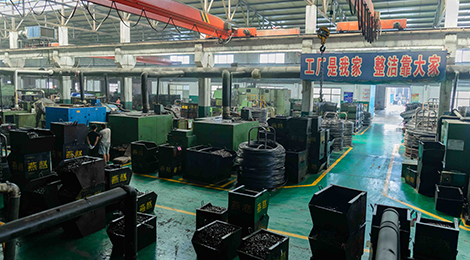
The manufacturing process involves cold heading, where the steel wire is fed into a die and formed into the U-shape. This process work-hardens the material, increasing its strength. Subsequent threading operations, typically performed via rolling, create the threads on both ends. Rolling is preferred over cutting as it does not sever the grain structure of the metal, resulting in a stronger, more fatigue-resistant thread. Critical parameters in the manufacturing process include die geometry (to ensure accurate U-bend radius and leg length), rolling pressure (to achieve consistent thread depth and pitch), and heat treatment (for alloy steels, to achieve optimal hardness and tempering). Quality control measures, including dimensional inspections, hardness testing (Rockwell or Brinell), and non-destructive testing (NDT) like magnetic particle inspection (MPI) are employed to detect defects like cracks or inclusions. Surface treatments such as zinc plating or hot-dip galvanization are frequently applied to carbon steel bolts to enhance corrosion resistance.
Performance & Engineering
The performance of a binding bolt is directly related to its ability to withstand applied loads without failure. Force analysis involves considering tensile stress (due to the clamping force), shear stress (due to potential side loads on the secured object), and bending stress (due to improper alignment or vibration). The clamping force is determined by the bolt’s preload, which is the tension applied to the bolt during tightening. Insufficient preload can lead to loosening and potential failure; excessive preload can exceed the bolt’s yield strength, causing permanent deformation.
Environmental resistance is crucial, particularly in corrosive environments. Exposure to saltwater, chemicals, or extreme temperatures can significantly degrade the bolt’s material. Selecting appropriate materials (e.g., 316 stainless steel for marine applications) and applying protective coatings are essential. Compliance requirements vary depending on the application. For example, in automotive applications, bolts must meet specific standards for strength and fatigue resistance as dictated by industry regulations (e.g., SAE standards). In critical infrastructure projects, bolts may need to comply with codes related to seismic resistance and structural integrity. Functional implementation requires careful consideration of bolt diameter, leg length, and thread engagement length to ensure adequate clamping force and prevent stripping of the threads. Finite Element Analysis (FEA) is often used to optimize bolt design and predict its performance under various loading conditions.
Technical Specifications
| Material Grade | Tensile Strength (MPa) | Yield Strength (MPa) | Diameter (mm) |
|---|---|---|---|
| Carbon Steel (A576 Grade 55) | 690 | 310 | 6 – 50 |
| Alloy Steel (4140) | 930 | 690 | 8 – 75 |
| Stainless Steel (304) | 517 | 205 | 6 – 48 |
| Stainless Steel (316) | 620 | 240 | 6 – 48 |
| Zinc Plated Carbon Steel | 690 (substrate) | 310 (substrate) | 6 – 50 |
| Hot-Dip Galvanized Carbon Steel | 690 (substrate) | 310 (substrate) | 6 – 50 |
Failure Mode & Maintenance
Binding bolts are susceptible to several failure modes. Fatigue cracking is common in applications involving cyclic loading or vibration, initiating at stress concentrations (e.g., thread roots). Stress corrosion cracking can occur in corrosive environments, particularly with susceptible materials like certain stainless steel alloys. Thread stripping can result from improper tightening, inadequate thread engagement length, or the use of incompatible materials. Corrosion, particularly for carbon steel bolts without adequate protection, leads to weakening of the material and eventual failure. Hydrogen embrittlement, a concern with high-strength steels, can reduce ductility and cause brittle fracture.
Preventative maintenance is crucial. Regular inspection for signs of corrosion, cracking, or loosening is essential. Applying a torque wrench to ensure proper preload during installation and periodic re-tightening are vital. Lubricating the threads can reduce friction and prevent galling. In corrosive environments, periodic application of corrosion inhibitors or replacement of bolts with more corrosion-resistant materials is recommended. If a bolt shows signs of significant corrosion or cracking, it should be replaced immediately. Non-destructive testing (NDT) methods like dye penetrant inspection can be used to detect surface cracks that are not readily visible.
Industry FAQ
Q: What is the impact of thread engagement length on the performance of a binding bolt?
A: Insufficient thread engagement length reduces the effective load-bearing area of the bolt, increasing stress concentration and the risk of thread stripping. A general rule of thumb is that the thread engagement length should be at least 1.5 times the bolt diameter for steel fasteners.
Q: How does the material choice affect the corrosion resistance of a binding bolt?
A: Material selection is paramount for corrosion resistance. Carbon steel is highly susceptible to corrosion unless protected with coatings. Alloy steels offer some inherent corrosion resistance but are still vulnerable in harsh environments. Stainless steels, particularly 316, provide excellent corrosion resistance in most environments, but specific alloy choices depend on the corrosive media encountered.
Q: What are the key considerations when selecting a binding bolt for a high-vibration application?
A: For high-vibration applications, consider using high-strength alloy steel bolts, applying a thread-locking compound (e.g., Loctite), and ensuring proper preload. Vibration can cause loosening, so frequent inspection and re-tightening are crucial. Consider using prevailing torque nuts or lock washers to further enhance resistance to loosening.
Q: What is the significance of heat treatment in the manufacturing of alloy steel binding bolts?
A: Heat treatment (typically quenching and tempering) is crucial for developing the desired mechanical properties of alloy steel bolts. Quenching hardens the steel, while tempering increases its toughness and ductility. Proper heat treatment ensures the bolt can withstand the intended loads without brittle fracture.
Q: What non-destructive testing methods are commonly used to inspect binding bolts for defects?
A: Magnetic particle inspection (MPI) is commonly used to detect surface and near-surface cracks in ferromagnetic materials. Dye penetrant inspection (DPI) can detect surface cracks in any material. Ultrasonic testing (UT) can detect internal defects. Visual inspection is always the first step, looking for obvious signs of corrosion or damage.
Conclusion
Binding bolts, despite their seemingly simple design, represent a critical fastening element across numerous industries. Their performance is intrinsically linked to material selection, precise manufacturing processes, and adherence to stringent engineering principles. Understanding the nuances of material properties – tensile strength, yield strength, and corrosion resistance – is paramount to ensuring the longevity and reliability of secured assemblies. Failure modes, ranging from fatigue cracking to stress corrosion, necessitate diligent preventative maintenance and regular inspection protocols.
The future of binding bolt technology will likely focus on advancements in material science, such as the development of new high-strength, corrosion-resistant alloys, and improvements in manufacturing techniques, including additive manufacturing (3D printing) for customized bolt designs. Continued refinement of non-destructive testing methods will also be vital for ensuring the integrity of critical infrastructure. Ultimately, a holistic approach encompassing material science, engineering analysis, and robust quality control will be essential to meeting the evolving demands of modern industrial applications.