
Introduction
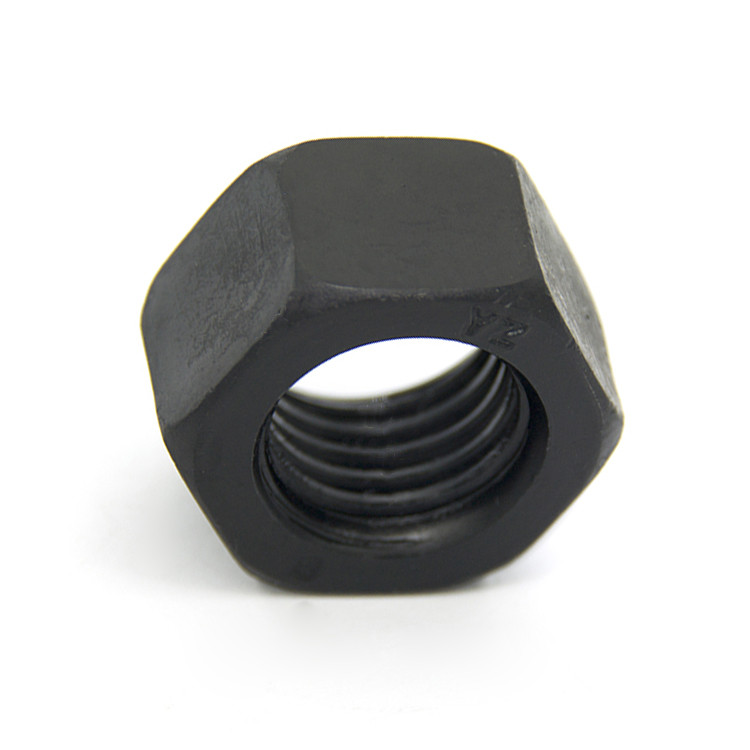
Metric hex bolts are externally threaded fasteners distinguished by their hexagonal head and reliance on the metric measurement system. They represent a foundational component across a vast spectrum of industries, including automotive, aerospace, construction, and general manufacturing. Their ubiquity stems from standardized dimensions, ease of installation with corresponding metric nuts and washers, and a demonstrable capacity to provide robust and reliable clamping force. This guide provides an in-depth technical overview of metric hex bolts, encompassing material science, manufacturing processes, performance characteristics, potential failure modes, and relevant industry standards. The core performance criteria center around tensile strength, yield strength, proof load, and resistance to environmental factors, directly impacting the structural integrity of assembled components. A critical industry pain point lies in ensuring consistent quality and traceability to prevent catastrophic failures arising from substandard materials or improper manufacturing.
Material Science & Manufacturing
The most common material for metric hex bolts is carbon steel, specifically grades like 4.8, 8.8, and 12.9, denoting increasing tensile strength. These designations correlate to the ultimate tensile strength (in MPa) divided by 100. For example, an 8.8 bolt has a tensile strength of 800 MPa. Alloy steels, such as those containing chromium, molybdenum, and nickel, are employed for higher strength and improved corrosion resistance. Stainless steels (A2, A4) provide excellent corrosion protection but generally offer lower tensile strength than alloy steels. Titanium alloys are used in aerospace applications requiring exceptional strength-to-weight ratios. Manufacturing begins with raw material selection and cold forming processes – typically upsetting – to shape the bolt head. Thread rolling, rather than machining, is the preferred method for creating the threads, as it work-hardens the material, increasing its strength and fatigue resistance. Heat treatment, including quenching and tempering, is crucial for achieving the desired mechanical properties. Parameter control during heat treatment (temperature, time, cooling rate) directly influences the microstructure, and thus, the bolt’s performance. Surface treatments, such as zinc plating, galvanizing, or phosphate coating, enhance corrosion resistance. Failure to properly control the chemical composition of the steel, inadequate heat treatment, or improper thread rolling can lead to premature failure.
Performance & Engineering
The performance of a metric hex bolt is primarily governed by its ability to withstand tensile, shear, and torsional forces. Tensile strength represents the maximum stress the bolt can endure before fracturing, while yield strength indicates the point at which permanent deformation begins. Proof load, typically higher than the working load, is the maximum tensile force that can be applied without causing permanent elongation. Environmental resistance is paramount, particularly in corrosive environments. Galvanic corrosion, occurring when dissimilar metals are in contact, must be considered when selecting bolt materials and coatings. Furthermore, creep, the tendency of a solid material to deform permanently under sustained stress, becomes a concern at elevated temperatures. Fatigue performance, or the ability to withstand repeated loading cycles, is critical in applications subject to vibration or dynamic loads. Engineering calculations must account for factors of safety, preload (the initial tension applied to the bolt during tightening), and potential stress concentrations at thread roots. Compliance requirements, such as those specified by automotive or aerospace standards, dictate specific performance criteria and testing procedures. Correct tightening torque, achieved using calibrated torque wrenches, is essential for maximizing bolt performance and preventing loosening or failure.
Technical Specifications
| Property | Grade 4.8 | Grade 8.8 | Grade 12.9 | A2 Stainless Steel |
|---|---|---|---|---|
| Tensile Strength (MPa) | 400 | 800 | 1200 | 700 |
| Yield Strength (MPa) | 240 | 600 | 1100 | 210 |
| Proof Load (MPa) | 320 | 720 | 1080 | 550 |
| Hardness (HV) | 170-210 | 310-370 | 390-450 | 160-200 |
| Elongation (%) | 16 | 12 | 8 | 30 |
| Corrosion Resistance | Limited (requires coating) | Limited (requires coating) | Limited (requires coating) | Excellent |
Failure Mode & Maintenance
Metric hex bolts are susceptible to several failure modes. Tensile failure occurs when the applied load exceeds the bolt’s tensile strength, resulting in fracture. Shear failure happens when the load applied perpendicular to the bolt’s axis exceeds its shear strength. Fatigue failure results from repeated cyclic loading, initiating at stress concentrations (e.g., thread roots) and propagating until critical crack size is reached. Corrosion, particularly crevice corrosion and pitting corrosion, weakens the bolt and reduces its load-carrying capacity. Hydrogen embrittlement, a phenomenon where hydrogen atoms diffuse into the metal lattice, can lead to brittle fracture, especially in high-strength steels. Stripped threads, occurring when the nut or tapped hole is damaged, prevent proper clamping. Maintenance involves regular inspections for signs of corrosion, damage, or loosening. Torque checks should be performed periodically to ensure the bolt remains properly tightened. Lubrication of threads reduces friction and prevents galling. In corrosive environments, protective coatings should be inspected and reapplied as needed. Replace any bolts exhibiting signs of fatigue cracking, corrosion, or thread damage immediately. Proper storage in a dry environment prevents corrosion during periods of inactivity.
Industry FAQ
Q: What is the difference between proof load and tensile strength, and why is proof load more relevant for bolted joint design?
A: Tensile strength represents the absolute maximum stress a bolt can withstand before fracturing. However, operating a bolt at or near its tensile strength is impractical and unsafe. Proof load, also known as yield strength, is the maximum stress a bolt can withstand without permanent deformation. Bolted joint designs are based on proof load because maintaining elasticity is crucial for reliable clamping force and fatigue resistance. Exceeding the proof load results in plastic deformation, reducing clamping force and potentially leading to joint failure.
Q: How does thread pitch affect the performance of a metric hex bolt?
A: Thread pitch, the distance between adjacent threads, impacts the bolt’s shear strength and stripping resistance. A coarser thread pitch (fewer threads per inch) generally provides higher shear strength but lower stripping resistance. Conversely, a finer thread pitch offers improved stripping resistance but reduced shear strength. The appropriate thread pitch is selected based on the application’s loading conditions and the material properties of the bolt and mating components.
Q: What are the benefits of using alloy steel bolts over carbon steel bolts?
A: Alloy steel bolts offer several advantages over carbon steel bolts, including higher tensile strength, improved toughness, and enhanced corrosion resistance. The addition of alloying elements like chromium, molybdenum, and nickel refines the steel’s microstructure, resulting in superior mechanical properties. This makes alloy steel bolts ideal for critical applications where high strength and durability are required.
Q: What considerations are important when selecting a surface treatment for a metric hex bolt?
A: The choice of surface treatment depends on the operating environment and the desired level of corrosion protection. Zinc plating is a cost-effective option for mild corrosion resistance. Galvanizing provides superior corrosion protection, particularly in outdoor applications. Phosphate coating offers good paint adhesion and some corrosion resistance. Stainless steel coatings are employed for exceptional corrosion resistance. The surface treatment must be compatible with the bolt material and the mating components to prevent galvanic corrosion.
Q: How does preload affect the fatigue life of a bolted joint?
A: Preload significantly influences the fatigue life of a bolted joint. Applying sufficient preload increases the clamping force, reducing stress fluctuations in the bolt and joint components under cyclic loading. Higher preload generally leads to improved fatigue resistance. However, exceeding the bolt’s proof load during tightening can cause plastic deformation and reduce fatigue life. Therefore, proper torque control is essential for achieving optimal preload and maximizing fatigue performance.
Conclusion
Metric hex bolts remain a fundamental fastening element across numerous industries due to their standardization, strength, and versatility. Understanding the interplay between material science, manufacturing processes, and performance characteristics is crucial for selecting the appropriate bolt grade and ensuring reliable joint performance. Careful consideration of environmental factors, potential failure modes, and proper maintenance practices are essential for maximizing the lifespan and safety of bolted connections. The continued evolution of material science and coating technologies will drive further improvements in bolt performance and durability.
Looking ahead, advancements in non-destructive testing methods (e.g., ultrasonic inspection) will enable more accurate quality control and defect detection. The development of self-locking bolts and smart bolts with integrated sensors will enhance joint security and provide real-time monitoring of preload. Furthermore, the increasing demand for lightweight materials will drive the adoption of titanium and composite bolts in specialized applications, leading to enhanced efficiency and performance.