
Introduction
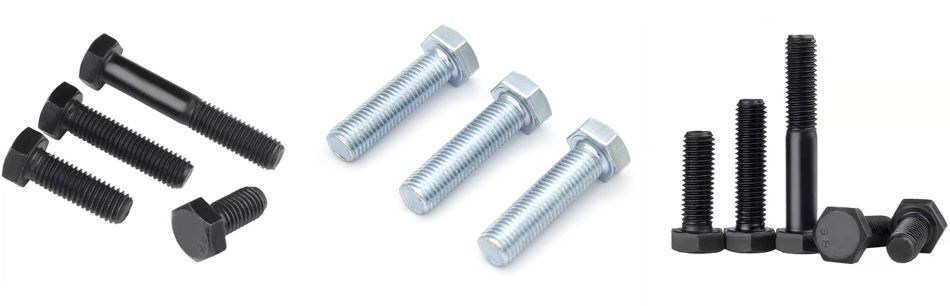
Black coating flange head bolts are a critical fastening component employed across diverse industrial sectors, including petrochemical, pressure vessel fabrication, and heavy machinery assembly. Characterized by a flange head distributing load over a wider surface area, and a black coating providing corrosion resistance, these bolts offer superior performance compared to standard hex head bolts in applications requiring secure, sealed connections. Their technical position within the fastening chain lies between material specification (steel grade, coating type) and functional performance (tensile strength, sealing capability). Core performance metrics include yield strength, proof load, prevailing torque (if applicable, with locking features), and the coating’s salt spray resistance, all crucial for ensuring long-term structural integrity and preventing catastrophic failure in demanding environments. A significant industry pain point revolves around ensuring consistent coating thickness and adhesion, which directly impacts long-term corrosion protection and overall bolt lifespan.
Material Science & Manufacturing
The primary material for black coating flange head bolts is typically medium carbon steel, conforming to grades such as SAE 4140 or equivalent (e.g., 42CrMo4). The steel’s chemical composition dictates its hardenability, tensile strength, and ductility. Manufacturing begins with hot forging of the bolt blank, followed by machining to achieve the final dimensions, including the flange head and threaded section. Critical parameters during forging include die temperature, forging pressure, and cooling rate, influencing the grain structure and potential for defects. Thread rolling, a cold-forming process, is preferred over thread cutting to enhance thread strength and fatigue resistance. The “black coating” refers to a phosphate conversion coating, commonly zinc phosphate or manganese phosphate. This process involves immersing the cleaned steel parts in a phosphate solution, creating a crystalline layer that enhances paint adhesion and provides some degree of corrosion protection. Post-coating, a light oil film is applied to inhibit rust formation. Control of phosphate bath temperature, immersion time, and solution concentration are paramount to achieve a uniform and durable coating. Hydrogen embrittlement is a concern during the phosphate coating process, necessitating a subsequent baking step to drive off absorbed hydrogen. Material compatibility between the phosphate coating, the oil film, and any subsequent applied coatings (e.g., paint, epoxy) must be rigorously verified to prevent delamination and corrosion.
Performance & Engineering
Performance of black coating flange head bolts is dictated by several key engineering principles. Tensile strength, yield strength, and proof load are determined through standardized testing (ASTM A307, A325, A574). Force analysis, particularly shear and tensile loading, is critical in selecting the appropriate bolt size and grade for a given application. The flange head design distributes the clamping force over a larger area, reducing stress concentration on the connected materials and improving joint integrity. Environmental resistance is primarily provided by the phosphate coating, though it’s considered a base for supplemental coatings. Salt spray testing (ASTM B117) is used to evaluate the coating’s corrosion resistance. Prevailing torque, if applicable due to features like nylon inserts or deformed threads, ensures self-locking capability, preventing loosening under vibration. Compliance requirements vary depending on the industry and application. Pressure vessel applications (ASME Section VIII, Division 1) mandate specific bolt material grades, coating requirements, and inspection protocols. Transportation industry standards (e.g., automotive, rail) impose stringent fatigue testing requirements. Finite Element Analysis (FEA) is often employed to simulate stress distributions within the bolt and connected components, optimizing the design for maximum load capacity and fatigue life. Galvanic corrosion can occur if the bolt material is coupled with dissimilar metals, necessitating the use of compatible materials or insulating washers.
Technical Specifications
| Parameter | Metric (SAE 4140, Zinc Phosphate) | Metric (SAE 4140, Manganese Phosphate) | Tolerance |
|---|---|---|---|
| Tensile Strength (MPa) | 600-800 | 600-800 | ±25 MPa |
| Yield Strength (MPa) | 450-550 | 450-550 | ±20 MPa |
| Proof Load (kN) | Varies by Size (See ASTM A325) | Varies by Size (See ASTM A325) | ±5% |
| Coating Thickness (µm) | 8-12 | 10-15 | ±1 µm |
| Salt Spray Resistance (Hours) | 24-48 | 48-72 | N/A (Pass/Fail) |
| Hydrogen Embrittlement (ppm) | < 5 | < 5 | N/A (Pass/Fail) |
Failure Mode & Maintenance
Common failure modes for black coating flange head bolts include tensile failure (bolt fracture), shear failure (bolt shear), thread stripping, and corrosion-induced failure. Fatigue cracking can occur under cyclic loading, especially if stress concentrations are present (e.g., damaged threads, improper tightening). Delamination of the phosphate coating, often caused by poor surface preparation or incompatible supplemental coatings, exposes the underlying steel to corrosion. Hydrogen embrittlement, if not adequately addressed during manufacturing, can lead to brittle fracture. Oxidation and rust formation compromise the coating’s protective properties, accelerating corrosion. Maintenance strategies include regular visual inspections for signs of corrosion or damage, proper torque application (using calibrated torque wrenches), and periodic re-tightening, particularly in applications subject to vibration. Lubrication of the threads with an anti-seize compound can reduce friction and prevent galling. If corrosion is detected, the affected bolts should be replaced. Preventative maintenance programs should include a detailed torque schedule and documentation of bolt tightening history. For critical applications, non-destructive testing (NDT) methods, such as magnetic particle inspection, can be used to detect surface cracks and other defects.
Industry FAQ
Q: What is the primary difference between zinc phosphate and manganese phosphate coatings, and how does this affect corrosion resistance?
A: Manganese phosphate coatings generally provide a thicker and more porous coating than zinc phosphate, leading to better oil retention and slightly improved corrosion resistance. However, zinc phosphate offers superior paint adhesion, making it a better choice if subsequent painting or coating is planned. Both provide a base for supplemental corrosion protection, and the specific application will dictate the optimal choice.
Q: How can hydrogen embrittlement be prevented during the phosphate coating process?
A: Hydrogen embrittlement is mitigated by controlling the phosphate bath chemistry (pH, iron content) and implementing a post-coating baking process. Baking at a specified temperature (typically 150-200°C) for a defined duration drives off absorbed hydrogen, reducing the risk of brittle fracture. Proper cleaning and pre-treatment of the steel surface also minimizes hydrogen absorption.
Q: What torque values should be used for tightening flange head bolts, and what factors influence these values?
A: Torque values are dependent on bolt diameter, material grade, thread pitch, and lubrication. Consult the manufacturer's specifications and relevant industry standards (e.g., ASME, ISO). Factors such as joint material, surface finish, and clamping pressure also influence the optimal torque. Using a calibrated torque wrench is essential to ensure accurate tightening.
Q: How does the flange head design contribute to the performance of these bolts compared to standard hex head bolts?
A: The flange head distributes the clamping force over a wider area, reducing stress concentration on the connected materials. This is particularly important in applications involving softer materials or where a secure seal is required. The larger bearing surface also improves stability and prevents loosening under vibration. It also provides a better aesthetic finish in some applications.
Q: What are the limitations of black oxide coating in highly corrosive environments (e.g., seawater exposure)?
A: Black oxide (phosphate) coatings offer only limited corrosion protection on their own. In highly corrosive environments like seawater exposure, they require supplemental coatings such as paint, epoxy, or galvanizing to provide adequate protection. Regular maintenance and inspection are also crucial to prevent corrosion and ensure long-term reliability.
Conclusion
Black coating flange head bolts represent a robust fastening solution for a wide range of industrial applications. Their performance hinges on a combination of material science, precise manufacturing processes, and adherence to relevant engineering principles. The phosphate coating, while providing a foundational layer of corrosion resistance, often requires supplementary protection in harsh environments. Understanding the potential failure modes, implementing effective maintenance strategies, and rigorously adhering to industry standards are crucial for ensuring the long-term reliability and structural integrity of bolted connections.
Future advancements in coating technologies, such as nano-ceramic coatings and enhanced phosphate conversion processes, promise to further improve the corrosion resistance and durability of these bolts. Continued research into fatigue behavior and stress analysis will optimize designs for increasingly demanding applications. Ultimately, the successful application of black coating flange head bolts requires a holistic approach encompassing material selection, manufacturing control, proper installation, and proactive maintenance.