
Introduction
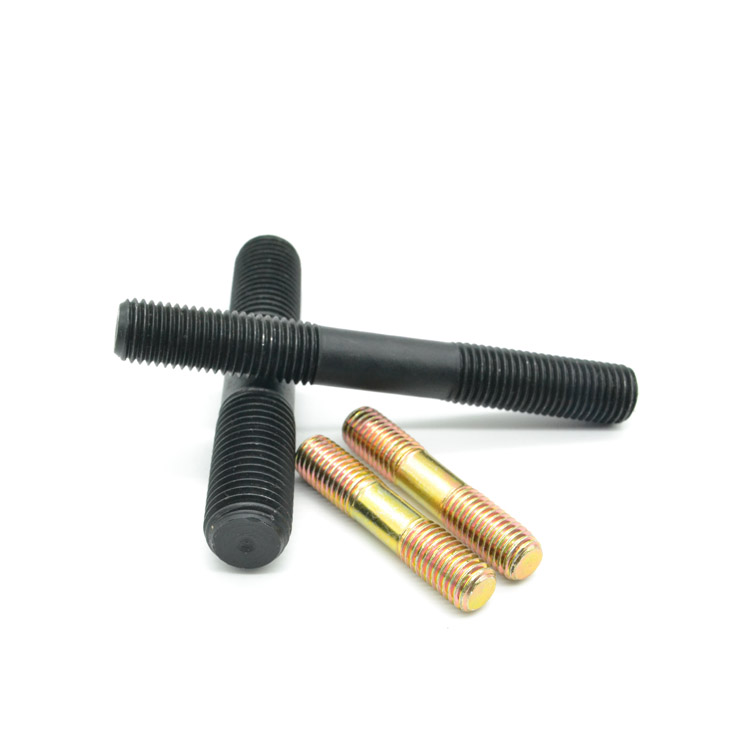
Black oxide thread rods are externally threaded fasteners produced from carbon steel, alloy steel, or stainless steel, and subsequently treated with a black oxide coating. This coating, primarily composed of magnetite (Fe3O4), is created through a controlled oxidation process. Within the industrial fastening supply chain, these rods serve as critical components in assemblies requiring moderate corrosion resistance, aesthetic appeal, and precise thread engagement. Their core performance characteristics – tensile strength, shear strength, and dimensional accuracy – are directly tied to the base material and the quality of the threading process. Black oxide provides a minimal increase in hardness but substantially improves resistance to surface degradation, often functioning as a preparatory layer for supplemental coatings like oil or wax. A primary industry pain point revolves around ensuring consistent coating thickness and adherence, as these directly impact long-term corrosion protection and the overall reliability of assembled structures.
Material Science & Manufacturing
The base material for black oxide thread rods predominantly consists of medium carbon steels like 1018, 1045, and 4140, selected for their balance of strength, ductility, and machinability. Stainless steel grades, particularly 304 and 316, are employed in more corrosive environments. The manufacturing process begins with hot rolling or cold drawing to create the rod stock. Subsequently, the threads are formed through either rolling or cutting. Thread rolling is favored for its superior grain flow, enhancing fatigue strength, while thread cutting is used for complex thread forms or when material hardness is a limiting factor. The black oxide conversion coating is typically achieved through immersion in a chemical solution containing sodium hydroxide, sodium nitrite, and water, maintained at an elevated temperature (80-140°C). The process induces the formation of a magnetite layer on the steel surface. Critical parameters include solution concentration, temperature control (±2°C), immersion time (5-30 minutes), and post-treatment rinsing and oiling. Insufficient rinsing leaves residual salts, accelerating corrosion. Excessive temperature can lead to uneven coating thickness and potential hydrogen embrittlement in high-strength steels. Chemical compatibility of the black oxide solution with the base metal is paramount; improper formulation can result in incomplete conversion or coating defects. Material properties directly influencing the process are steel composition, surface roughness (Ra < 3.2 μm is preferred), and pre-treatment cleanliness.
Performance & Engineering
The mechanical performance of black oxide thread rods is largely dictated by the base material's tensile and yield strength. Black oxide itself contributes minimally to these properties, but its influence on corrosion resistance is significant. Thread engagement force analysis is crucial, considering factors like thread pitch, material friction coefficient (typically 0.15-0.20 for black oxide coated steel), and applied torque. The coating provides a moderate barrier against atmospheric corrosion, delaying the onset of rust. However, it’s a porous coating and requires supplemental protection (oil, wax) for prolonged exposure to harsh environments, especially chlorides. Engineering considerations include avoiding galvanic corrosion when mating black oxide rods with dissimilar metals. The coating thickness (typically 0.5-2.5 μm) is a critical dimension, influencing corrosion protection and the accuracy of thread dimensions. Compliance requirements often dictate the need for salt spray testing (ASTM B117) to verify corrosion resistance levels. Environmental resistance is also impacted by temperature extremes; prolonged exposure to high temperatures can cause the coating to degrade and flake. Proper preload control during assembly is essential to prevent stripping of threads, particularly in applications subject to dynamic loading. Finite element analysis (FEA) can be used to optimize thread design and predict stress concentrations under varying load conditions.
Technical Specifications
| Parameter | Grade 5 (SAE) | Grade 8 (SAE) | 304 Stainless Steel | 316 Stainless Steel |
|---|---|---|---|---|
| Tensile Strength (MPa) | 572 | 830 | 517 | 586 |
| Yield Strength (MPa) | 379 | 690 | 205 | 248 |
| Hardness (Rockwell C) | 25-35 | 33-39 | 85-100 | 85-105 |
| Coating Thickness (μm) | 0.5-2.5 | 0.5-2.5 | 0.5-2.5 (optional) | 0.5-2.5 (optional) |
| Salt Spray Resistance (Hours - ASTM B117) | 24-72 (with oil) | 24-72 (with oil) | >1000 (without coating) | >2000 (without coating) |
| Thread Standard | UNC/UNF | UNC/UNF | UNC/UNF | UNC/UNF |
Failure Mode & Maintenance
Common failure modes for black oxide thread rods include thread stripping due to excessive torque or improper preload, corrosion leading to weakening of the material, and coating delamination due to poor adhesion or impact damage. Fatigue cracking can occur under cyclic loading, particularly if the threads are poorly formed or the material contains inclusions. Hydrogen embrittlement, while less common, can occur in high-strength steels during the black oxide process if not carefully controlled. Corrosion is often exacerbated by chloride exposure and the lack of supplemental protective coatings. Maintenance primarily involves regular inspection for signs of corrosion or thread damage. Re-application of oil or wax is recommended for components exposed to corrosive environments. If corrosion is detected, the affected area should be cleaned and re-coated. In cases of severe corrosion or thread damage, replacement of the rod is necessary. Preventive maintenance also includes proper torque control during assembly and avoiding the use of abrasive cleaning agents that can damage the coating. A failure analysis should be conducted if catastrophic failures occur, investigating material properties, manufacturing processes, and operating conditions to identify the root cause.
Industry FAQ
Q: What is the primary limitation of black oxide as a corrosion protection method?
A: The primary limitation is its porosity. Black oxide coatings are not dense and therefore provide limited protection against prolonged exposure to corrosive environments, especially those containing chlorides. Supplemental coatings like oil or wax are crucial for extending corrosion resistance.
Q: Can black oxide coating affect the dimensional accuracy of the threads?
A: Yes, the coating process adds a thin layer of material, potentially altering thread dimensions by a few microns. This is generally within acceptable tolerances for most applications, but precise applications may require thread chasing or post-coating inspection.
Q: Is black oxide suitable for high-temperature applications?
A: No, black oxide coatings degrade at elevated temperatures. Prolonged exposure to temperatures above 200°C can cause the coating to flake and lose its protective properties.
Q: What pre-treatment steps are essential for achieving good black oxide adhesion?
A: Thorough cleaning to remove oil, grease, dirt, and scale is essential. This typically involves degreasing, pickling (acid cleaning), and rinsing. Surface roughness is also important; a slightly roughened surface provides a better key for the coating to adhere to.
Q: What is the difference between black oxide and phosphate coating in terms of corrosion resistance?
A: Phosphate coatings (like zinc phosphate) generally offer superior corrosion resistance compared to black oxide. Phosphate coatings are more porous but provide a better base for paint or other protective coatings. Black oxide primarily provides aesthetic benefits and mild corrosion protection.
Conclusion
Black oxide thread rods represent a cost-effective fastening solution where moderate corrosion resistance, aesthetic appearance, and precise thread engagement are required. Their performance is fundamentally linked to the base material selection, meticulous manufacturing processes, and proper surface preparation. While the black oxide coating itself offers limited long-term corrosion protection, its role as a preparatory layer for supplementary coatings and its contribution to dimensional stability make it a widely utilized finish in numerous industries.
Looking forward, advancements in coating technologies, such as incorporating nanoparticles into the black oxide solution to enhance corrosion resistance and wear properties, could expand the applicability of these rods. Continued emphasis on process control – particularly regarding solution chemistry, temperature regulation, and post-treatment rinsing – will be critical for ensuring consistent quality and reliable performance in demanding applications. Further research into environmentally friendly black oxide formulations is also expected to drive innovation in this field.