
Introduction
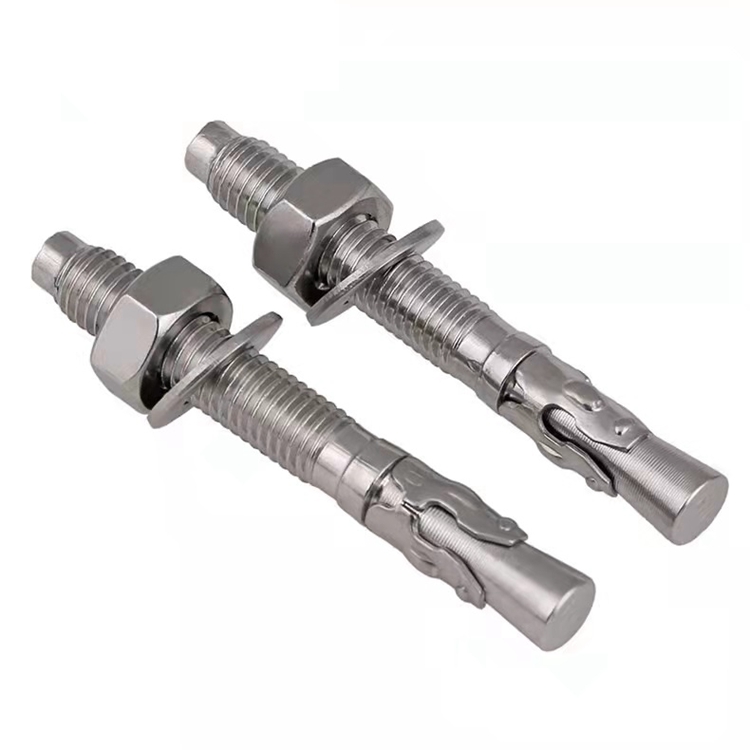
Zinc plated wedge anchors are mechanical fastening devices designed for securing fixtures to concrete, brick, and block. They function by utilizing a wedge-shaped component that expands within a pre-drilled hole, creating a robust clamping force. These anchors represent a critical element in construction, infrastructure, and industrial applications where reliable and high-strength connections are paramount. The zinc plating provides a degree of corrosion resistance, extending the service life of the anchor in less aggressive environments. Their primary position within the construction supply chain is as a direct component of structural fastening, competing with alternative anchoring systems such as sleeve anchors, epoxy anchors, and cast-in-place anchors. Core performance characteristics include tensile strength, shear strength, embedment depth requirements, and resistance to pullout forces. Understanding these factors is crucial for engineers and procurement specialists to ensure proper selection and installation, ultimately guaranteeing structural integrity.
Material Science & Manufacturing
The primary material for wedge anchors is typically medium to high carbon steel (e.g., 1018, 1045 steel), selected for its tensile strength and ductility. The wedge component is often made from similar steel grades, hardened to achieve the necessary wedging action. The zinc plating is usually applied via hot-dip galvanizing or electroplating, with hot-dip providing a thicker and more robust coating, improving corrosion resistance. Manufacturing begins with cold forging of the anchor body and wedge to achieve the desired shape and internal geometry. This process work-hardens the steel, enhancing its strength. Following forging, the anchors undergo machining operations – often involving CNC turning and milling – to refine dimensions and create threads. The critical manufacturing parameter is the precise angle and surface finish of the wedge, which directly impacts its expansion force and holding capacity. The threads must be accurately formed to ensure proper engagement with the fastener. Zinc plating is applied following machining and is carefully monitored for coating thickness and uniformity (typically 50-85 μm for hot-dip galvanizing, 5-25 μm for electroplating). Post-plating, quality control checks include dimensional inspection, coating thickness verification, and torque testing to ensure adherence to specifications. Hydrogen embrittlement is a potential concern during electroplating; a post-plating bake-out process is often employed to mitigate this risk.
Performance & Engineering
The performance of a zinc plated wedge anchor is governed by several key engineering principles. Force analysis focuses on tensile loading (pull-out resistance), shear loading (sideways force resistance), and combined loading scenarios. Pull-out resistance is directly related to the anchor's embedment depth, the diameter of the hole, and the concrete's compressive strength. Shear resistance depends on the concrete's tensile strength and the anchor's shear area. Environmental resistance is primarily determined by the zinc coating's effectiveness against corrosion. Exposure to chlorides (e.g., seawater, de-icing salts) significantly accelerates corrosion, potentially leading to anchor failure. Compliance requirements vary by region and application. In seismic zones, anchors must be designed to withstand dynamic loading and meet stringent testing standards (e.g., ICC-ES AC37). Functional implementation requires proper hole drilling techniques. Hole diameter and depth must precisely match anchor specifications. The hole must be cleaned of debris before anchor insertion. Incorrect installation – such as over-torquing or insufficient embedment – can drastically reduce anchor capacity. Finite Element Analysis (FEA) is frequently employed during the design phase to optimize anchor geometry and predict performance under various loading conditions. The anchor's expansion force must be carefully calibrated to avoid cracking the concrete substrate.
Technical Specifications
| Anchor Diameter (in) | Minimum Embedment Depth (in) | Tensile Strength (lbs) | Shear Strength (lbs) |
|---|---|---|---|
| 1/4" | 2" | 2,500 | 1,250 |
| 3/8" | 2 1/2" | 4,000 | 2,000 |
| 1/2" | 3" | 6,000 | 3,000 |
| 5/8" | 3 1/2" | 8,000 | 4,000 |
| 3/4" | 4" | 10,000 | 5,000 |
| 1" | 5" | 15,000 | 7,500 |
Failure Mode & Maintenance
Wedge anchor failure can manifest in several ways. Fatigue cracking, induced by cyclical loading, is a common issue, particularly in applications subject to vibrations or repeated stress. Corrosion, especially in chloride-rich environments, degrades the zinc coating and ultimately attacks the steel substrate, reducing tensile and shear strength. Pull-out failure occurs when the anchor’s expansion force is insufficient to create adequate friction with the concrete. Concrete cracking around the anchor is another failure mode, often resulting from over-torquing during installation or inadequate concrete compressive strength. Hydrogen embrittlement, a risk during electroplating if not properly mitigated, can lead to brittle fracture. Maintenance primarily involves periodic inspection of the anchors for signs of corrosion or deformation. In corrosive environments, supplemental corrosion protection measures – such as applying a corrosion inhibitor or using stainless steel washers – can extend anchor life. If corrosion is detected, the anchor should be replaced. For critical applications, regular torque checks can ensure the anchor remains properly tightened. Addressing any concrete cracking in the vicinity of the anchor is essential to prevent progressive failure. When replacing anchors, ensure the new anchors meet or exceed the original specifications and are installed correctly according to manufacturer’s instructions.
Industry FAQ
Q: What is the primary difference between hot-dip galvanized and electroplated zinc coatings in terms of corrosion resistance?
A: Hot-dip galvanizing provides a significantly thicker zinc coating compared to electroplating, resulting in superior corrosion resistance. The thicker coating acts as a more effective barrier against corrosive elements and offers greater sacrificial protection. While electroplating is more cost-effective, it's less suitable for harsh environments.
Q: How does concrete compressive strength affect the pull-out capacity of a wedge anchor?
A: Higher concrete compressive strength directly increases the pull-out capacity of the anchor. The anchor relies on friction between the expanded wedge and the surrounding concrete. Stronger concrete provides a greater resistance to displacement and thus a higher pull-out resistance.
Q: What are the critical considerations when selecting a wedge anchor for a seismic application?
A: Seismic applications necessitate anchors that have been tested and approved to meet specific performance criteria under dynamic loading conditions (ICC-ES AC37 is a common standard). Factors to consider include ductility, energy absorption capacity, and the anchor’s ability to resist cyclic loading without failure. The anchor’s embedment depth and spacing are also critical.
Q: What is the potential consequence of over-torquing a wedge anchor during installation?
A: Over-torquing can induce excessive stress on the concrete, potentially causing cracking around the anchor. This cracking reduces the anchor's holding capacity and can lead to premature failure. It can also damage the anchor itself, affecting its long-term performance.
Q: How does the hole drilling process impact the performance of a wedge anchor?
A: The accuracy of the hole diameter and depth is paramount. Holes that are too large reduce the anchor's clamping force, while holes that are too shallow compromise embedment depth. Furthermore, proper hole cleaning to remove debris is critical, as debris can interfere with the anchor’s expansion mechanism and reduce its holding capacity.
Conclusion
Zinc plated wedge anchors remain a cornerstone of mechanical fastening in concrete construction due to their robust performance, relatively low cost, and ease of installation. Their efficacy, however, is deeply rooted in proper material selection, precise manufacturing controls, and adherence to rigorous engineering principles. Understanding the interplay between tensile and shear forces, environmental factors, and installation techniques is crucial for ensuring the long-term integrity of structures relying on these anchors.
Future advancements may focus on developing enhanced zinc alloy coatings with improved corrosion resistance, incorporating smart monitoring systems to detect anchor loosening or corrosion, and optimizing anchor geometry through advanced modeling techniques. Selecting the appropriate anchor for a specific application, coupled with diligent installation practices and periodic maintenance, remains the most effective strategy for maximizing their lifespan and guaranteeing structural safety.