
Introduction
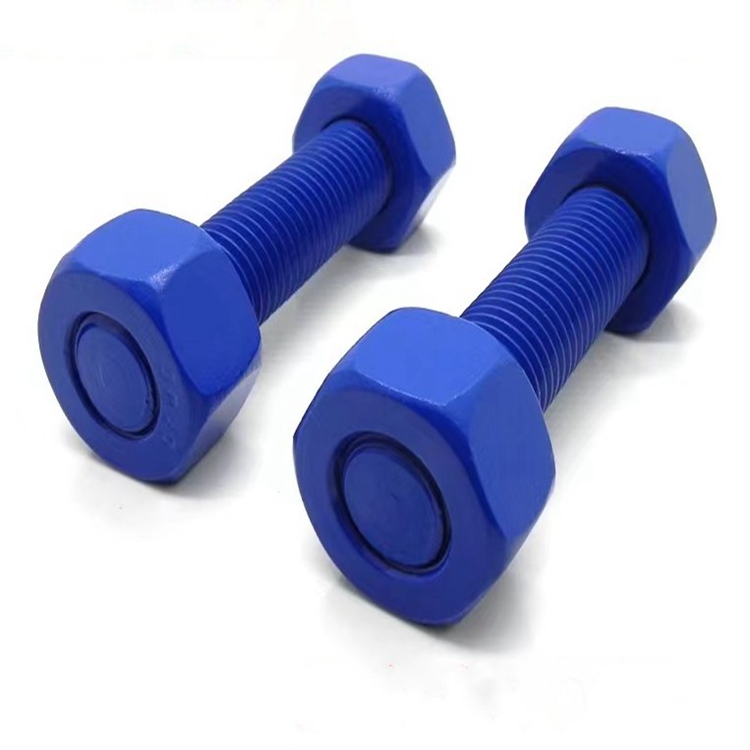
High strength allen key bolts represent a critical fastening solution across numerous industries, including automotive, aerospace, heavy machinery, and structural engineering. These bolts, characterized by their use of alloy steels and precise manufacturing processes, are designed to withstand significantly higher loads and stresses compared to standard fasteners. Positioned within the industry chain as a specialized component of assembly and maintenance, their performance directly impacts the integrity and longevity of assembled structures and equipment. Core performance metrics revolve around tensile strength, yield strength, fatigue resistance, and resistance to shear stress, all rigorously controlled to ensure reliable operation in demanding environments. The increasing demand for lightweighting and high-performance materials has driven advancements in alloy compositions and manufacturing techniques for these critical fasteners. A key pain point in industry is ensuring consistent material quality and adherence to stringent manufacturing tolerances to prevent premature failure and maintain structural safety.
Material Science & Manufacturing
High strength allen key bolts are typically manufactured from alloy steels such as 40CrMnTi, 35CrMo, and SCM435. The selection of steel grade dictates the ultimate mechanical properties. 40CrMnTi offers a good balance of strength and toughness, making it suitable for general high-strength applications. 35CrMo provides enhanced hardenability and is often used in applications requiring high wear resistance. SCM435, a nickel-chromium-molybdenum alloy steel, delivers superior tensile strength and fatigue resistance, critical for demanding applications like aerospace components. Manufacturing begins with hot forging, which aligns the grain structure along the bolt’s axis, enhancing tensile strength. Following forging, the bolts undergo heat treatment, including hardening, tempering, and sometimes case hardening. Hardening, often through quenching in oil or water, increases the steel's hardness. Tempering reduces brittleness and improves ductility. Crucially, precise control of heating and cooling rates during heat treatment is paramount. Finally, the bolts are precisely machined to create the hex socket (allen drive) and threads, often utilizing CNC machining for accuracy. Thread rolling, as opposed to cutting, is preferred as it work-hardens the surface, increasing fatigue strength. Surface treatments, such as phosphate coating or zinc plating, provide corrosion resistance. Parameter control during heat treatment – temperature, time, and cooling medium – are critical to achieving desired mechanical properties. Chemical composition verification through spectroscopic analysis and non-destructive testing (NDT), like ultrasonic inspection and magnetic particle inspection, are employed to ensure material integrity.
Performance & Engineering
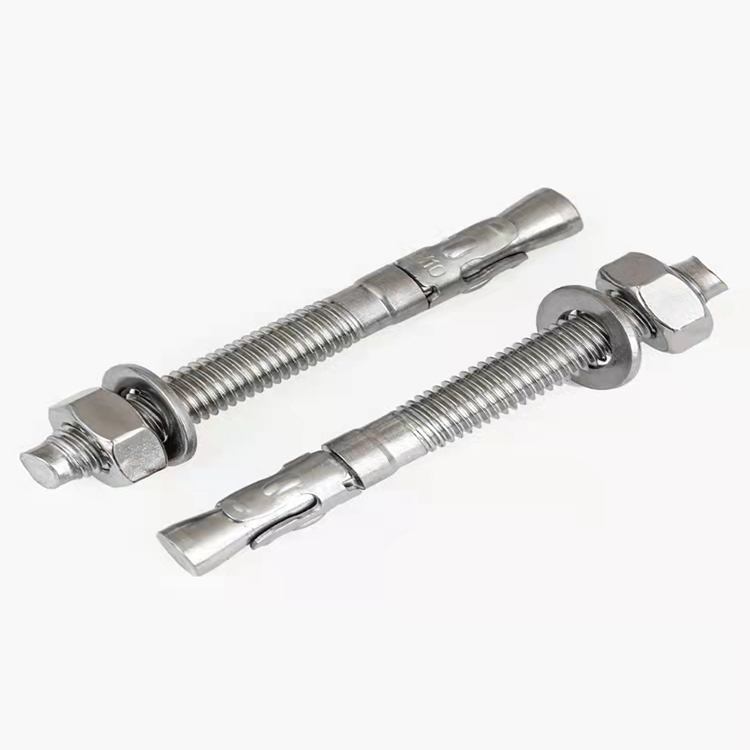
The performance of high strength allen key bolts is fundamentally governed by stress analysis. Bolt preload is a critical parameter; correct preload ensures that the bolt remains within its elastic region under service loads, preventing loosening and fatigue failure. Preload is achieved through tightening torque, which is related to the bolt's diameter, material, and coefficient of friction. Finite Element Analysis (FEA) is routinely used to model stress distribution within the bolt and the joined components, identifying potential failure points. Environmental resistance is another key consideration. Corrosion, particularly in marine or chemically aggressive environments, can significantly reduce bolt strength. Coatings, as mentioned, mitigate corrosion, but material selection is also important; stainless steel alloys offer inherent corrosion resistance but typically exhibit lower tensile strength. Compliance requirements vary by industry. Automotive applications adhere to IATF 16949 standards, demanding stringent process control and traceability. Aerospace applications follow AS9100, with even more rigorous inspection and documentation requirements. In structural engineering, bolts must meet the specifications outlined in codes like Eurocode 9 or AISC. Fatigue performance is assessed through S-N curves (stress vs. number of cycles to failure), derived from laboratory testing. These curves are used to predict bolt life under cyclic loading conditions. Shear resistance is determined through testing and is a critical factor in applications where bolts are subjected to transverse forces.
Technical Specifications
| Property | Grade 8.8 | Grade 10.9 | Grade 12.9 | Unit |
|---|---|---|---|---|
| Tensile Strength | 800 | 1000 | 1200 | MPa |
| Yield Strength | 640 | 900 | 1100 | MPa |
| Hardness (HRC) | 33-39 | 35-41 | 38-44 | - |
| Elongation (%) | 16 | 14 | 12 | - |
| Shear Strength | 600 | 780 | 960 | MPa |
| Proof Load | 560 | 780 | 990 | MPa |
Failure Mode & Maintenance
High strength allen key bolts are susceptible to several failure modes. Fatigue cracking, initiated by cyclic loading, is a common cause of failure, particularly in applications involving vibration. Corrosion, especially in the presence of chlorides, can initiate pitting corrosion and reduce the bolt's effective cross-sectional area, leading to failure. Hydrogen embrittlement, a phenomenon where hydrogen atoms diffuse into the steel, reducing ductility, is a concern in electroplating or high-temperature applications. Striping of threads, caused by excessive torque or improper lubrication, reduces the clamping force and can lead to loosening and eventual failure. Over-tightening can induce plastic deformation, weakening the bolt. Failure analysis often involves fractographic examination to determine the origin and propagation path of cracks. Maintenance involves periodic inspection for signs of corrosion, loosening, or damage. Torque checks should be performed regularly, utilizing calibrated torque wrenches. Lubrication with appropriate anti-seize compounds prevents corrosion and facilitates disassembly. Damaged bolts should be replaced immediately. Non-destructive testing, such as dye penetrant inspection, can detect surface cracks. Preventative maintenance schedules should be tailored to the specific application and environmental conditions. Proper storage is also crucial; bolts should be stored in a clean, dry environment to prevent corrosion.
Industry FAQ
Q: What is the significance of bolt grade markings, and how do I interpret them?
A: Bolt grade markings, such as 8.8, 10.9, or 12.9, indicate the tensile strength and yield strength of the steel. The first two digits represent one-tenth of the ultimate tensile strength in MPa (e.g., 8.8 indicates 800 MPa tensile strength). The second digit represents the ratio of yield strength to tensile strength, expressed as a percentage (e.g., 8 represents 80% yield strength relative to tensile strength). Higher grades signify greater strength but may have lower ductility.
Q: What is the impact of using incorrect tightening torque on bolt performance?
A: Incorrect tightening torque can have significant consequences. Under-tightening leads to insufficient clamping force, resulting in loosening, vibration, and potential joint failure. Over-tightening can exceed the bolt's yield strength, causing plastic deformation, reducing preload, and potentially leading to fatigue failure or thread stripping.
Q: How does corrosion affect the performance of high strength bolts, and what mitigation strategies are available?
A: Corrosion weakens the bolt by reducing its cross-sectional area and initiating stress concentrations. Mitigation strategies include selecting corrosion-resistant materials (stainless steel), applying protective coatings (zinc plating, phosphate coating), using corrosion inhibitors, and implementing regular inspection and maintenance programs. Galvanic corrosion, occurring when dissimilar metals are in contact, should also be considered.
Q: What are the advantages and disadvantages of using alloy steel versus stainless steel for high-strength applications?
A: Alloy steels (e.g., 40CrMnTi, 35CrMo) generally offer higher tensile and yield strengths at a lower cost compared to stainless steel. However, alloy steels are more susceptible to corrosion. Stainless steel provides excellent corrosion resistance but typically has lower strength. The optimal choice depends on the specific application’s requirements and environmental conditions.
Q: What is the role of non-destructive testing (NDT) in ensuring the quality of high strength bolts?
A: NDT methods, such as ultrasonic testing, magnetic particle inspection, and dye penetrant inspection, are used to detect internal and surface flaws without damaging the bolt. These methods help identify cracks, voids, and other defects that could compromise the bolt's integrity, ensuring the quality and reliability of the fastener.
Conclusion
High strength allen key bolts are engineered components whose performance is governed by a complex interplay of material science, manufacturing precision, and engineering principles. Understanding the critical factors influencing their strength, fatigue resistance, and corrosion behavior is paramount for ensuring the integrity of assembled structures. Proper selection of material grade, adherence to stringent manufacturing processes, accurate torque control, and regular inspection are all essential for maximizing bolt lifespan and preventing catastrophic failures.
Future advancements in bolt technology will likely focus on developing new alloy compositions with enhanced strength-to-weight ratios, improved corrosion resistance, and reduced susceptibility to hydrogen embrittlement. Smart bolts, incorporating sensors to monitor preload and detect corrosion, will provide real-time data for predictive maintenance and enhanced safety. Further refinement of FEA modeling techniques will enable more accurate stress analysis and optimized bolt designs for increasingly demanding applications.